Fast-Tracking Rental Housing – Residential Rental Districts Update
Motion 17 · Council Meeting, May 19, 2026
Summary
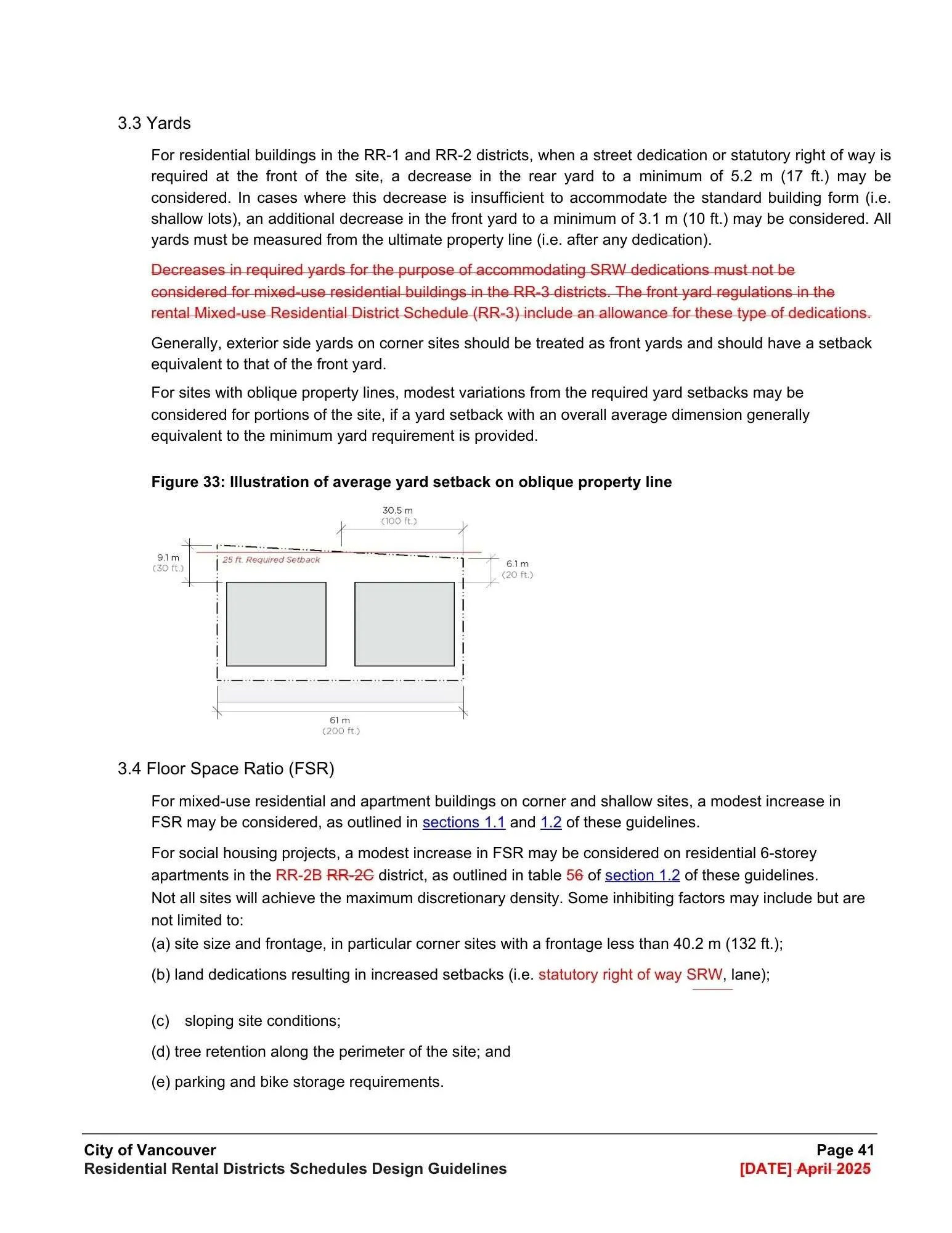
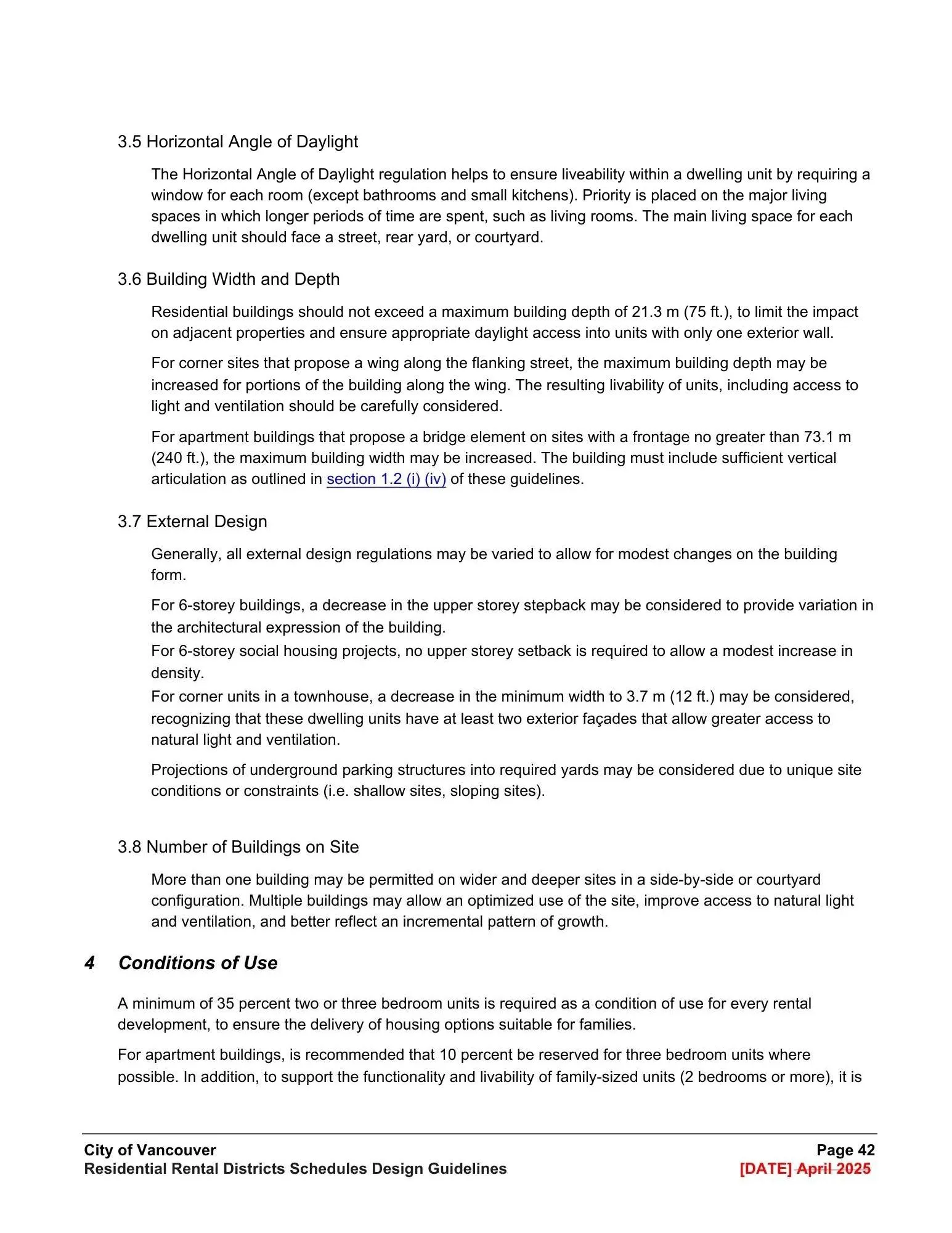
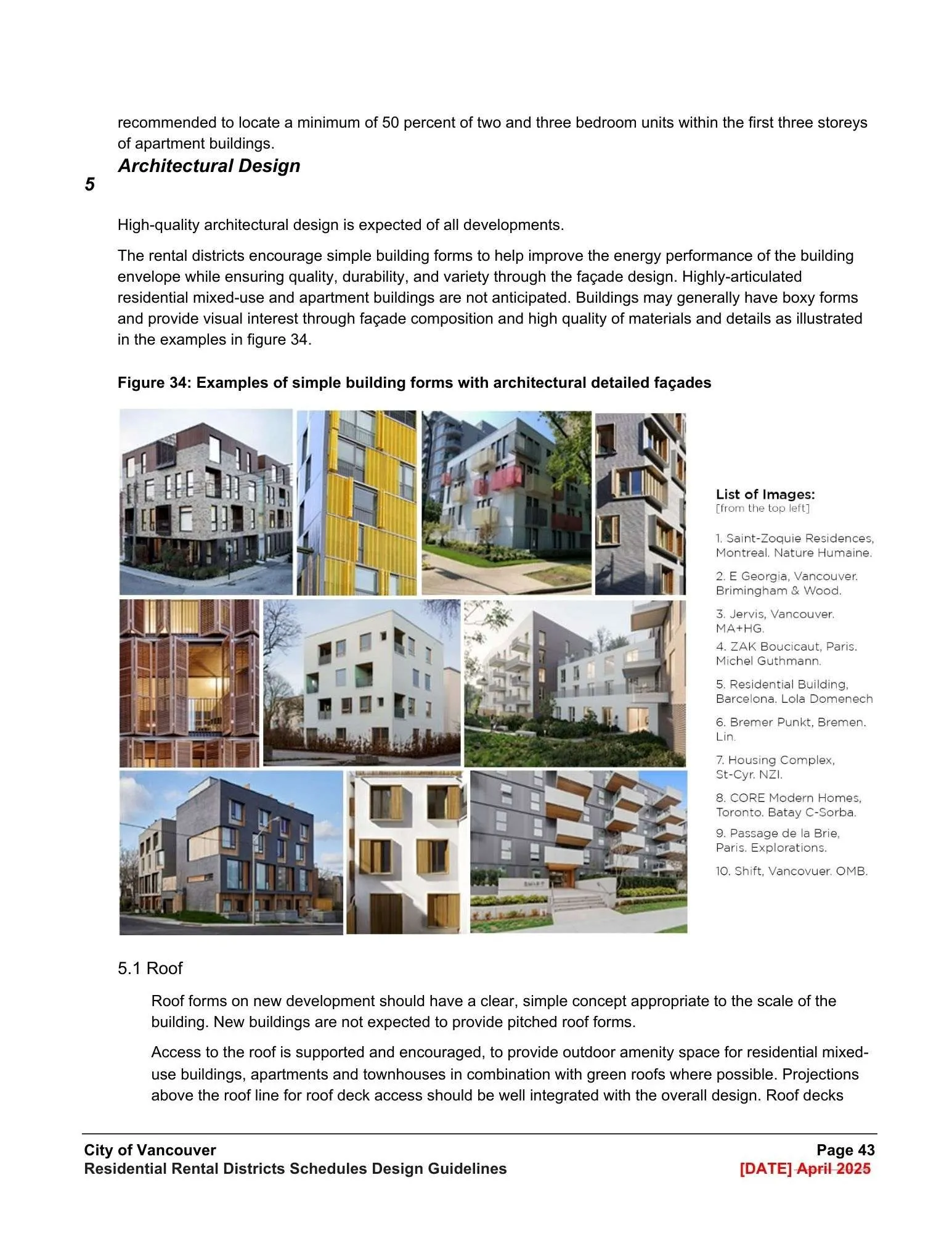
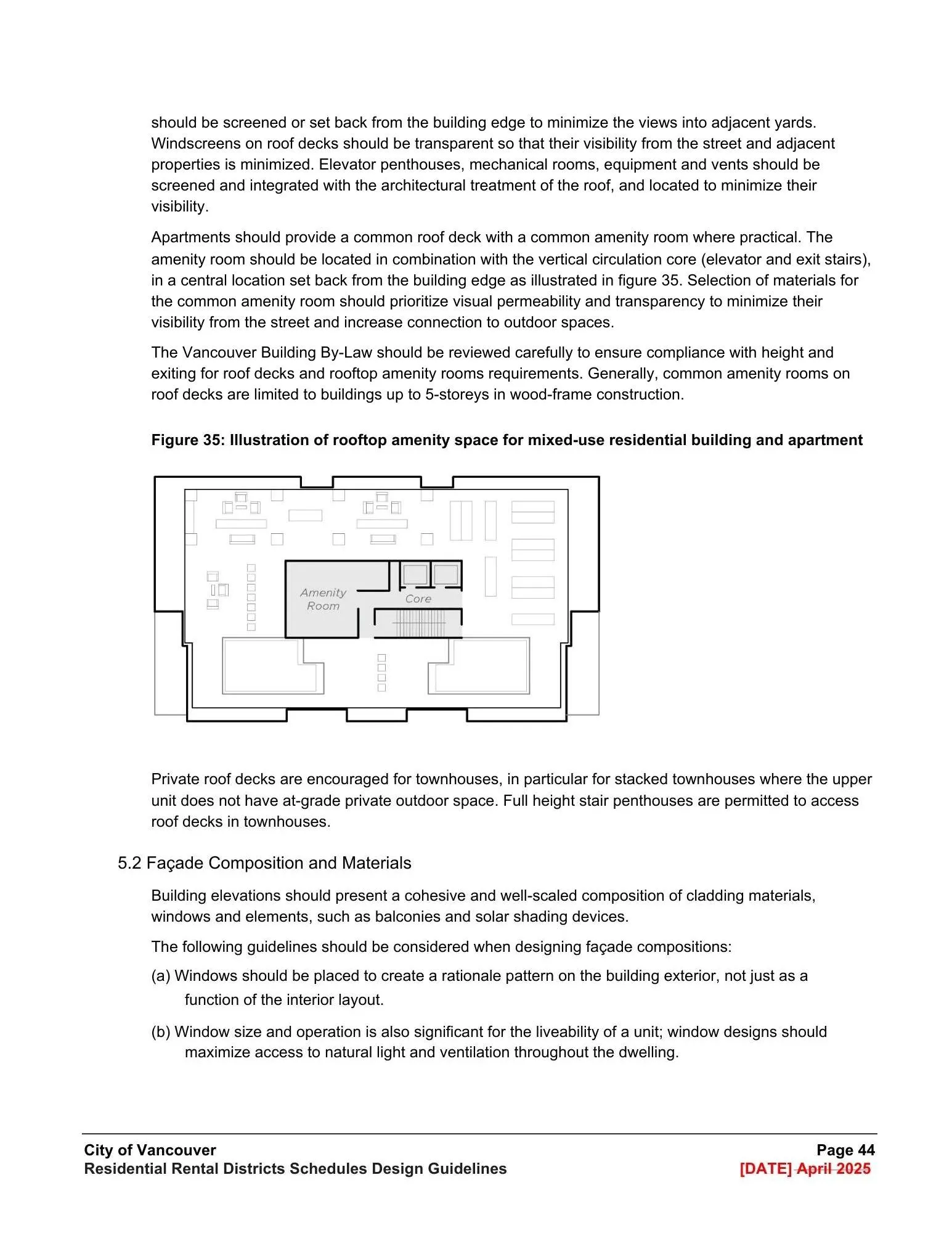
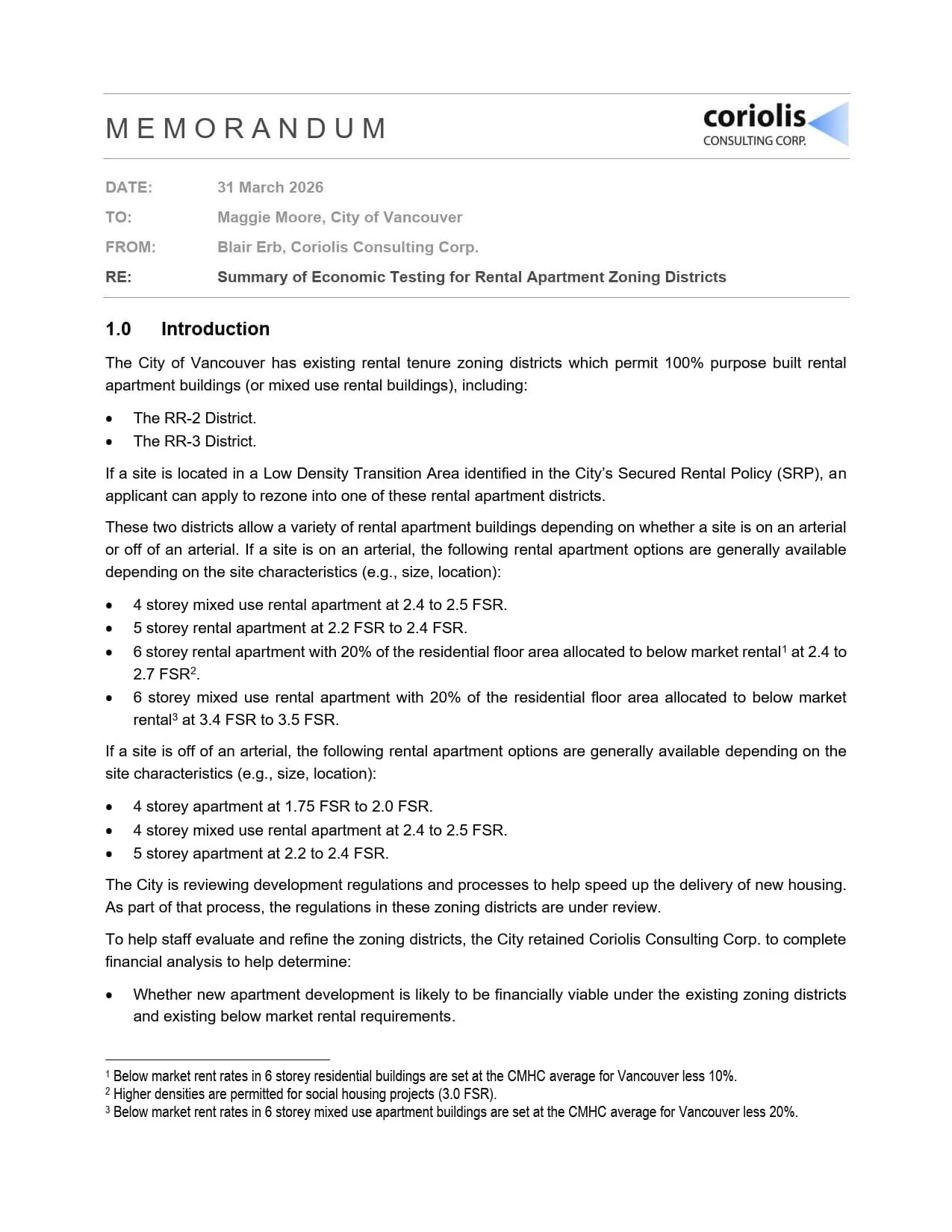
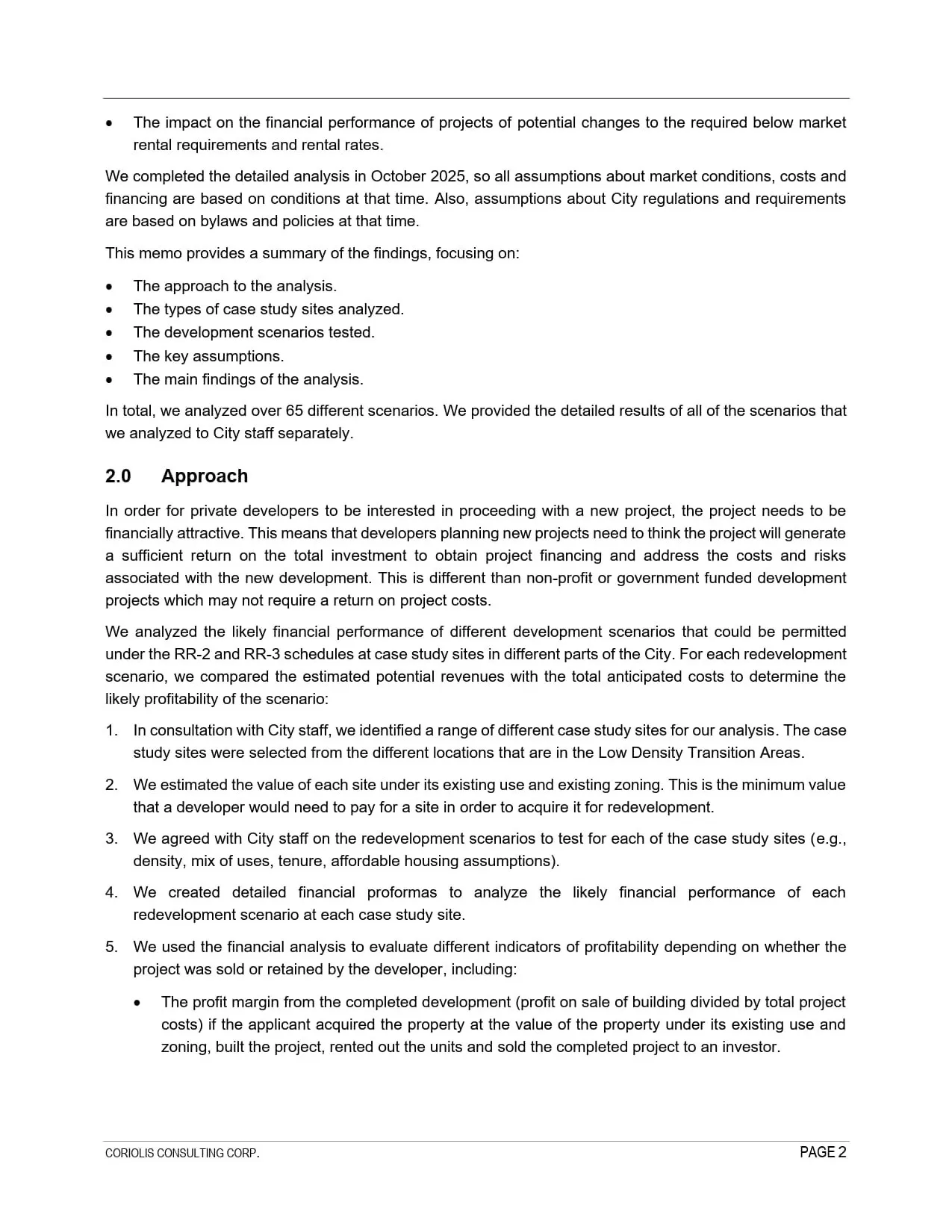
- This report proposes amendments to Vancouver's Zoning and Development By-law to update the Residential Rental (RR) district schedules, aiming to keep low-rise rental housing financially viable to build amid challenging market conditions including high construction costs and declining rents and sale prices.
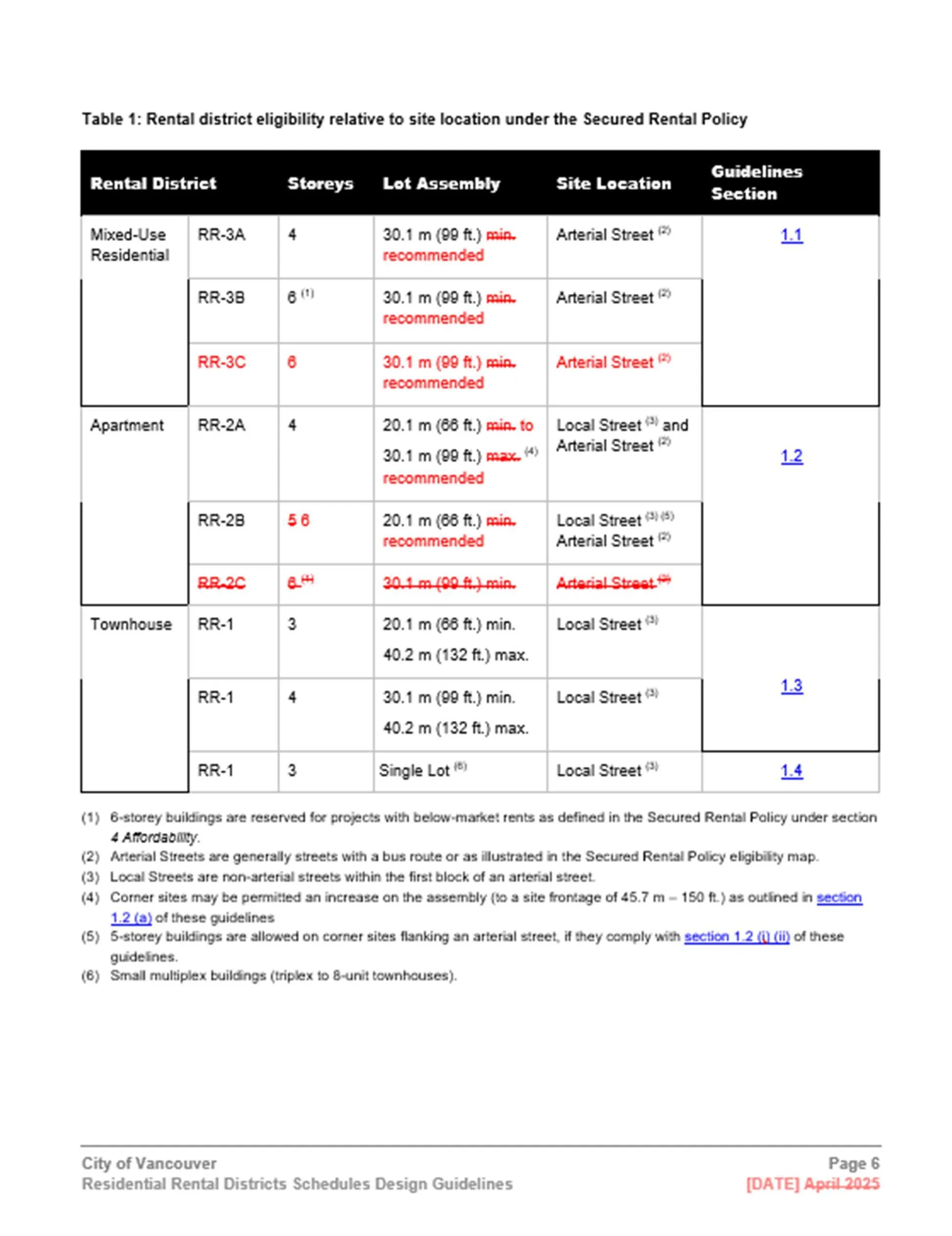
- Key changes include creating a new RR-3C district, eliminating the existing RR-2C district, and adjusting or removing certain below-market rental requirements that have been limiting project delivery in the current market environment.
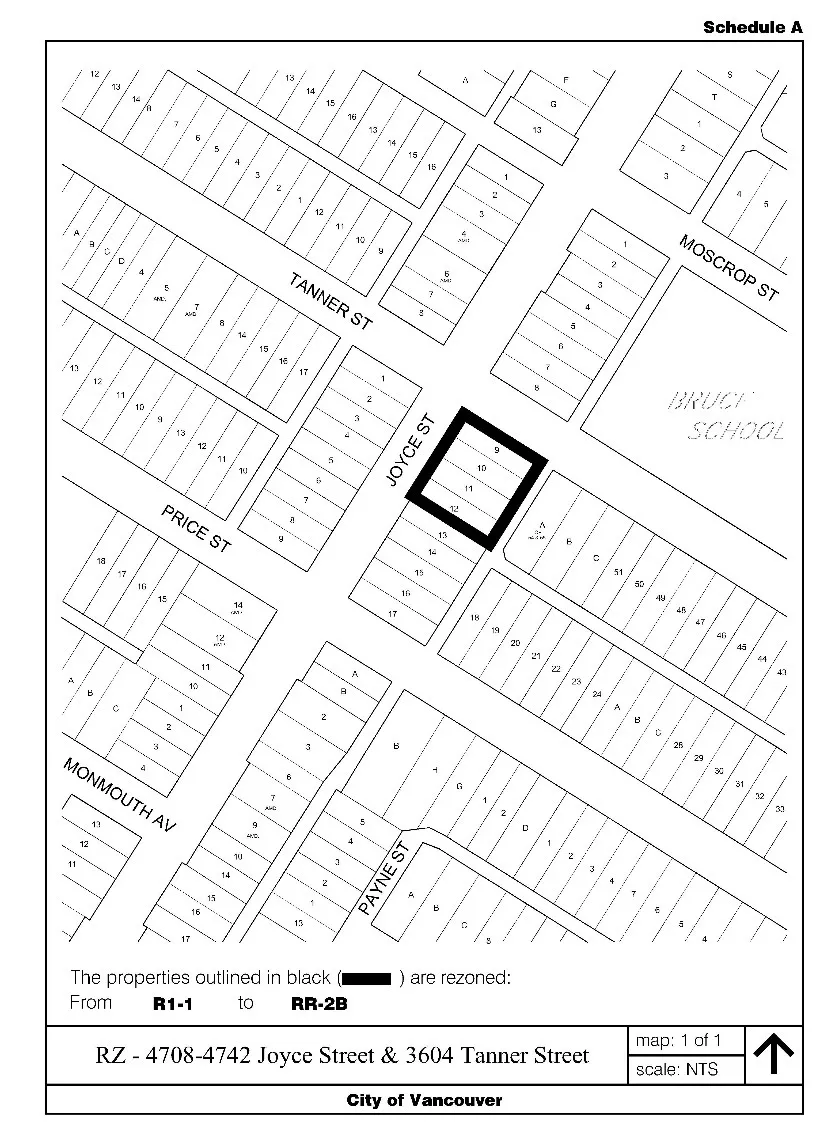
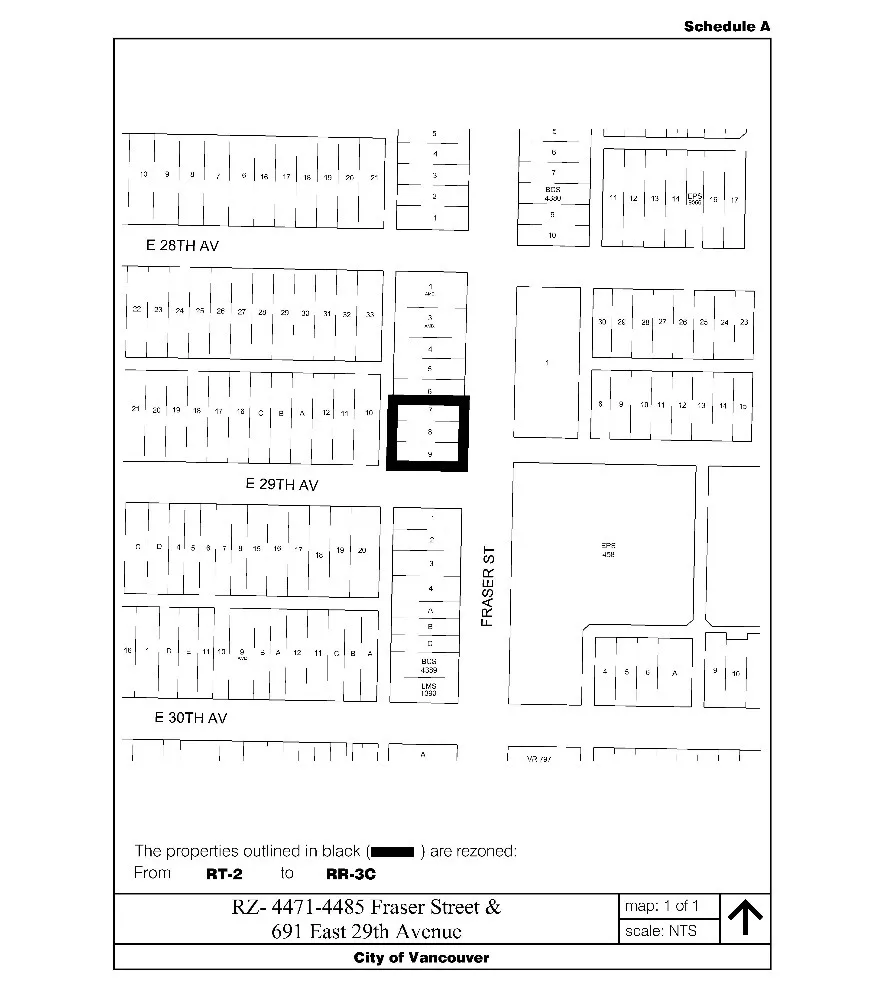
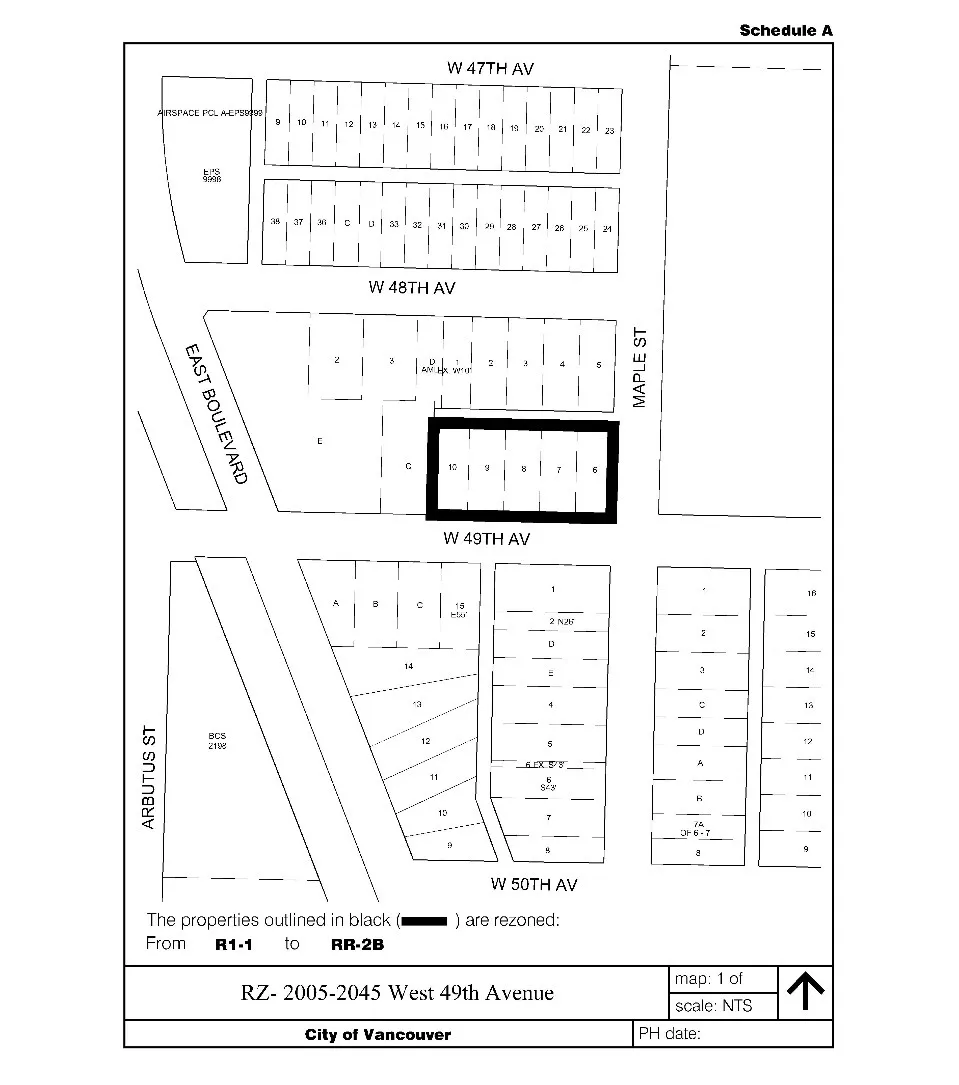
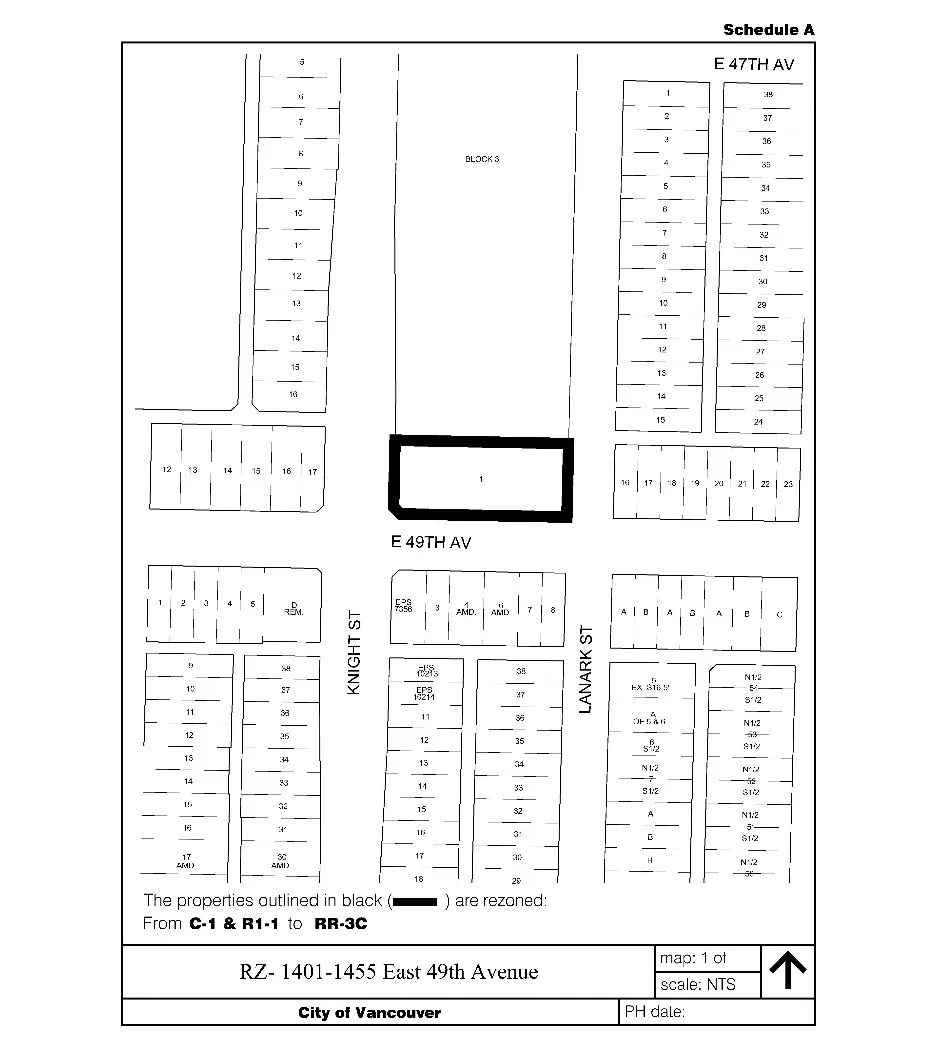
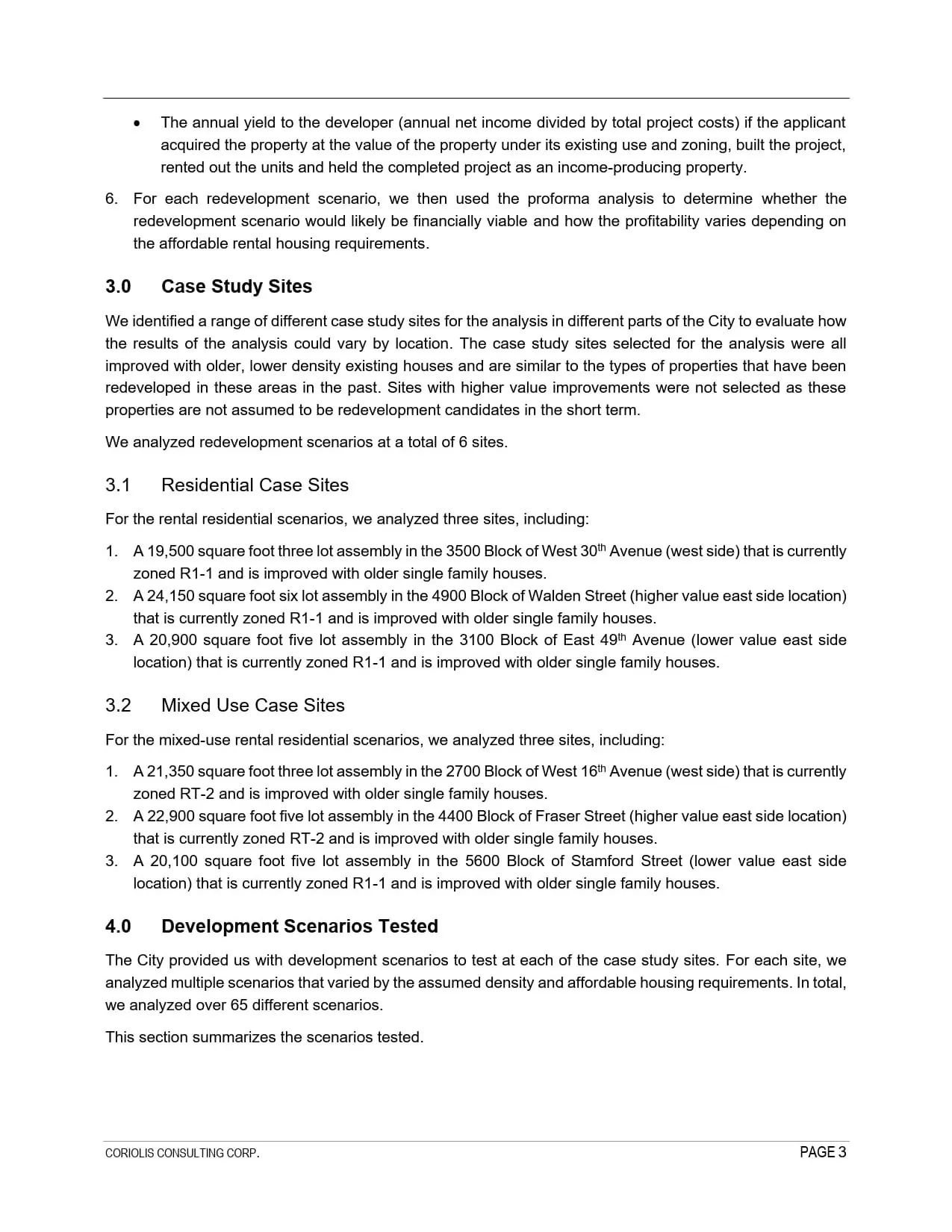
- Four specific sites across Vancouver would be rezoned under the updated RR framework: Joyce Street/Tanner Street (to RR-2B), Fraser Street/East 29th Avenue (to RR-3C), West 49th Avenue (to RR-2B), and East 49th Avenue (to RR-3C); previous rezoning approvals in principle for these sites would be replaced by the new approvals.
- The RR zones require all residential units to be secured as long-term rental tenure through Housing Agreements registered on title — no strata conversion or sale of individual units is permitted.
- The streamlined RR rezoning process is intended to reduce complexity and approval timelines compared to site-specific CD-1 rezonings, providing developers with greater certainty and supporting the City's 3-3-3-1 permitting targets.
- The General Manager of Planning, Urban Design and Sustainability recommends approval, noting the changes are consistent with the Vancouver Official Development Plan and are exempt from a public hearing requirement under the Vancouver Charter.
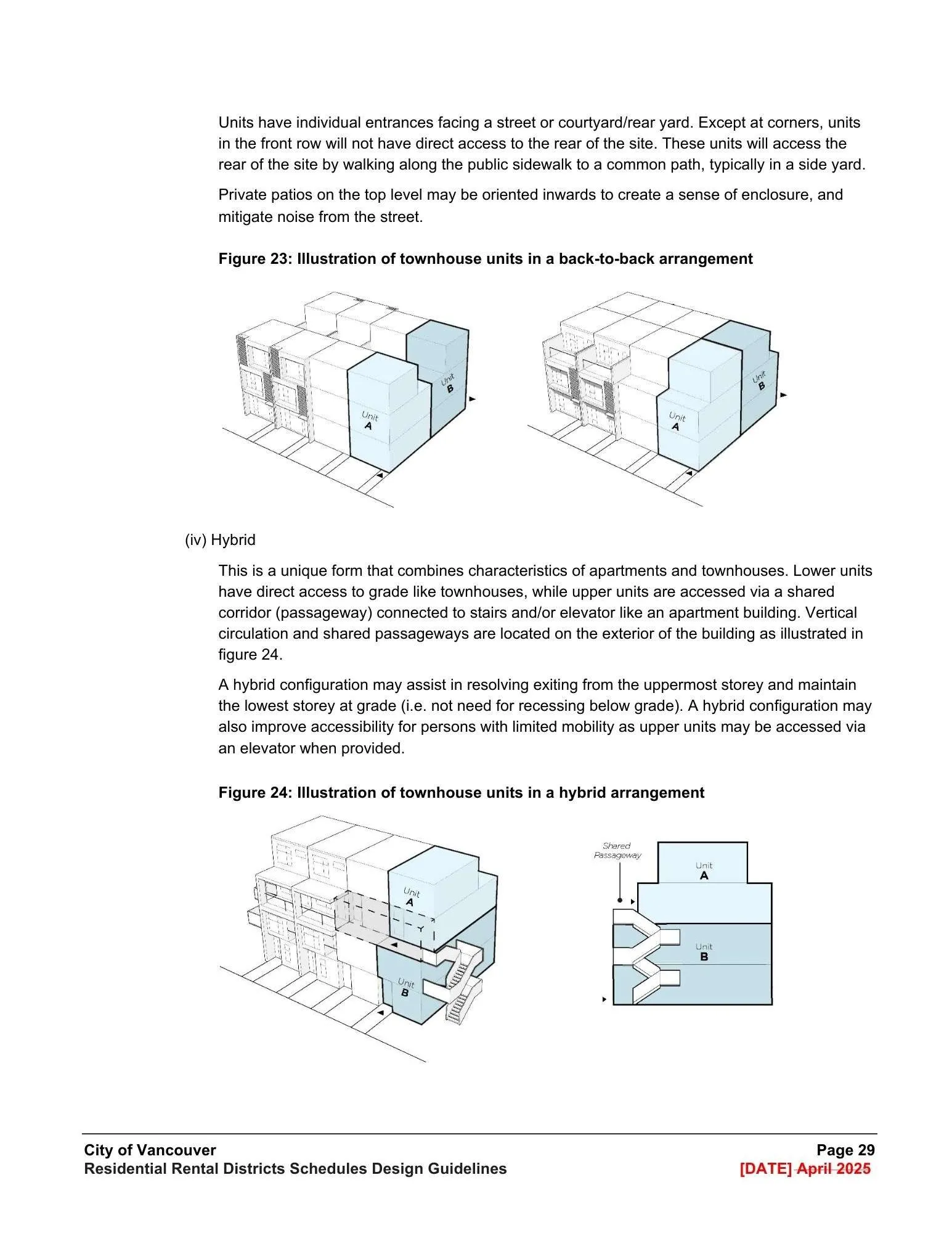
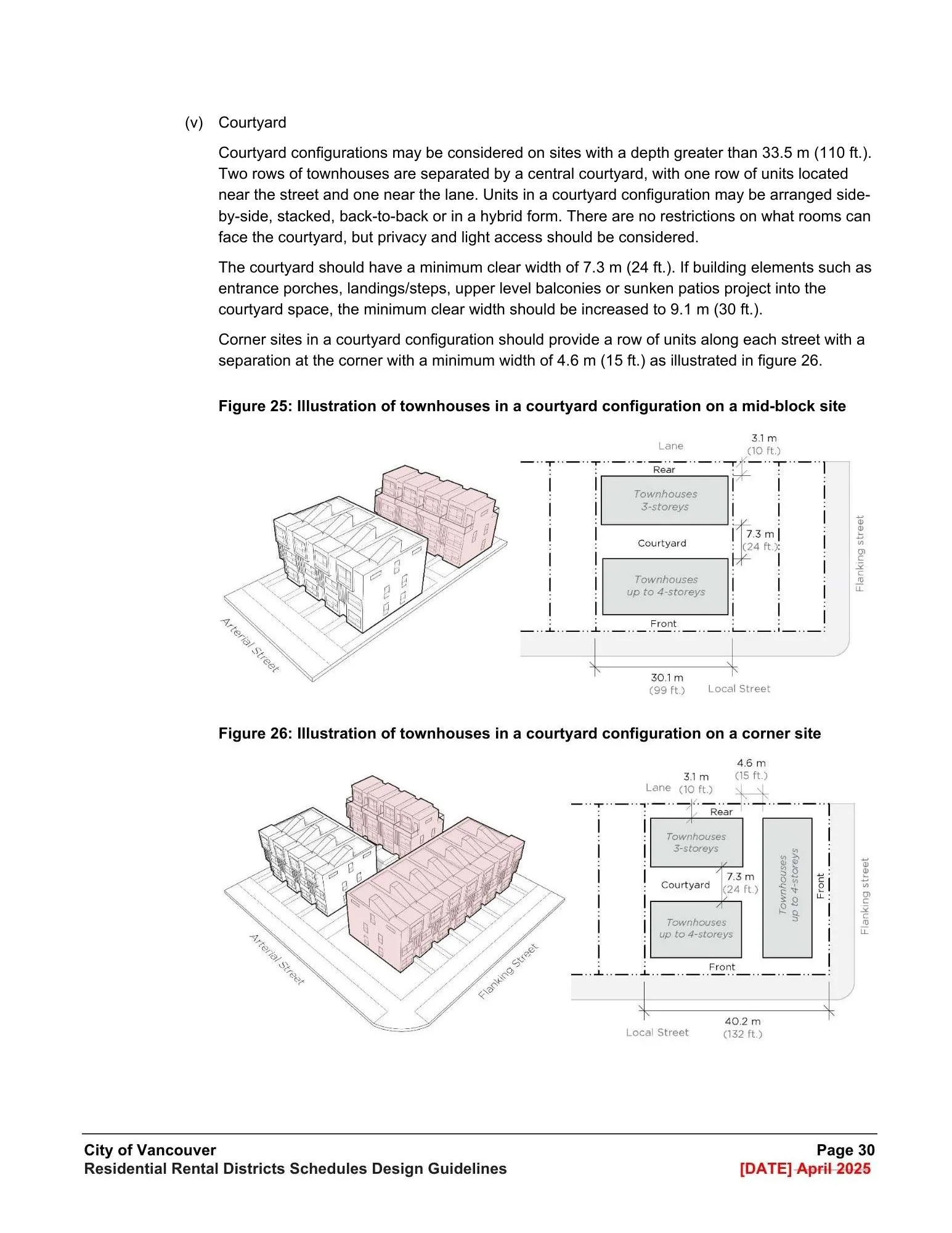
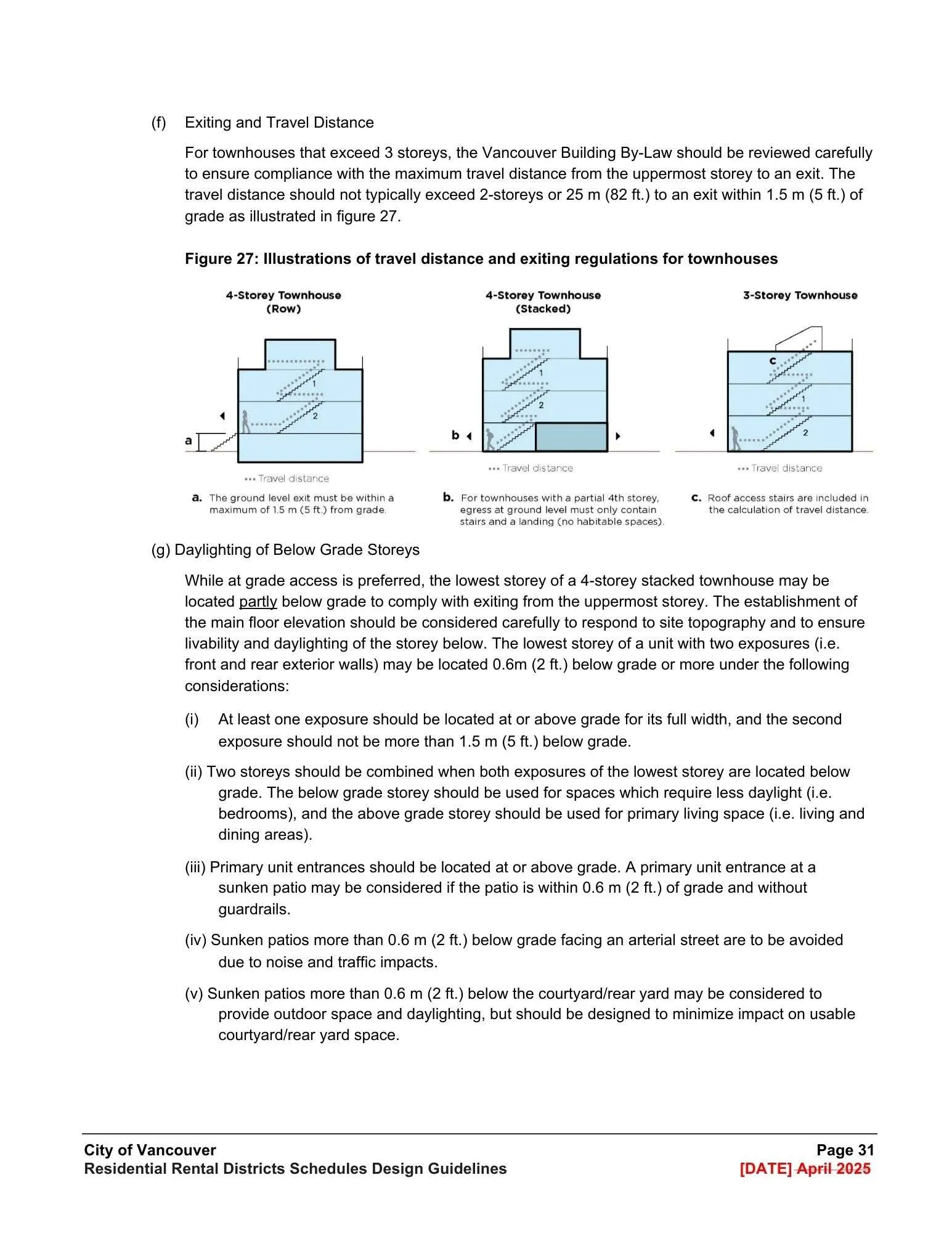
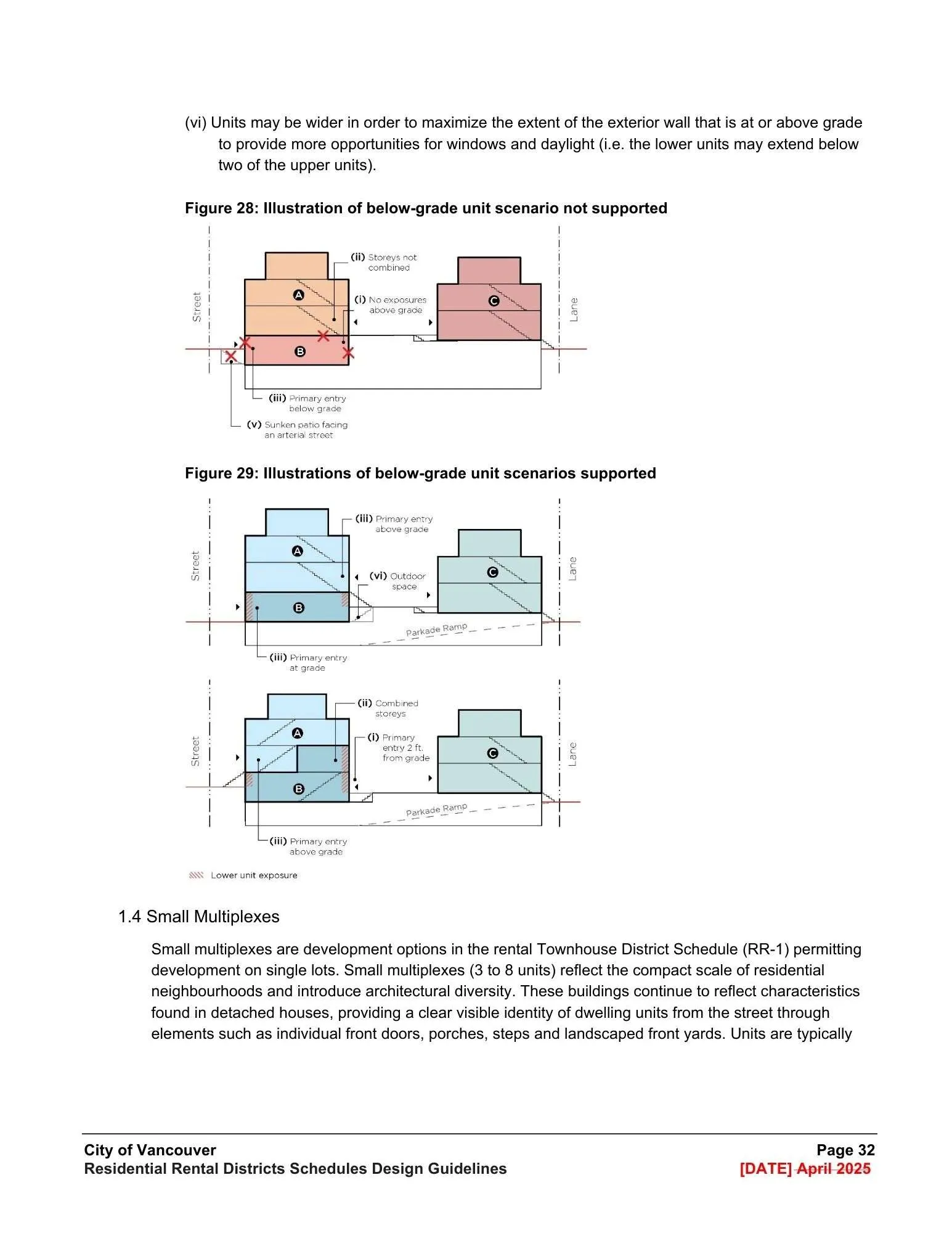
Report Images


Vote
In favour 9
Opposed 1
Abstained 1
Public comments
Read all 4 statements
Transcript
67 segments
Thank you very much. That completes item number eight. Okay, so now we are on report number 11, fast-tracking rental housing updates to residential rental districts. Before we begin, does anybody need to declare a conflict of interest?
This item does have a presentation. We do have team members here to present it, unless someone wants to waive the presentation. All right. I'm seeing no one putting up their hand.
Great. Thank you so much. Hello, Mayor and Council. I'm Maggie Moore, a planner in housing policy. Today, I'm sharing the proposed changes to the residential rental districts.
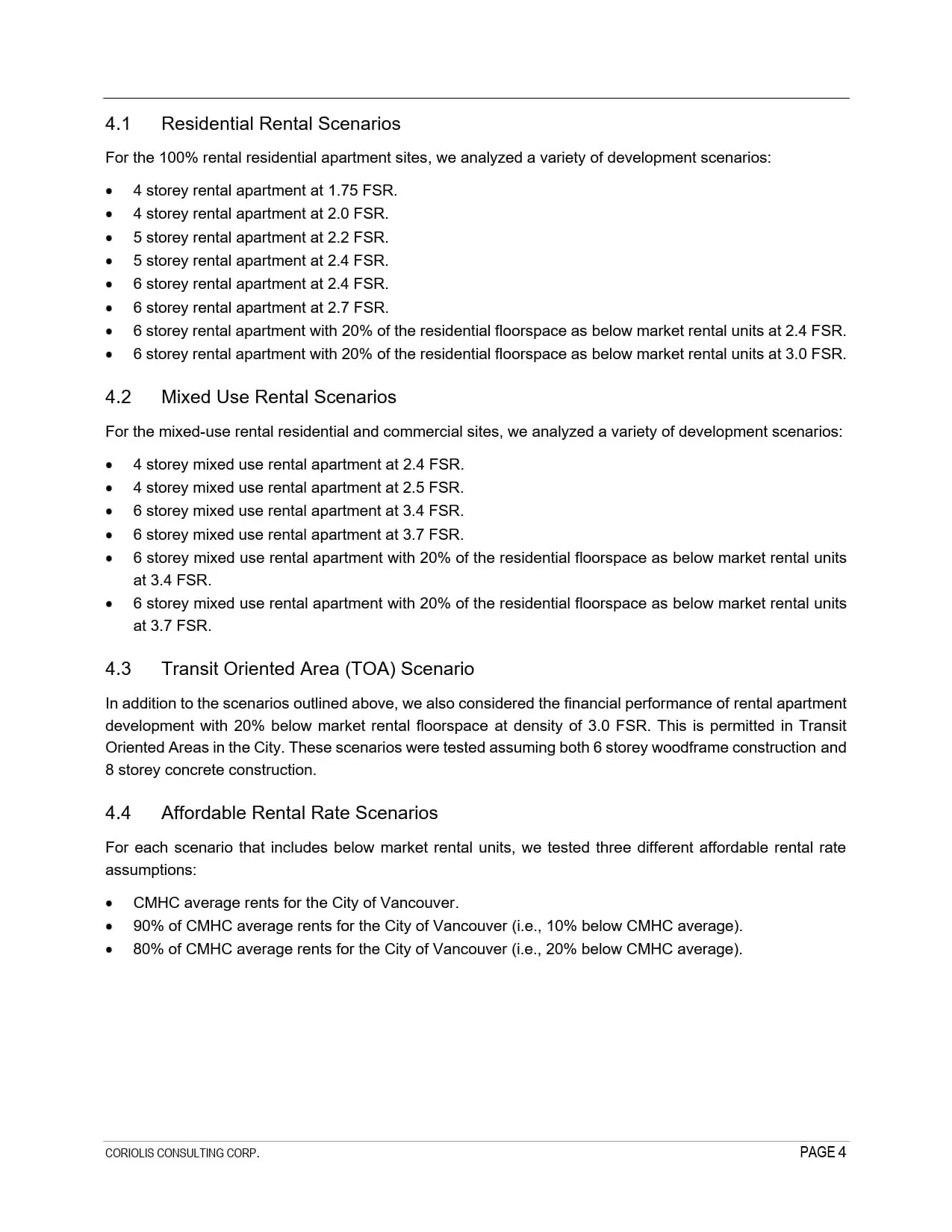
I will start with an overview of the recommendations you have in front of you today. Then I'll talk through the current state of the city's housing targets, the city's policy objectives that relate to this proposal, as well as where we're at with our current residential rental districts. Then we'll get into today's recommendations, which are the proposed updates to these districts. I'll talk through engagement and what we've heard as well as a summary and next steps. So looking at the recommendations you have, recommendation A includes changes to the RR2 and RR3 district schedules, including removing below-market rental requirements for fully residential development, removing or reducing requirements in mixed-use developments, and allowing up to eight stories in the RR2 districts to be compliant with TOA legislation. Recommendations B and C include applying the district changes to four current in-stream projects. Basically, we're slotting these four projects into the correct district schedule to support their development viability. This also includes terminating their existing approval and principle. And then recommendations D and E include consequential changes to the secured rental policy and other bylaws and policies, including the subdivision bylaw and the signed bylaw.
So looking at the Vancouver housing targets, one of the values of the Housing Vancouver strategy is for housing to respond to the diversity of people and households that call Vancouver home. To measure this, the 10-year housing targets outline the specific type and quantity of housing planned. The overall goal is for 83,000 units. Today, we're focusing on these two middle categories of rental housing that are highlighted here. The purpose-built below-market rental and purpose-built market rental, representing 43% of the city's overall target. And while we've been very successful in developing new units and enabling supply through zoning, there's been difficulty in the market delivering deeper affordability, especially in these low-rise districts. We'll share data throughout this presentation on what types of projects we've seen approved and make it to construction in the residential rental districts. Overall, we've seen that delivering below-market rental through private development in these low-rise zones can be very difficult and only shows viability in certain types of projects in certain areas of the city. Delivering more of these types of projects could require a greater investment from different areas of government, and we need to continue to work on partnerships with other levels of government on the ability to deliver below-market rental units.
So looking at what's been approved so far, close to 50 projects in the residential rental districts have been approved since the districts came online in 2021. These projects include close to 3,500 secured rental units. However, only 5%, which is a very small portion of these units, are below market. The status shows that the secured rental policy in the RR districts have been really successful in delivering market rental, these low-rise, middle-density housing options, but it's been difficult to get the below-market rental units. We've also seen a couple of projects canceled and many other projects coming to the city asking for added support and reduction in below-market rental units. There are a few reasons why this has been the case, including increasing costs of development. This slide is not showing any new information. We know that there have been rising costs of construction. These rising costs are making it increasingly difficult to deliver the secured market rental housing, and even more so for projects that have the below market rental included. And as mentioned on the last slide, while units have been approved, we're seeing the rising costs of construction continue to make it difficult to deliver these units. Since 2021, no BMR units have been delivered from the residential rental districts. And while some, close to 50 units, are currently under construction, many others are failing to get to the construction phase.
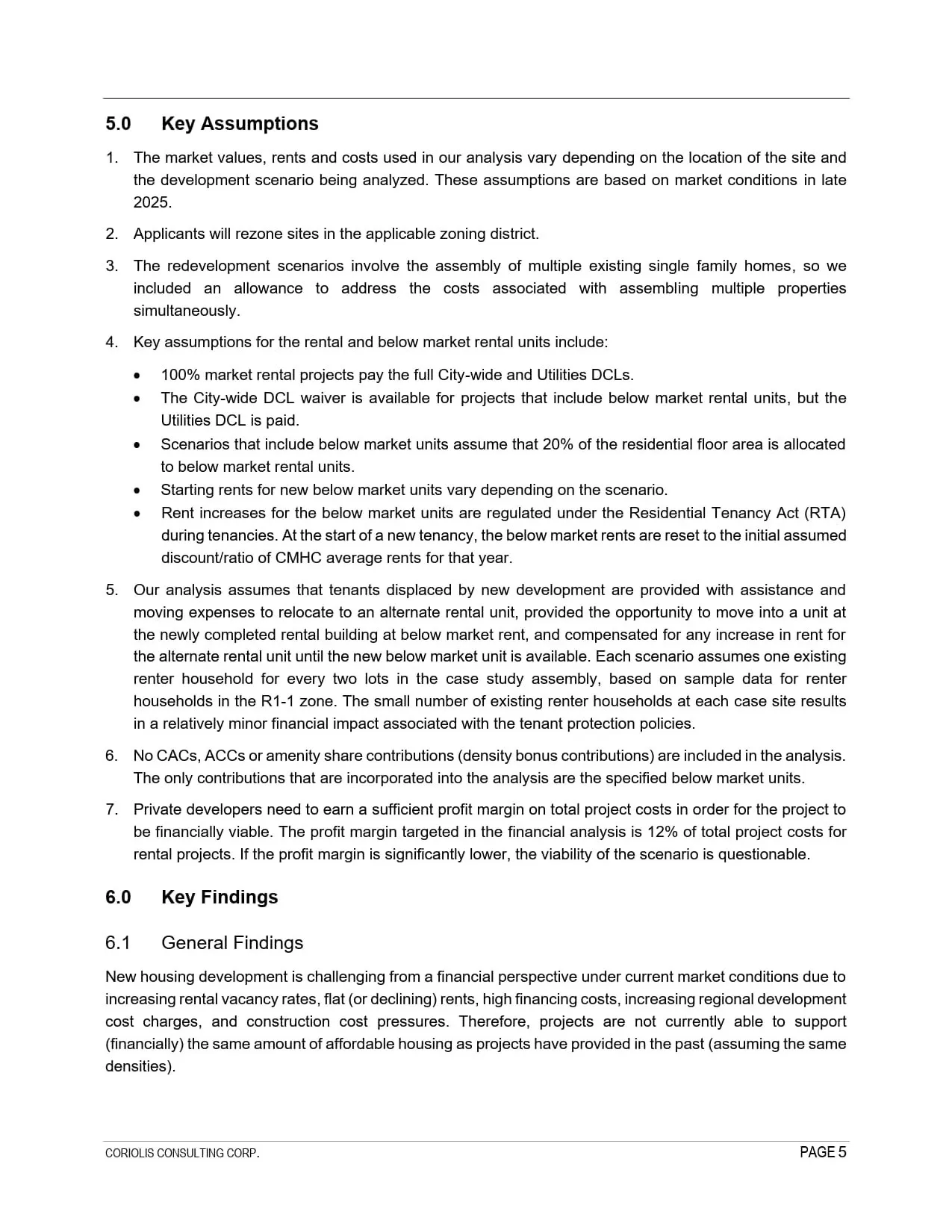
So looking at it from a policy context, based on the data and the projects we've seen, we're proposing changes to the residential rental districts to ensure that the projects can continue. These changes are being proposed under the secured rental policy developed in 2019 to promote the development of secured market rental housing and the development viability report, which was brought to council in December 2025, which proposed a set of measures to address immediate development viability challenges, including this one.
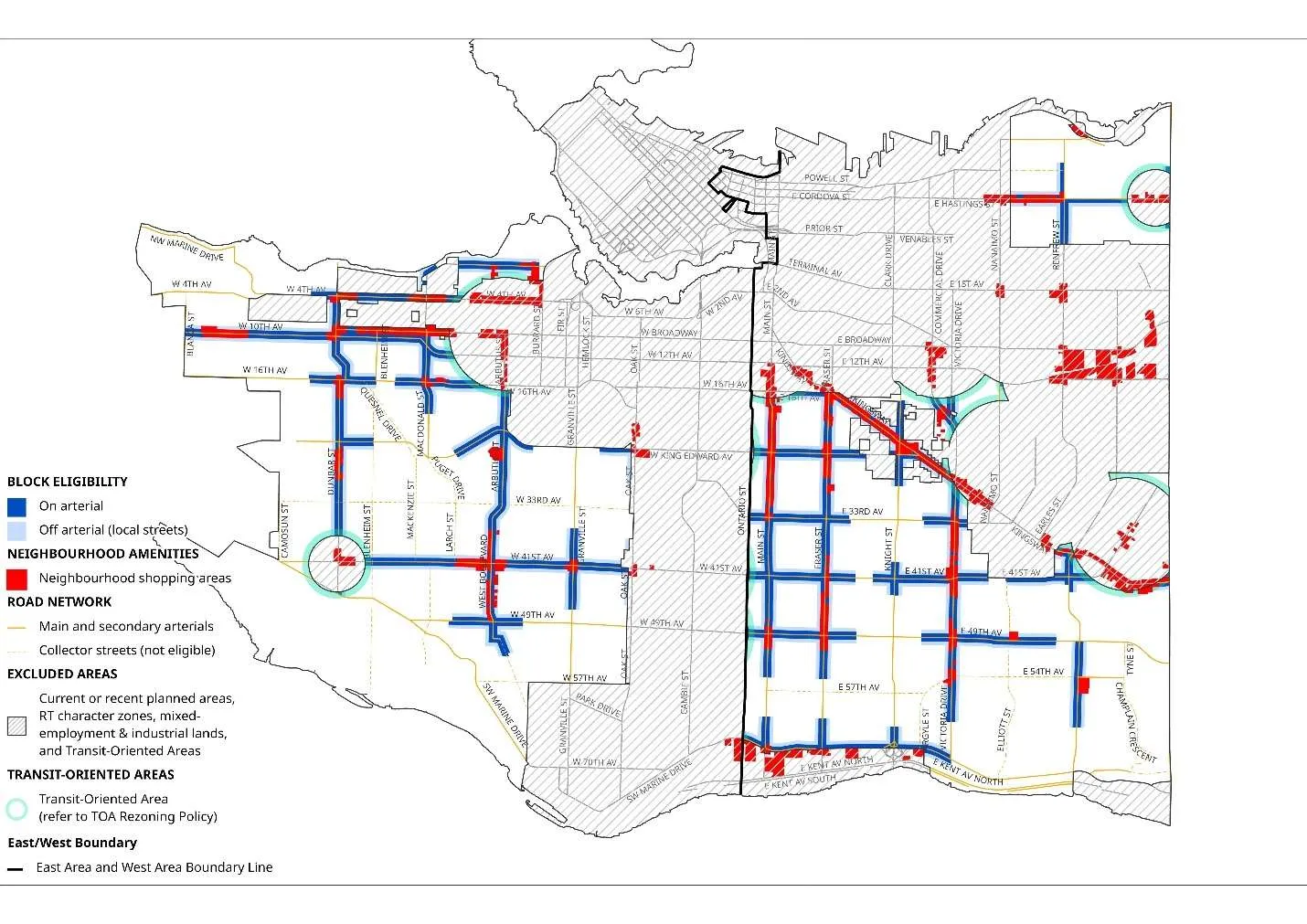
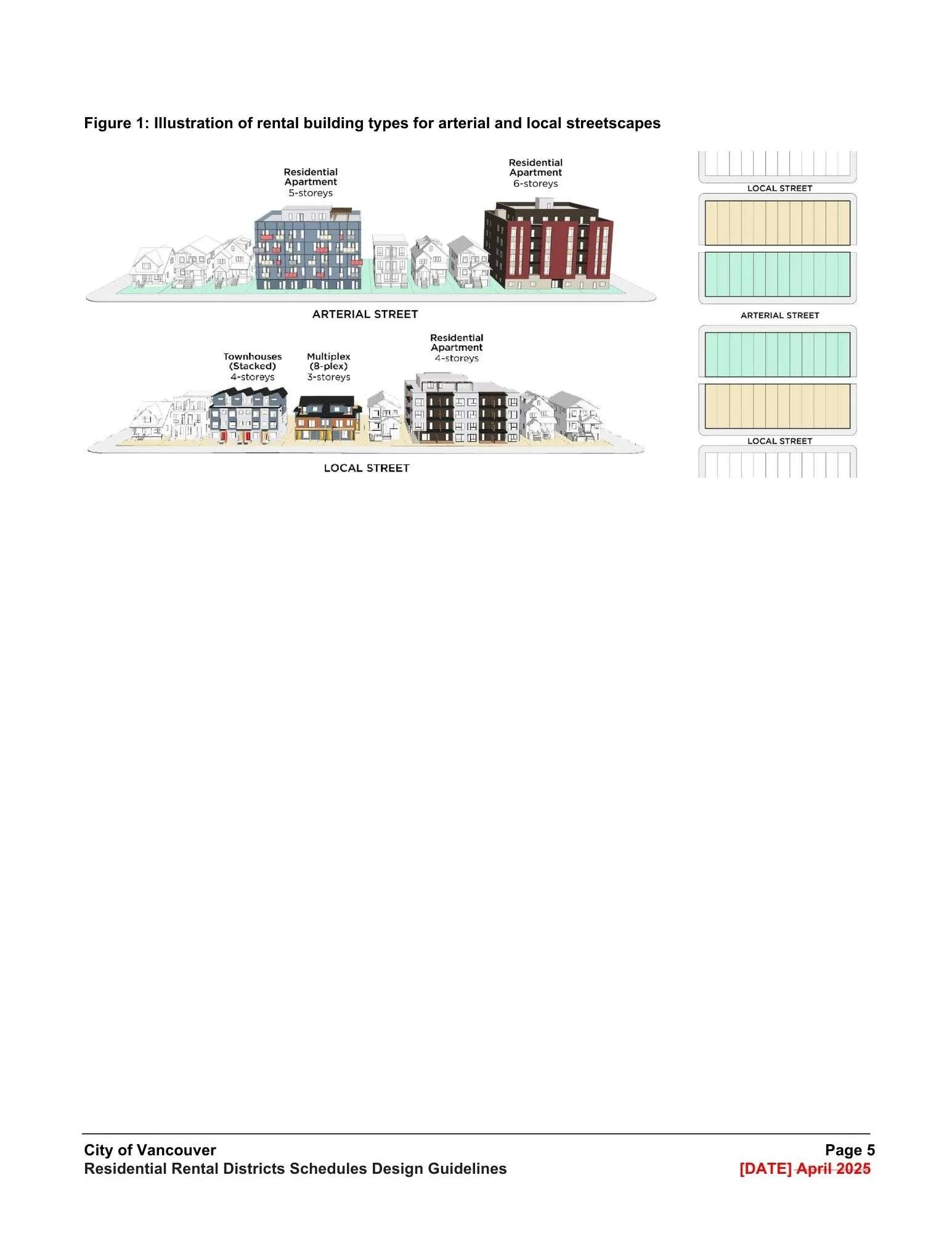
In December 2021, Council approved amendments to the secured rental policy to create new rental residential districts near shopping and transit. Similar to other standard zoning districts, the RR zone set regulations such as permitted use, density, and height limits while allowing for a range of building designs. All residential uses in the RR zones are secured as rental tenure and no stratification or sale. of individual residential units is allowed. These requirements are secured through housing agreements. And the RR districts include options for four to six-story fully residential and mixed-use developments. The aim of allowing these projects is to develop complete communities, including the options on retail streets that allow for retail on the ground floor and apartments above to support these neighborhoods. When the zones were created in 2021, all six-story projects and arterials were required to provide below-market rental units based on the financial testing done at the time.
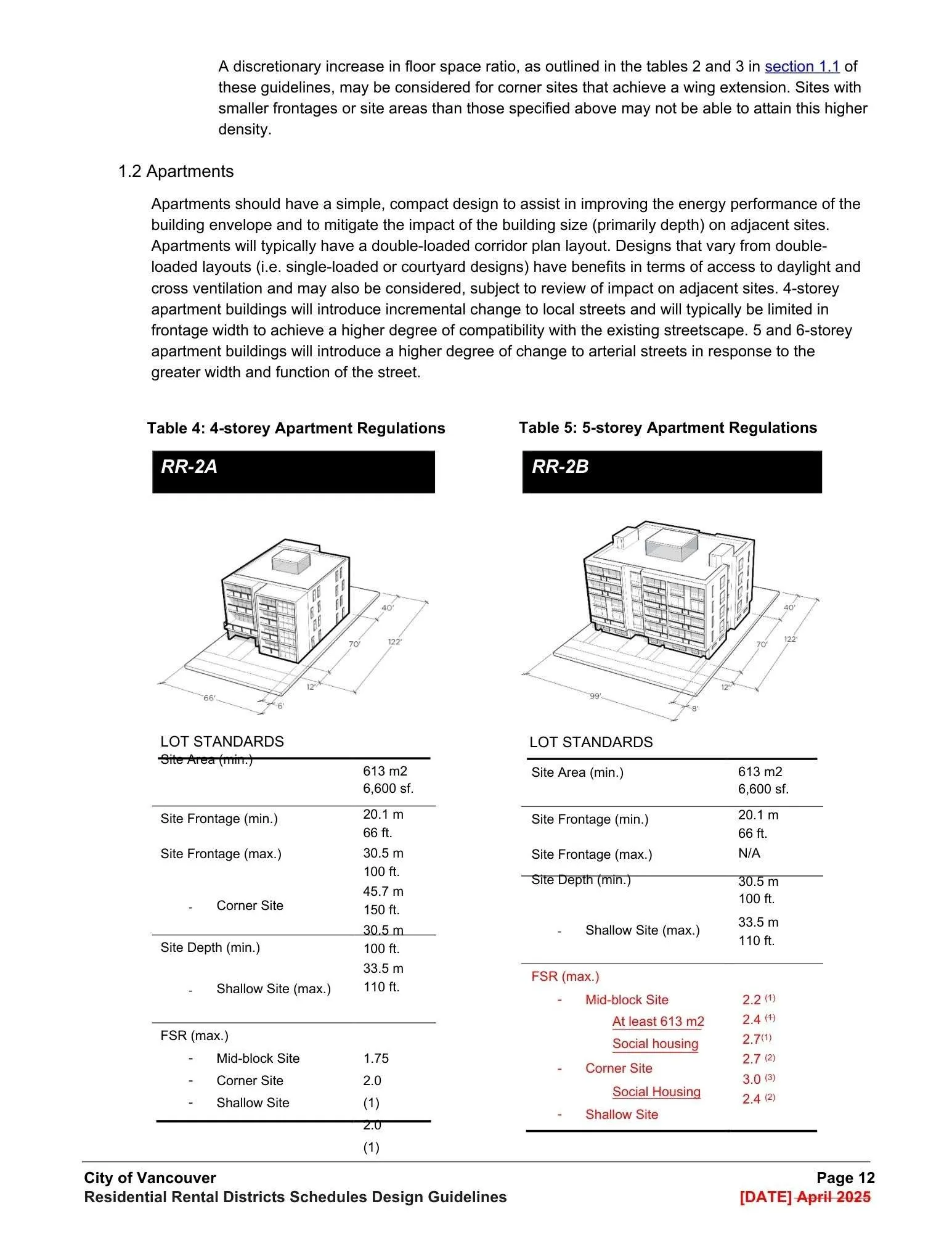
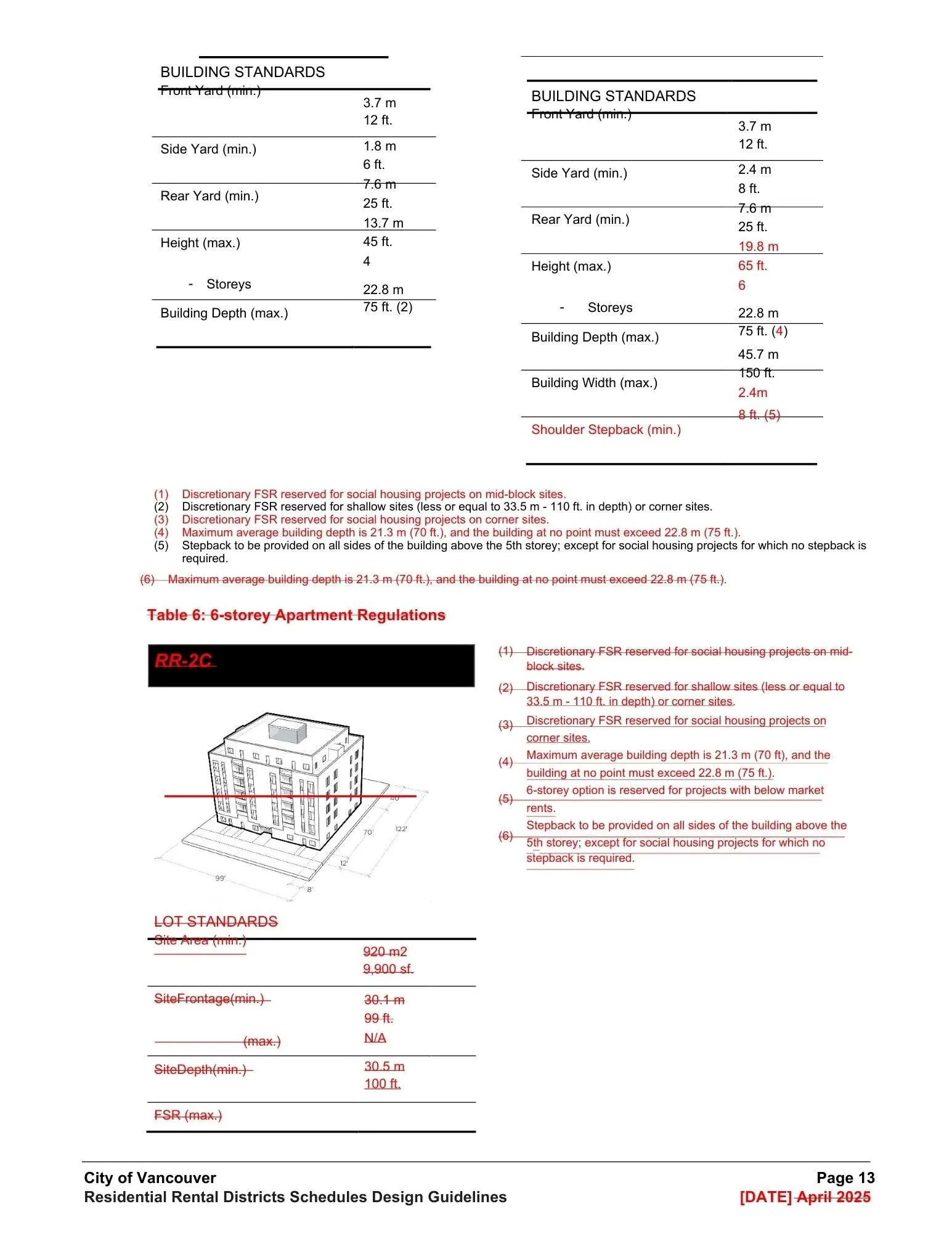
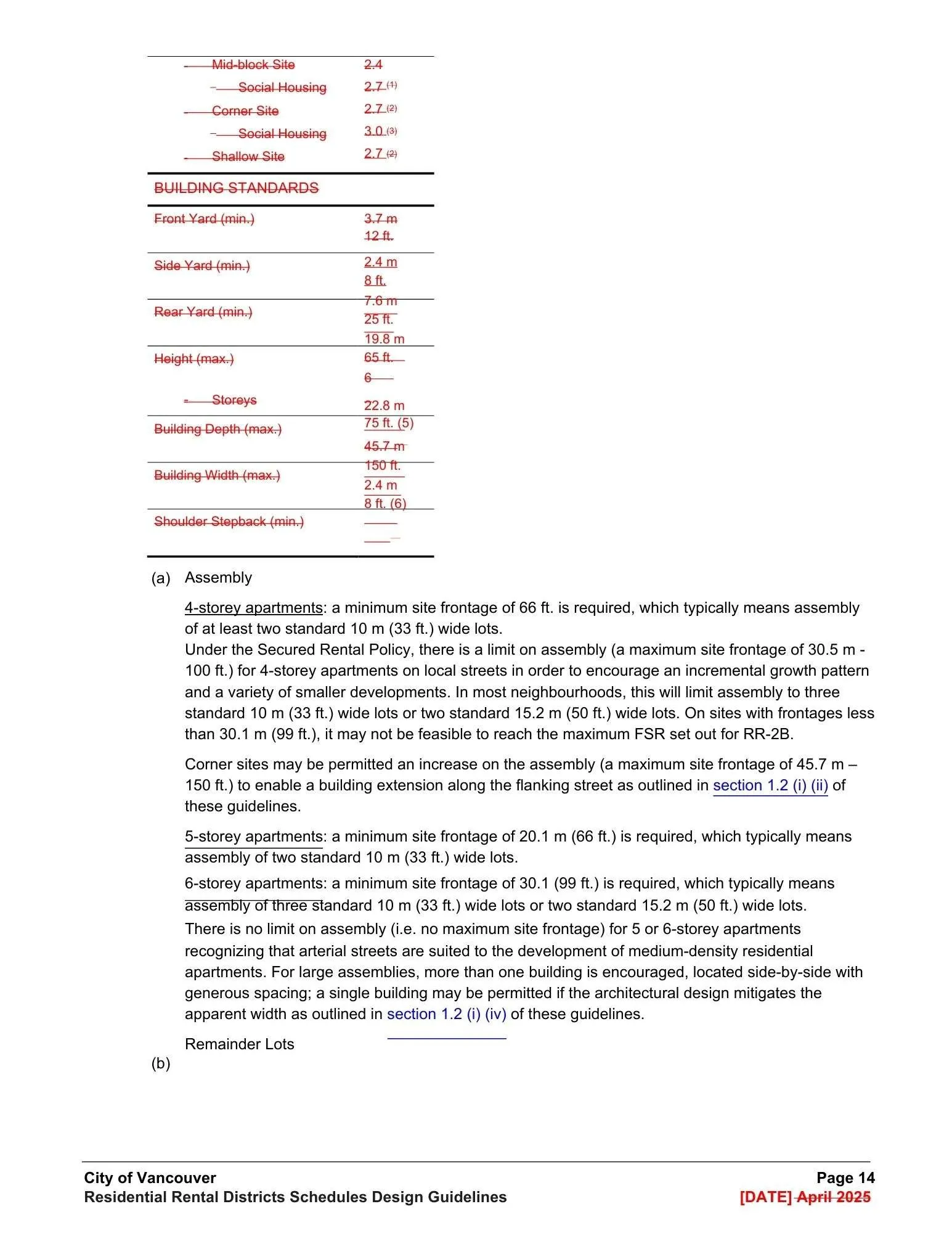
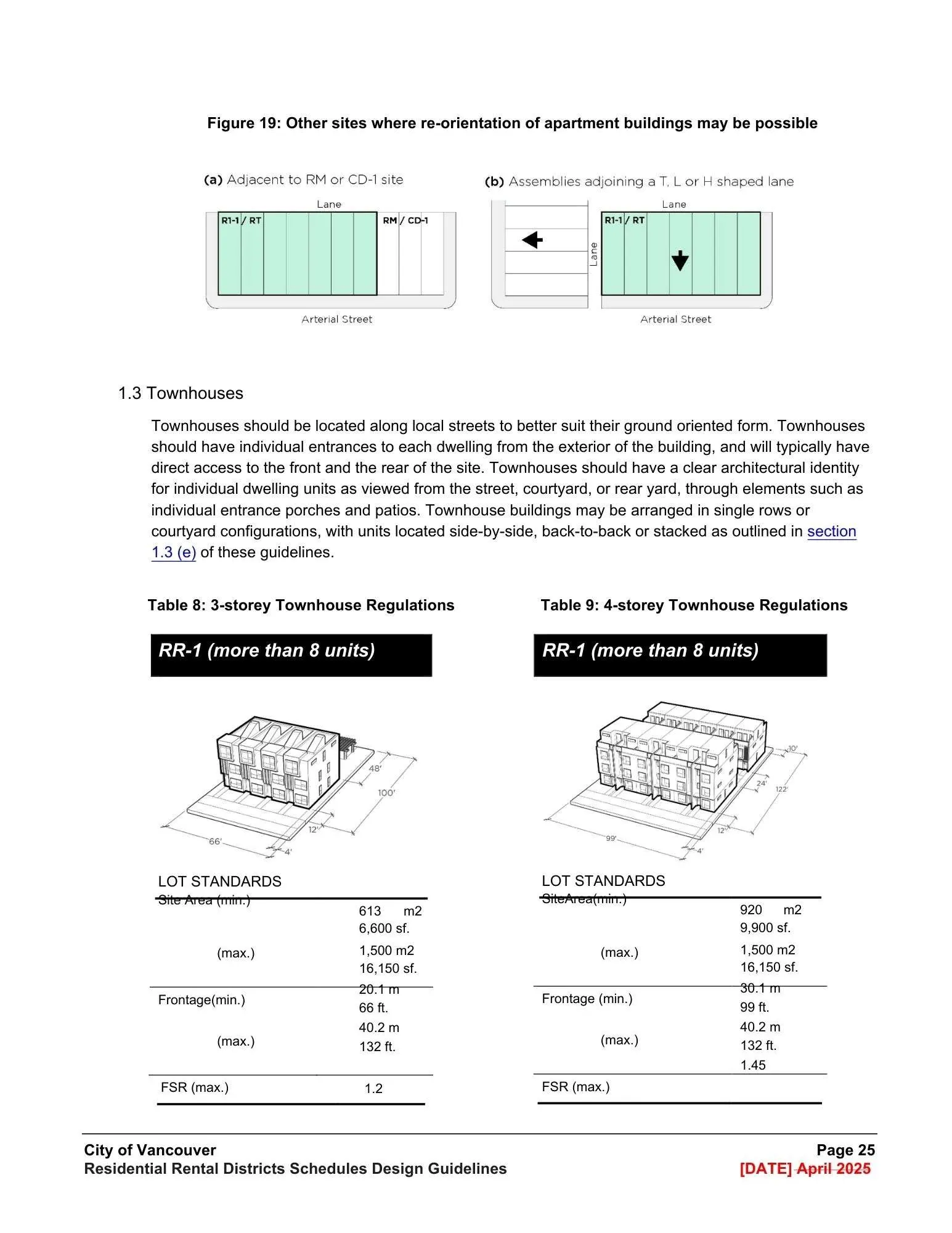
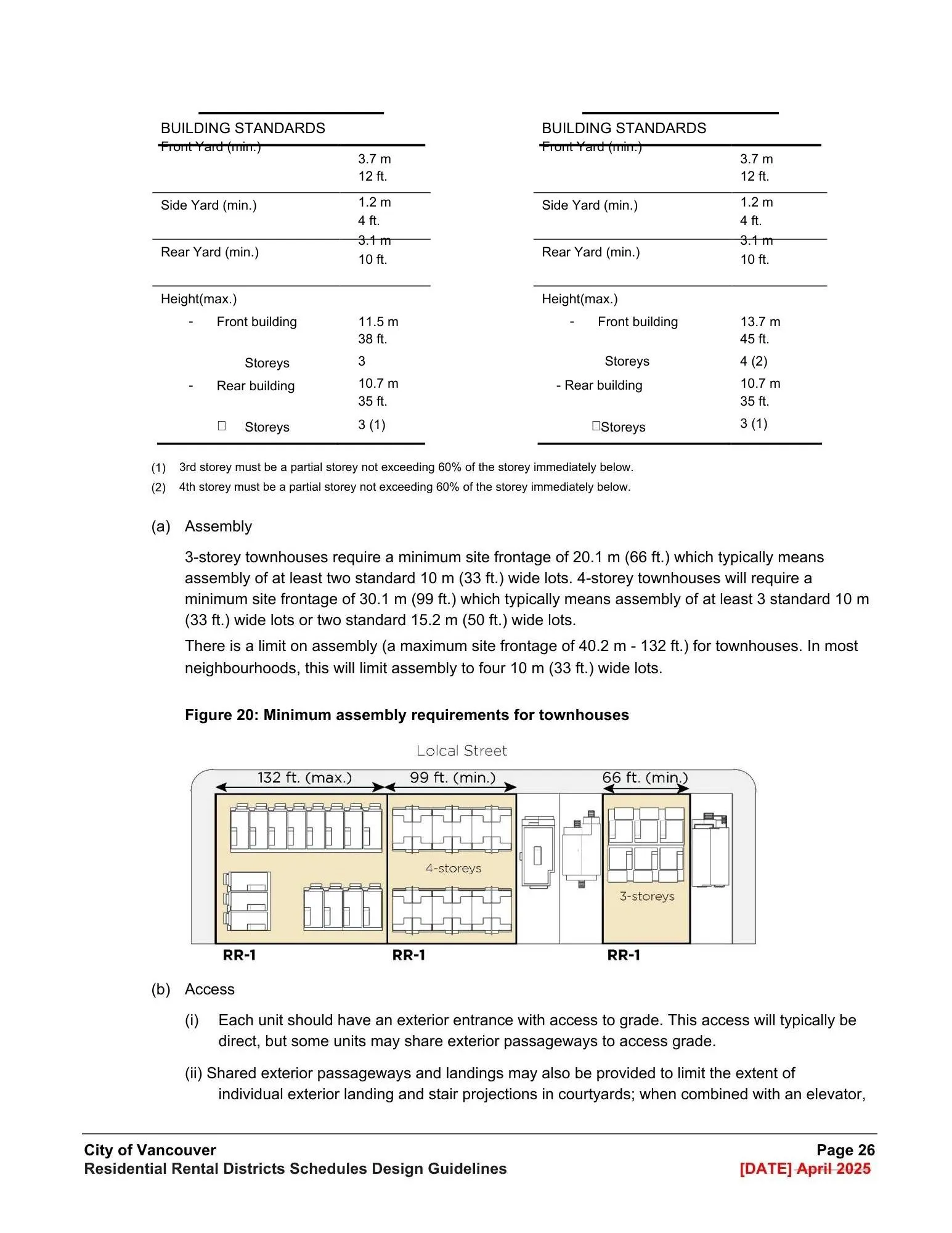
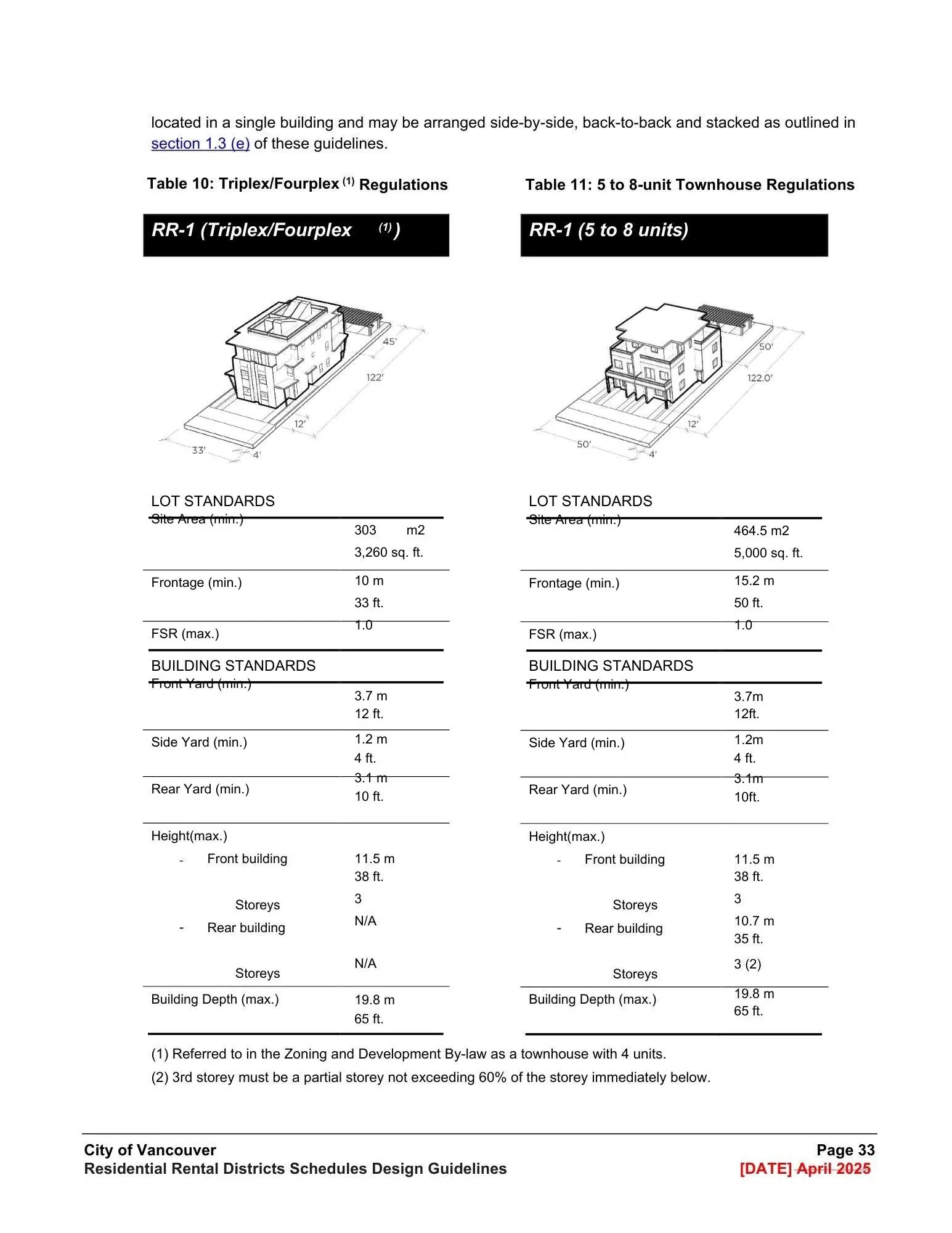
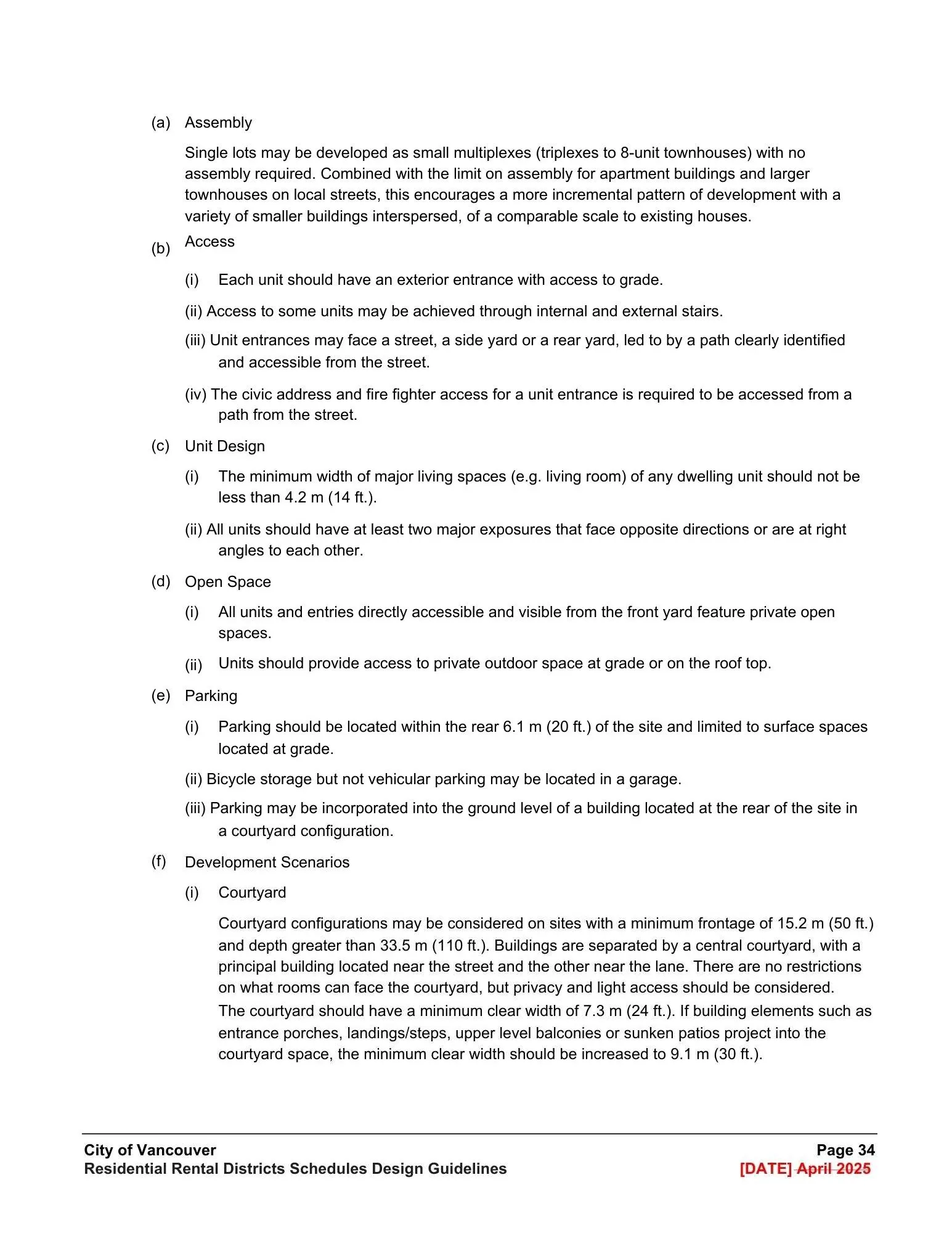
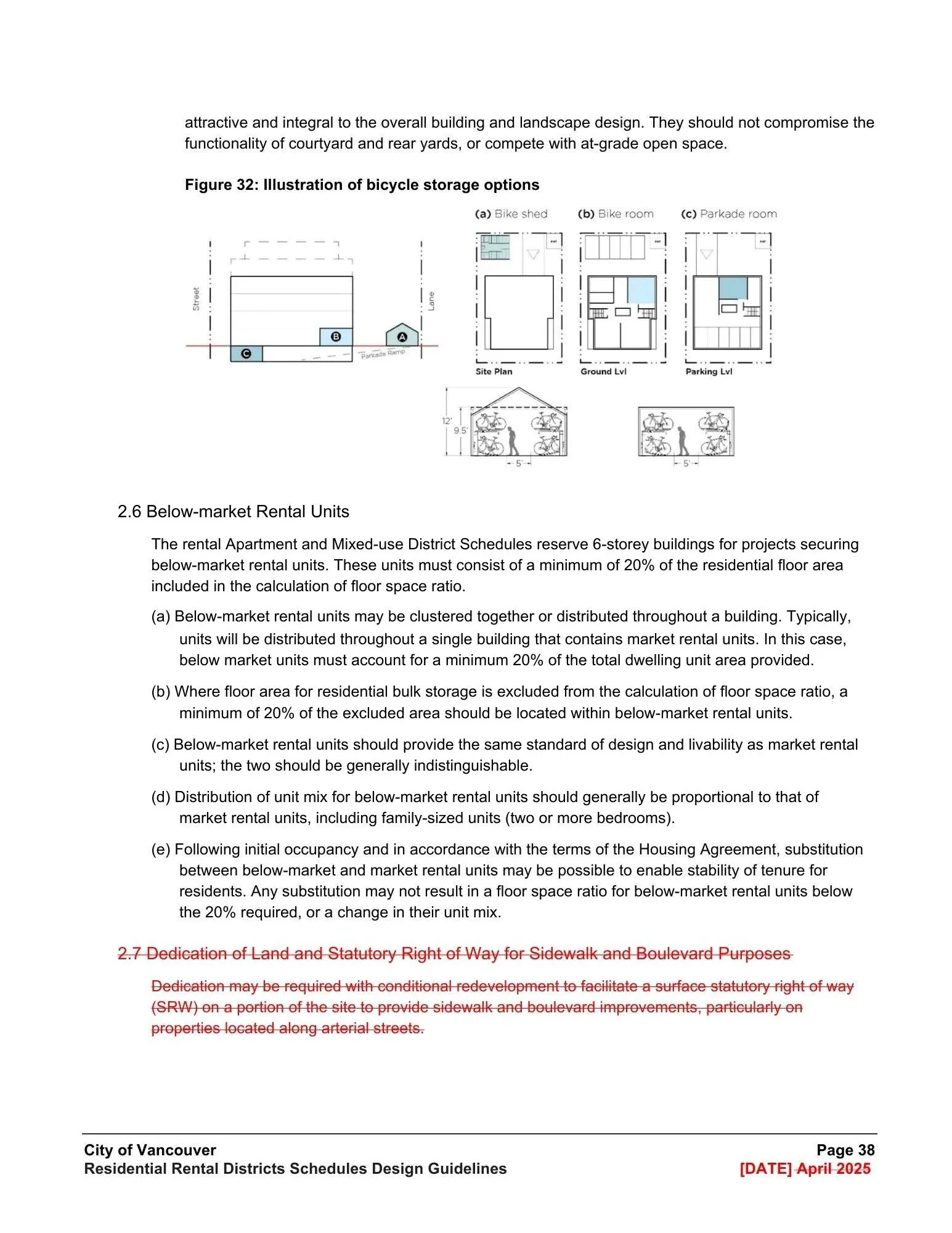
So I'm going to go into a little more detail on what the districts look like and what the proposed changes are. The RR2A, RR2B, and RR2C district schedules currently allow apartment buildings at four, five, or six stories. where all dwelling units are secured as residential rental tenure. The six-story option requires 20% of residential floor area to be secured as below-market rental.
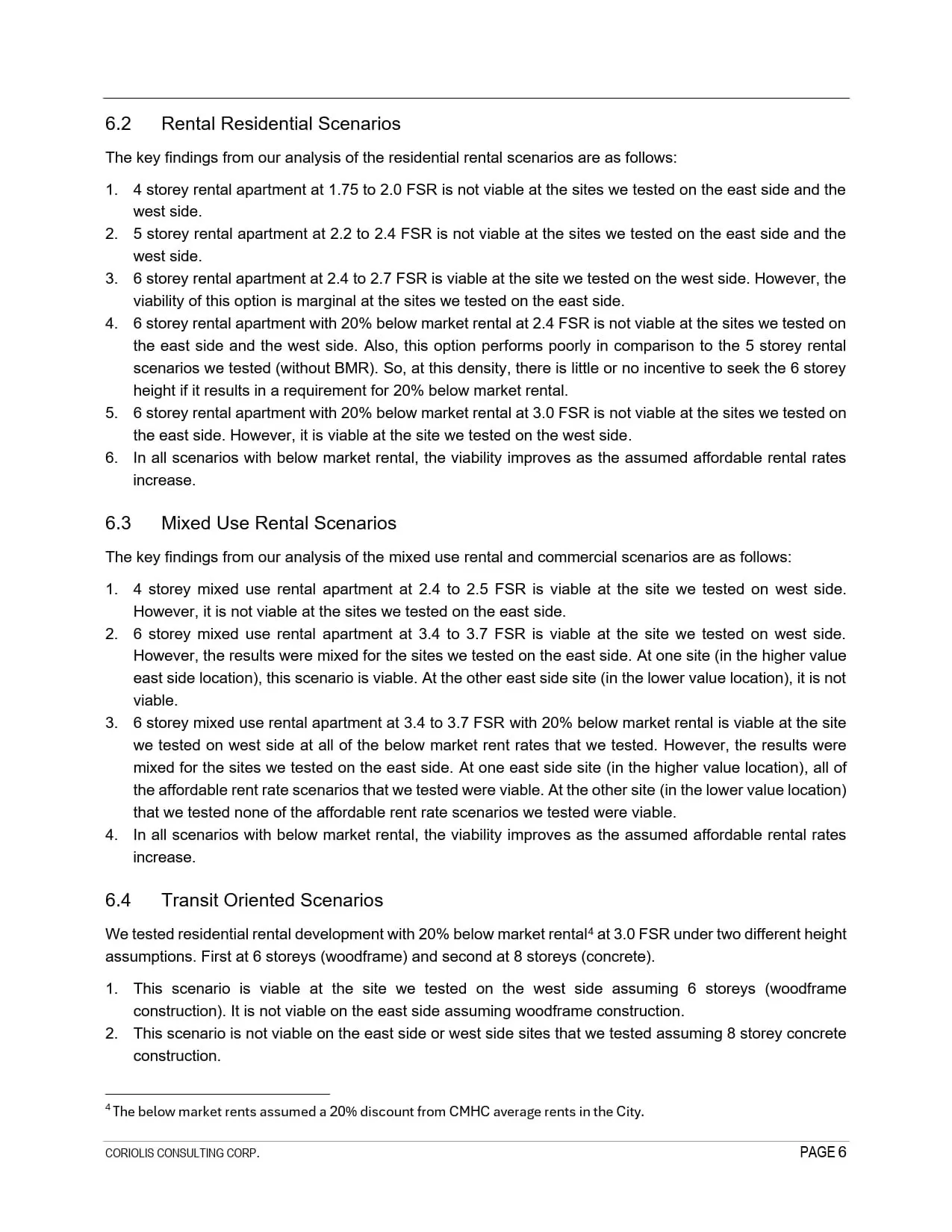
Focusing just on the five and six-story option, the RR2B and RR2C, we've seen close to 30 projects approved since 2021. However, we've seen over 10 times more projects come in under the five-story option without BMR units than the six-story RR2C option. And while we've seen some five-story projects completed, we haven't seen any of the six-story projects completed or even have their zoning enacted. Because the five-story option is being opted for a lot more frequently, we're losing out on that six-story of rental units. If all of these five-story buildings had been approved as six stories, we could have seen up to 400 more rental units approved in just a few years.
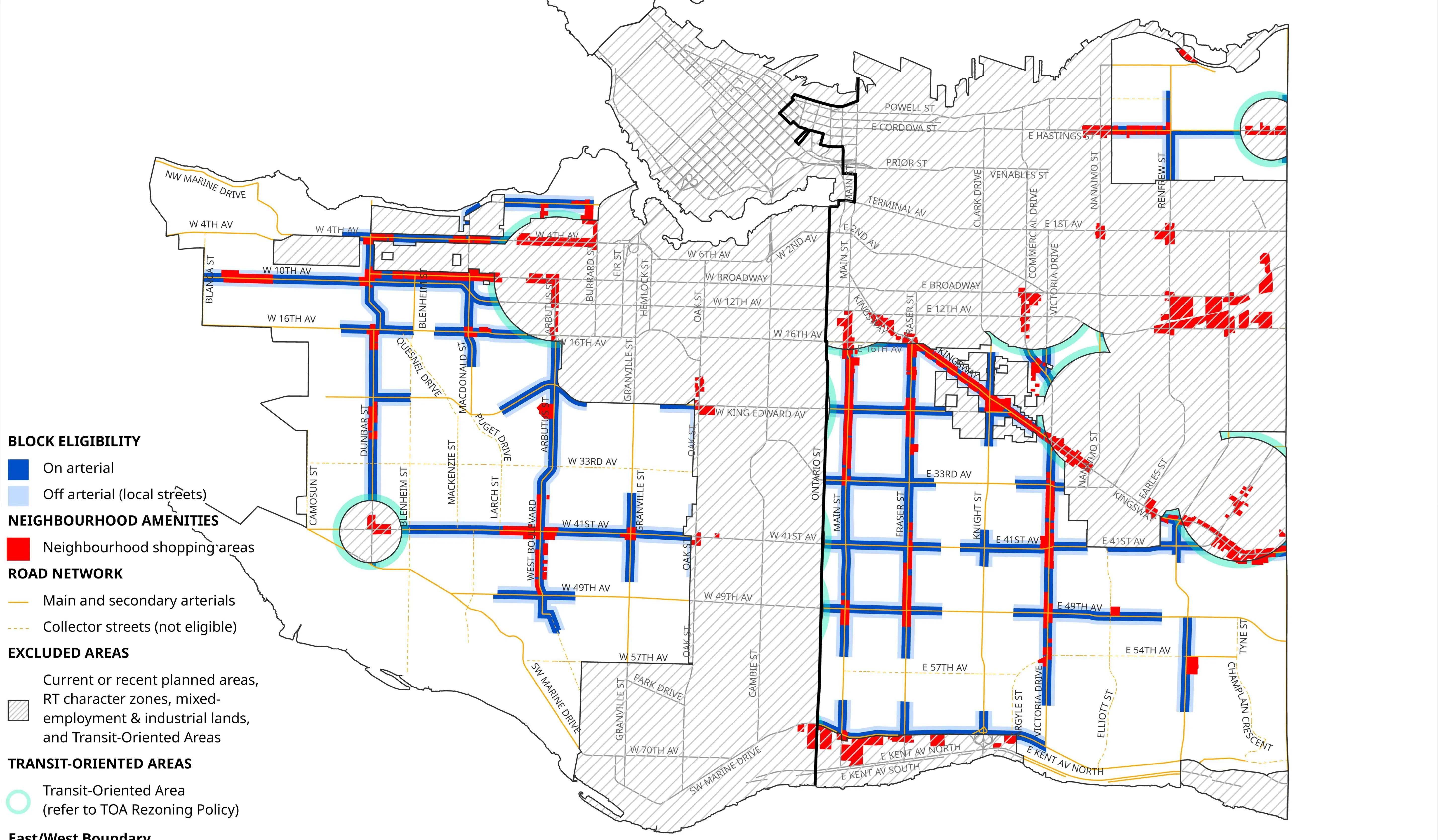
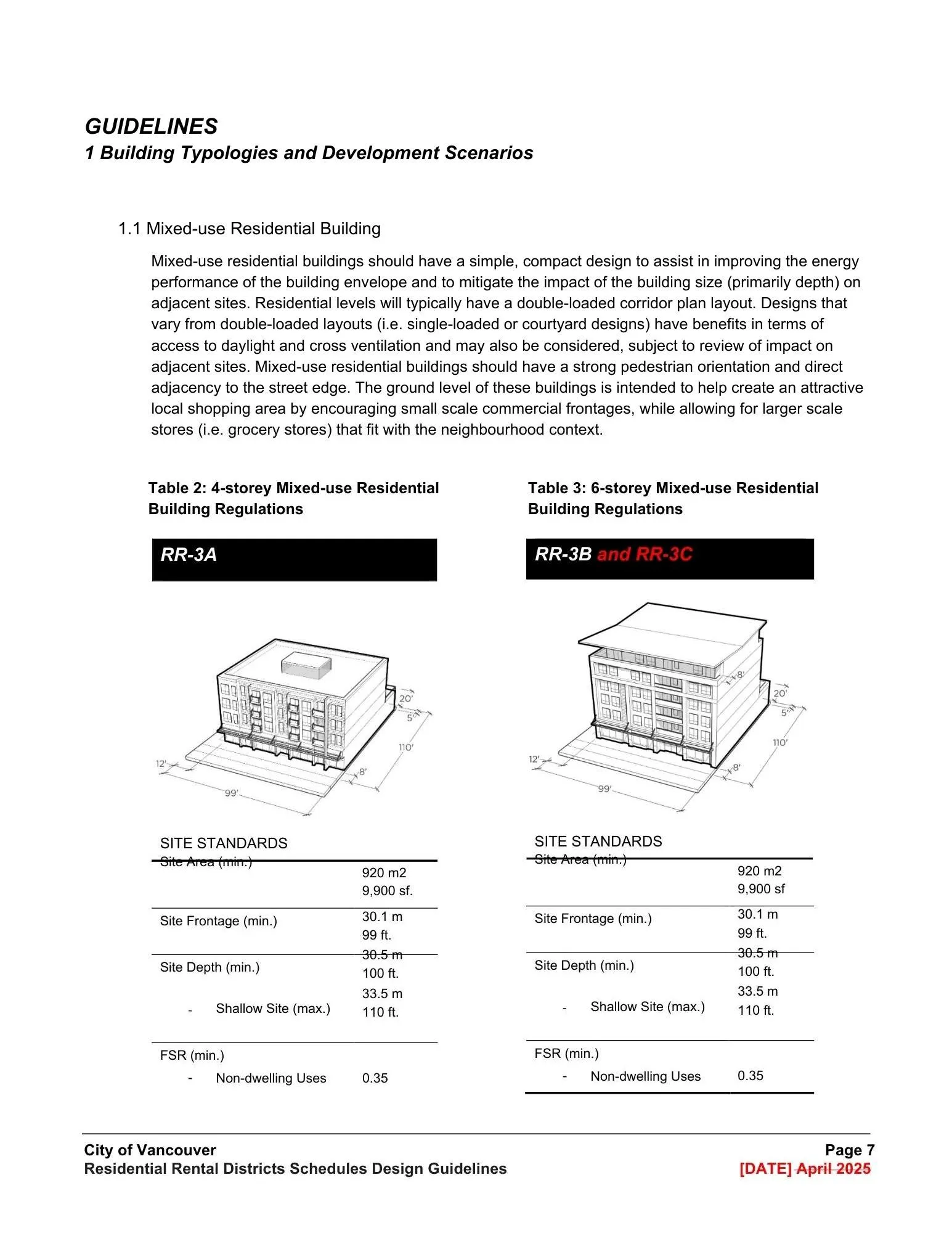
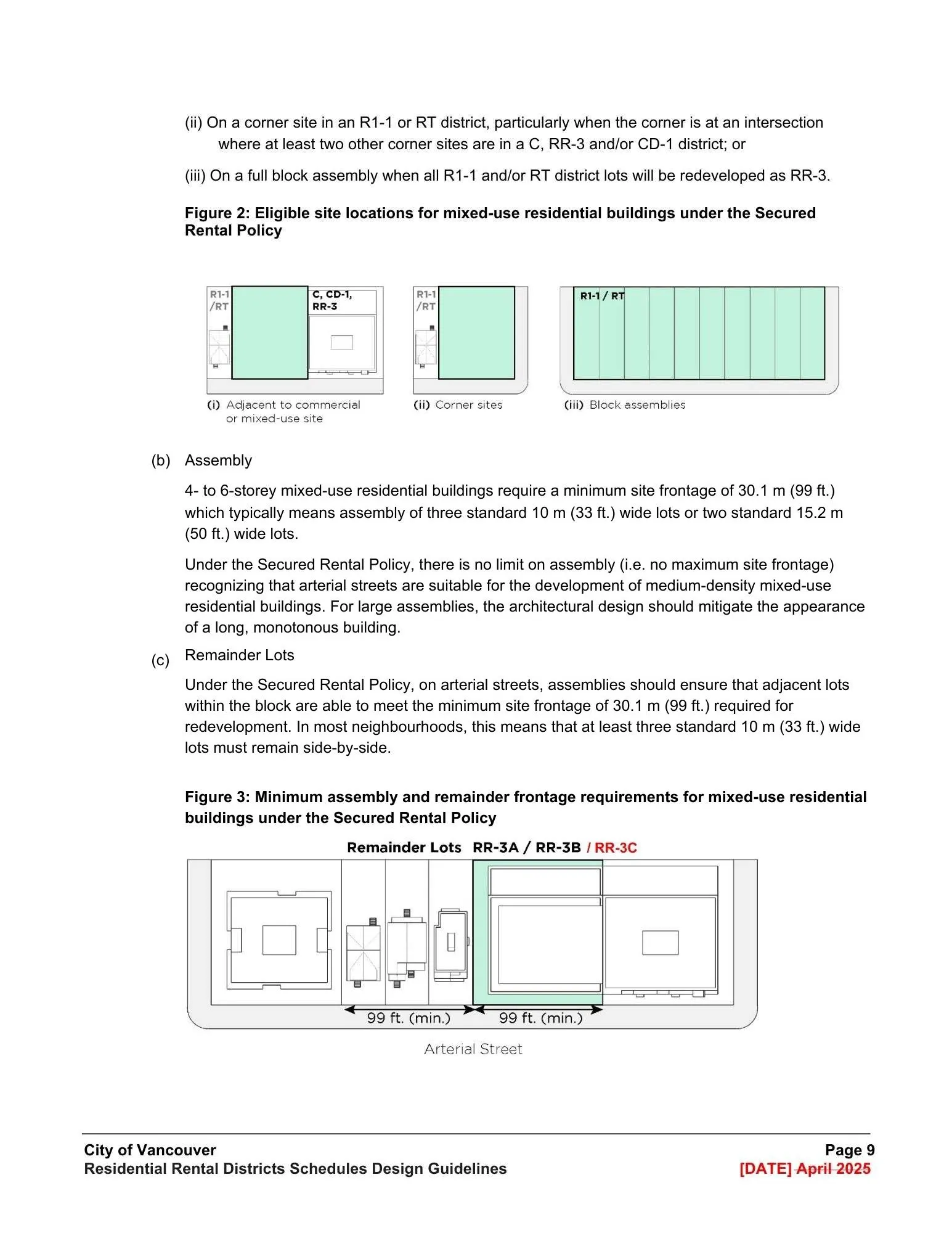
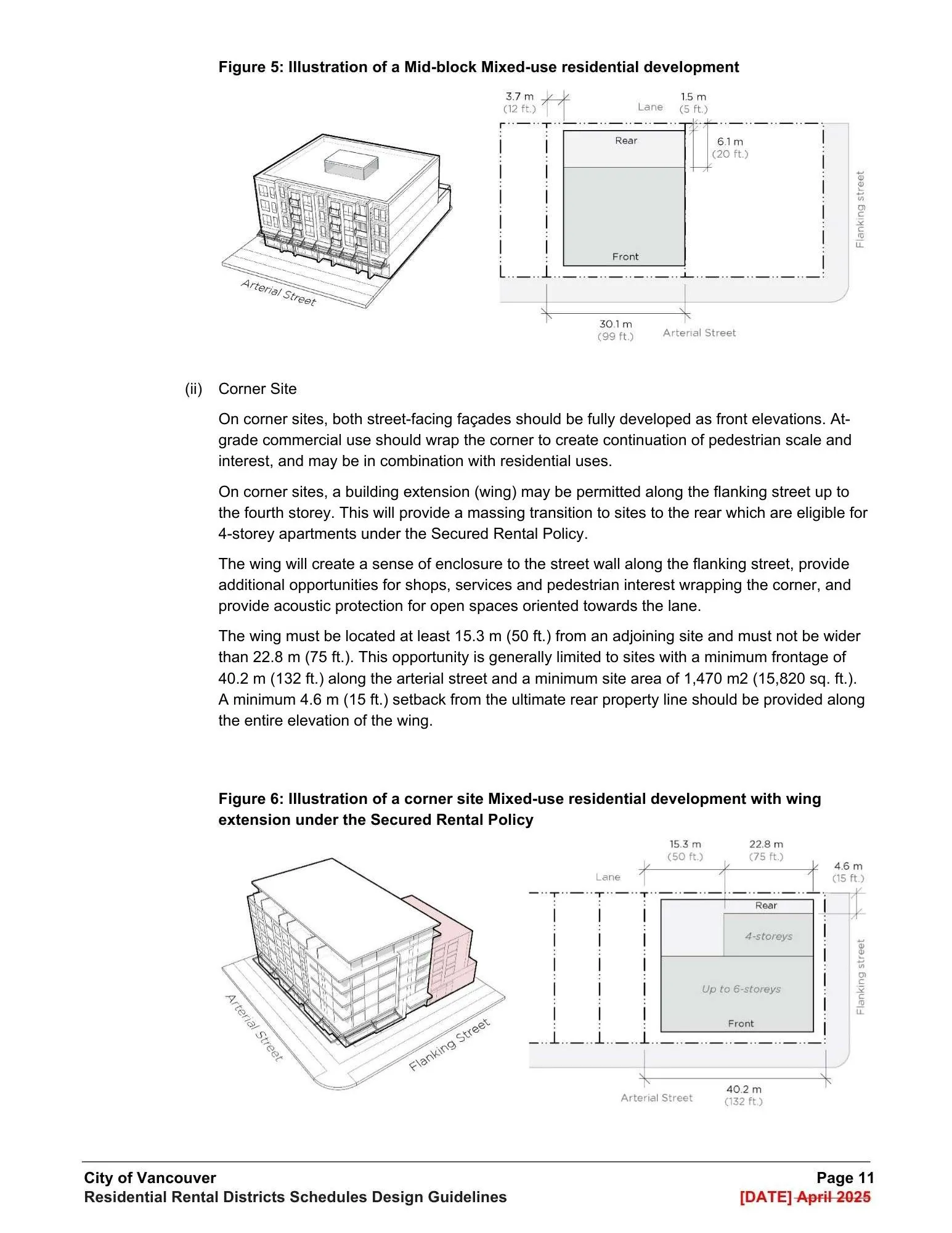
Moving on to the mixed use RR3 district. There are currently two options, four stories at 100% market rental and six story with a below market rental requirement. Looking at what we've seen in the mixed use projects, we've seen a different trend than in the fully residential projects. Overall, we have not seen a lot of these projects and many are struggling. There have been no projects in this district that have been completed and some have asked for adjustments to the below market rental inclusion. As you can see from this map, we are seeing a majority of projects opt into doing six stories with the BMR requirement. However, three times as many are doing this on the west side of the city. And the only four story projects we've seen have come in on the east side of the city. An important part of complete communities is to ensure we're getting these mixed-use projects and we're not getting a lot of uptake. Current conditions are making this even more difficult. We really want to make sure we get the retail. Through our financial testing and the projects that are coming in, we've seen that the BMR units are more viable on the west side of the city, although they still face some difficulties for delivery. The difference between east and west could be from a variety of factors, including lot size differences across the city and the going market rents that are feasible for those market rental units.
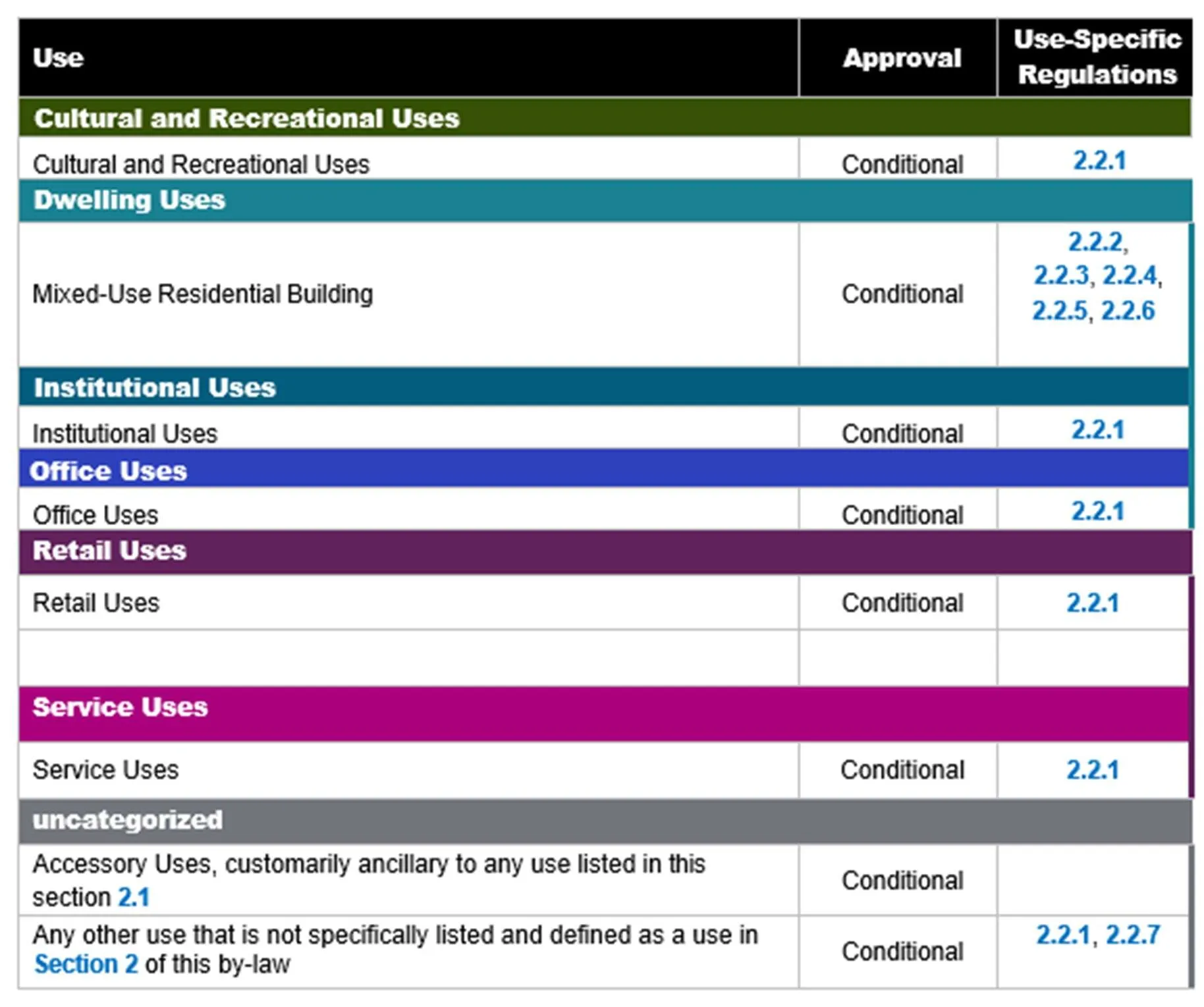
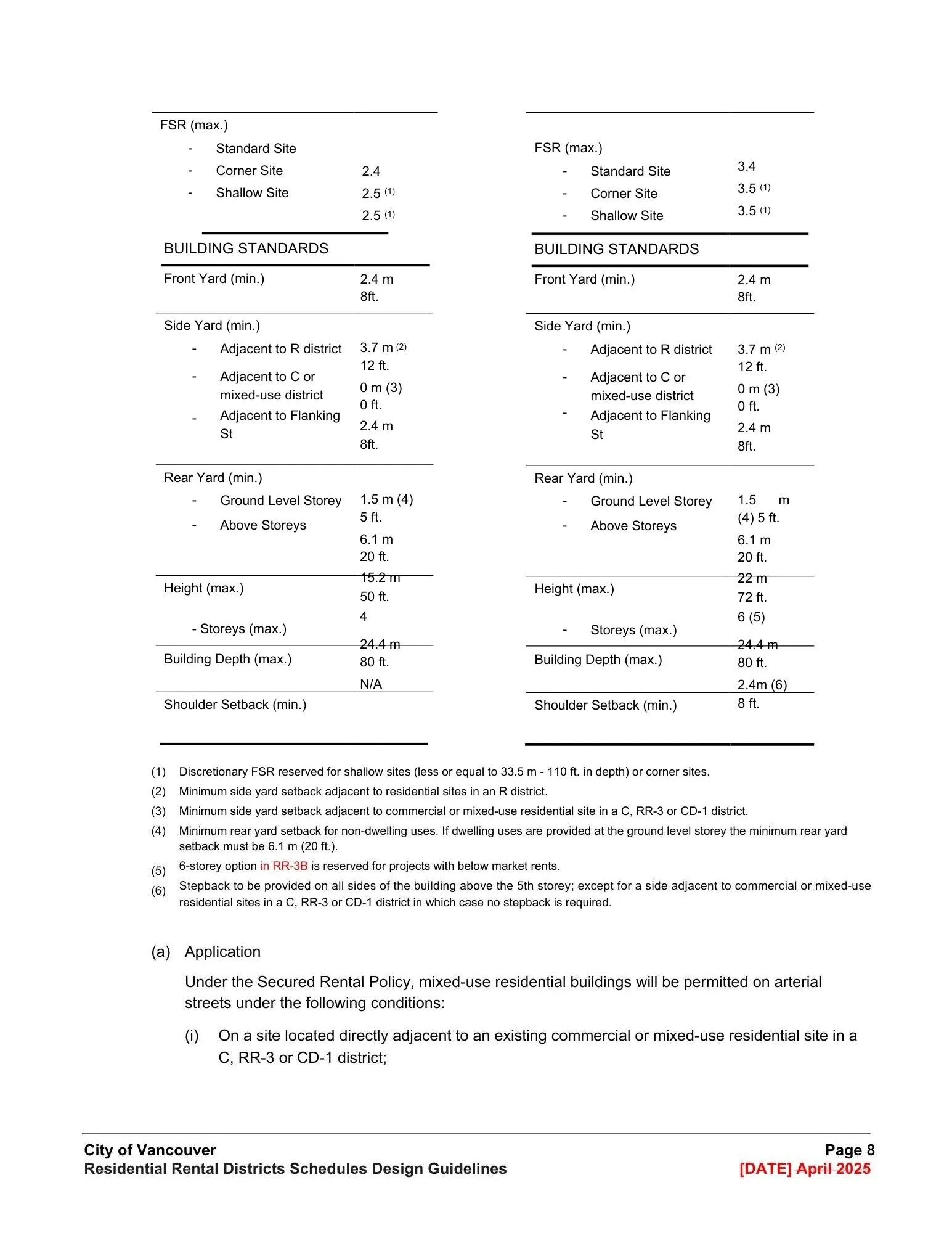
So looking at those changes specifically to the RR3 districts. We are proposing removing the below-market rental requirement in six-story buildings on the east side of the city, where they're more difficult to deliver, and reducing the below-market rental requirement on the west side from a 20% discount below CMHC average rents to a 10% discount. This would allow us to get more mixed-use rental buildings throughout the city, contributing to those complete communities. So looking at an overview... THIS IS WHAT WE PROPOSED THE THIS IS WHAT WE PROPOSED THE DISTRICTS TO LOOK LIKE WITH THE DISTRICTS TO LOOK LIKE WITH THE CHANGES HIGHLIGHTED IN PURPLE. CHANGES HIGHLIGHTED IN PURPLE. SO IN THE RR2A, THAT FULLY SO IN THE RR2A, THAT FULLY RESIDENTIAL DISTRICT, WE'RE RESIDENTIAL DISTRICT, WE'RE LOOKING AT A FOUR STORY OPTION LOOKING AT A FOUR STORY OPTION AND A SIX STORY OPTION WITH NO AND A SIX STORY OPTION WITH NO LONGER BELOW MARKET RENTAL LONGER BELOW MARKET RENTAL REQUIREMENTS IN SIX STORIES. And then three mixed-use districts, a four-story option and two separate six-story options with different levels of affordability requirements based on location. So removing the below-market rental on the east side of the city.
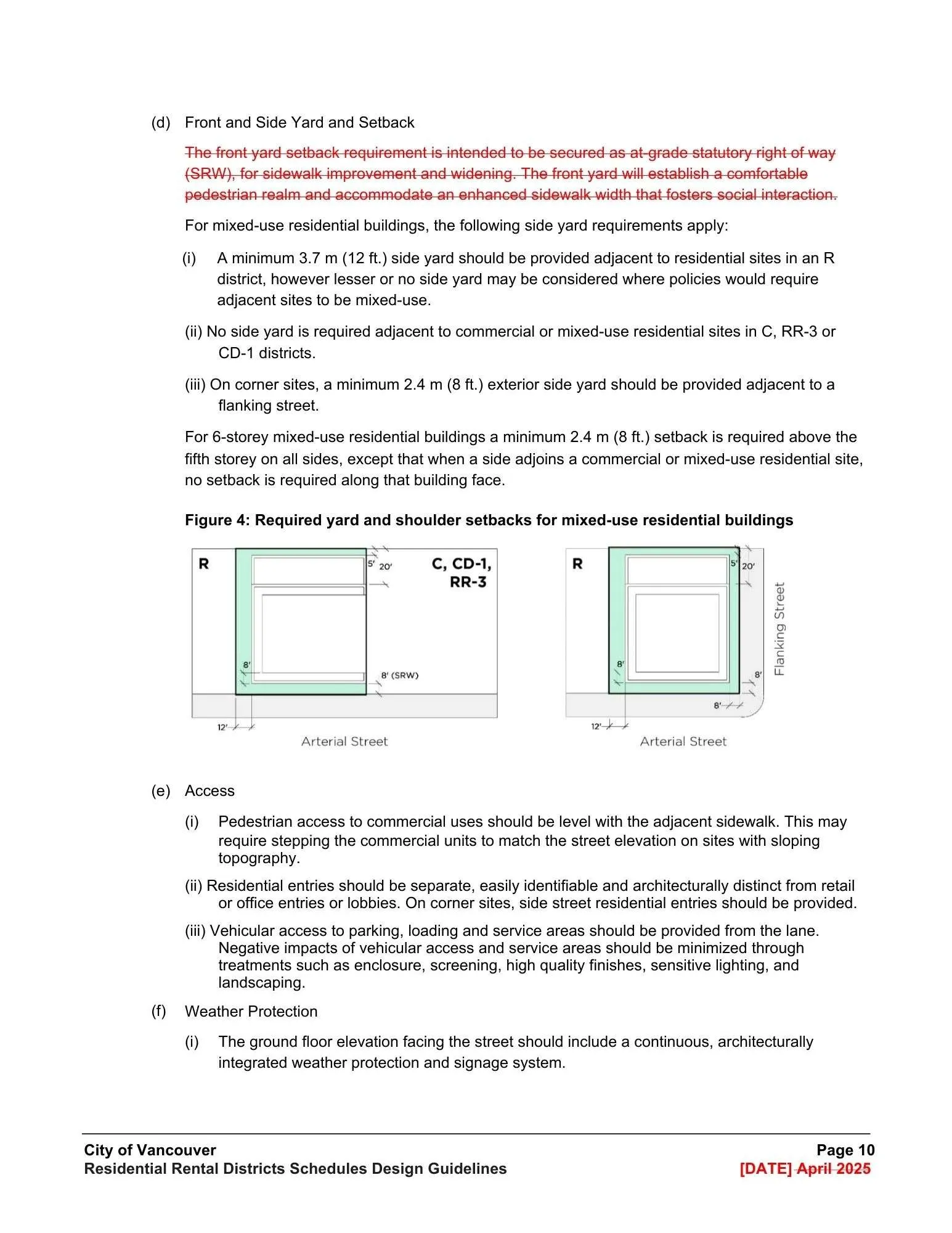
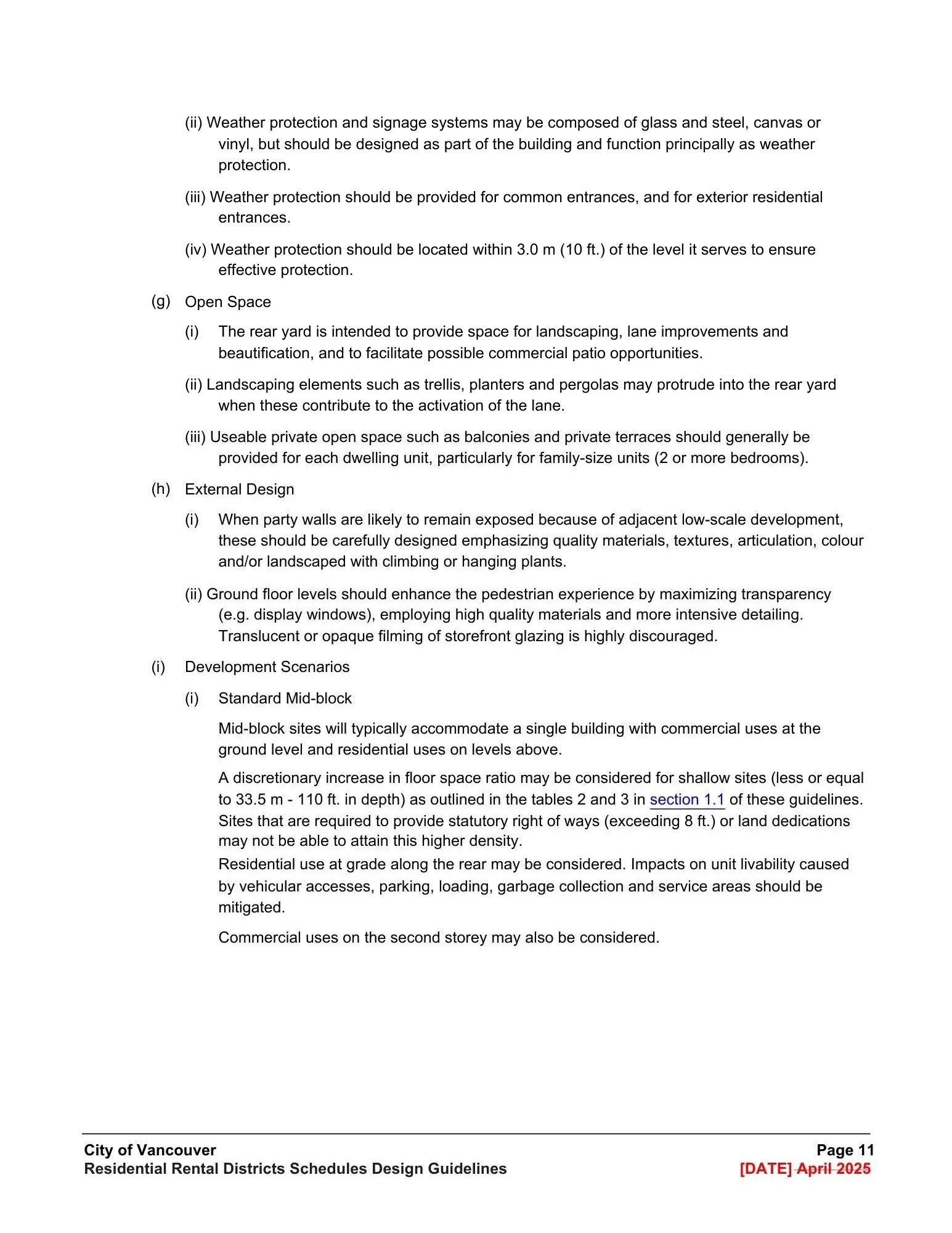
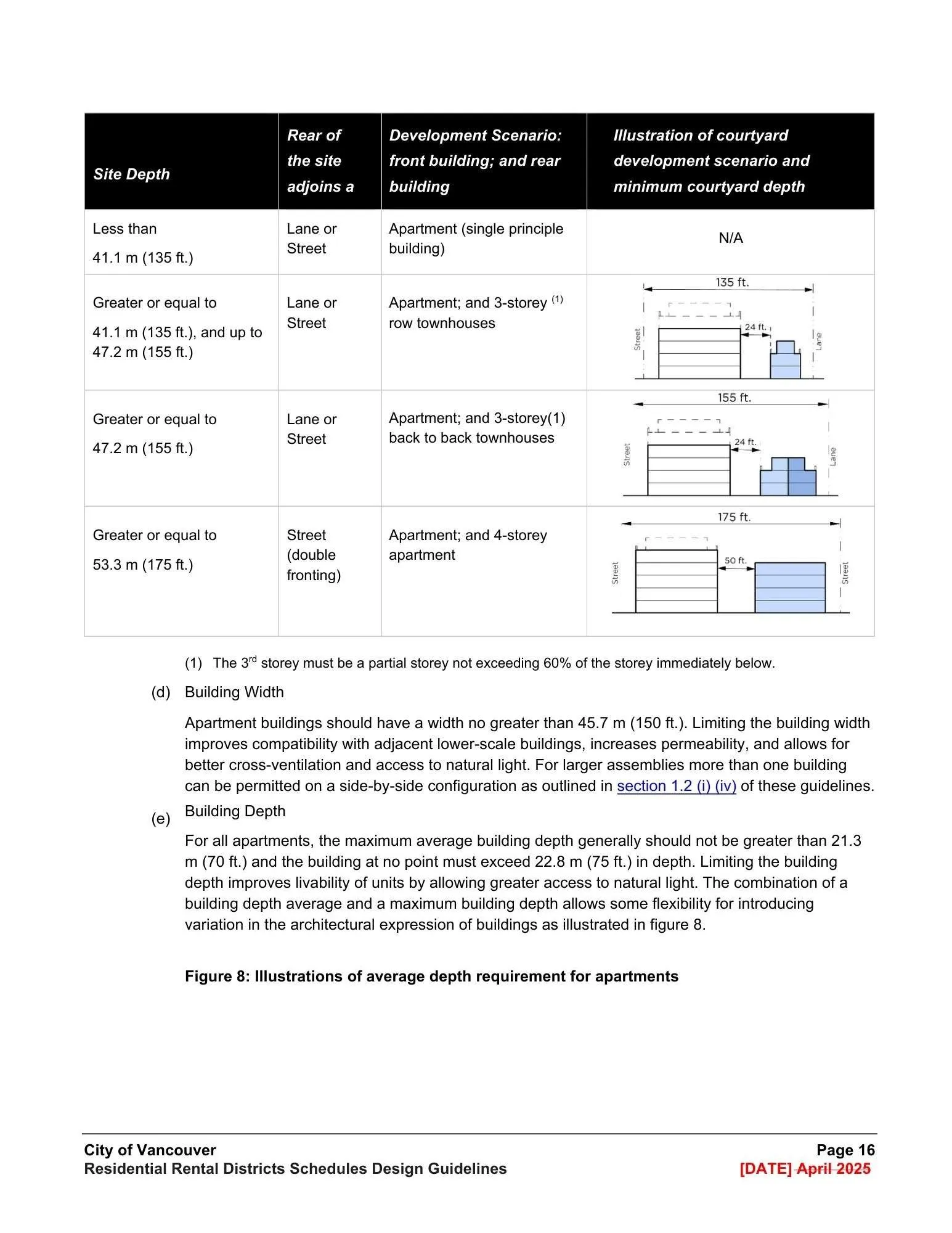
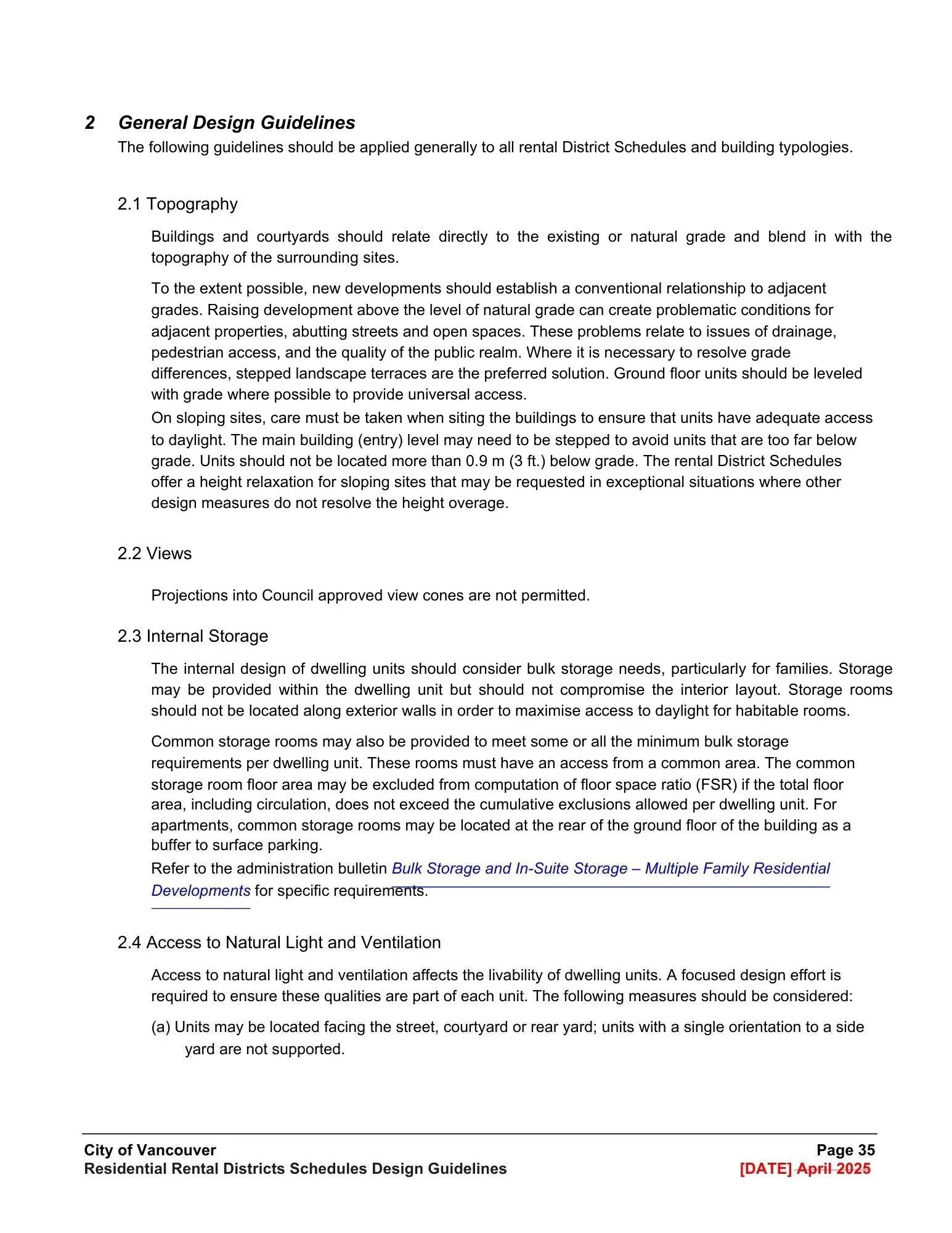
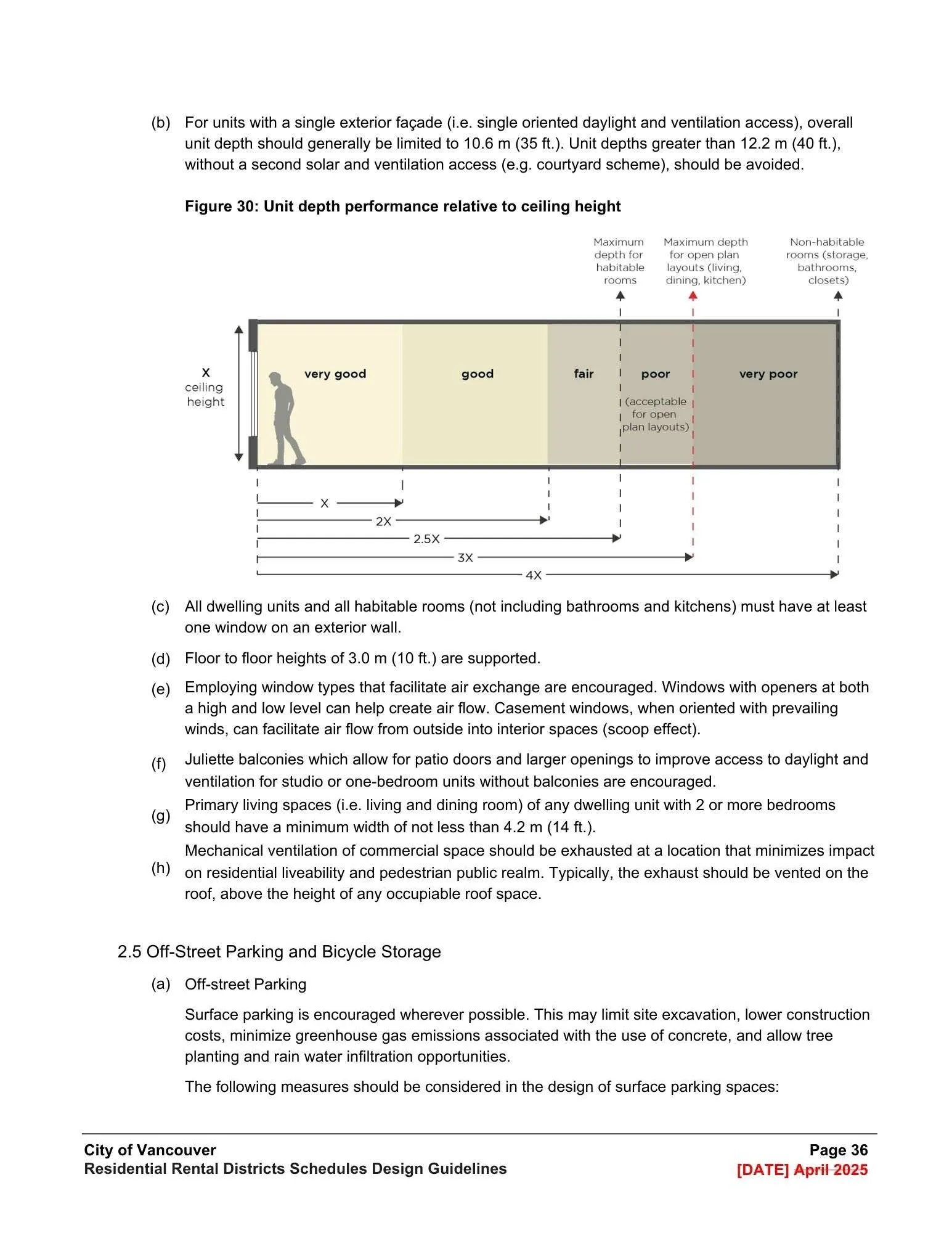
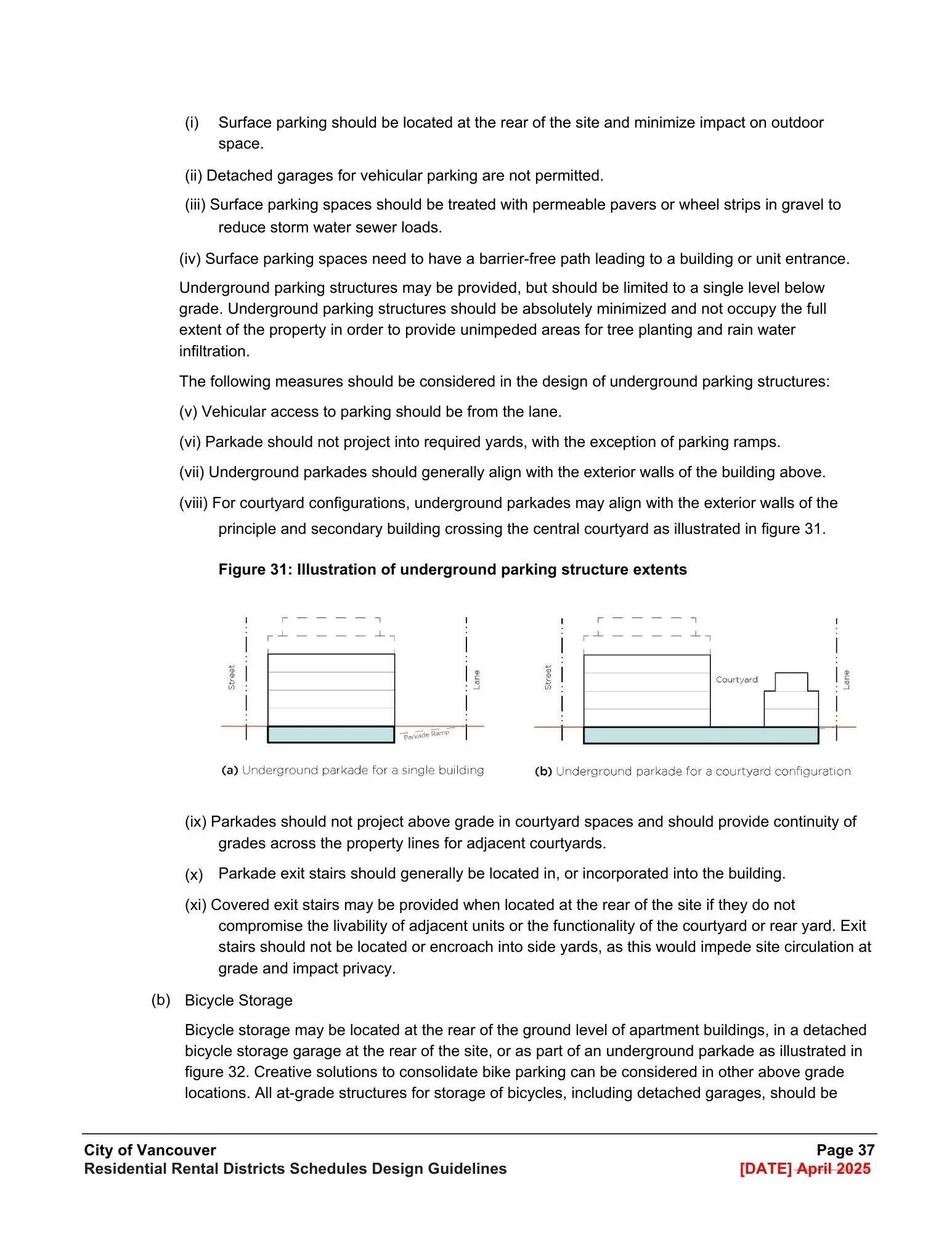
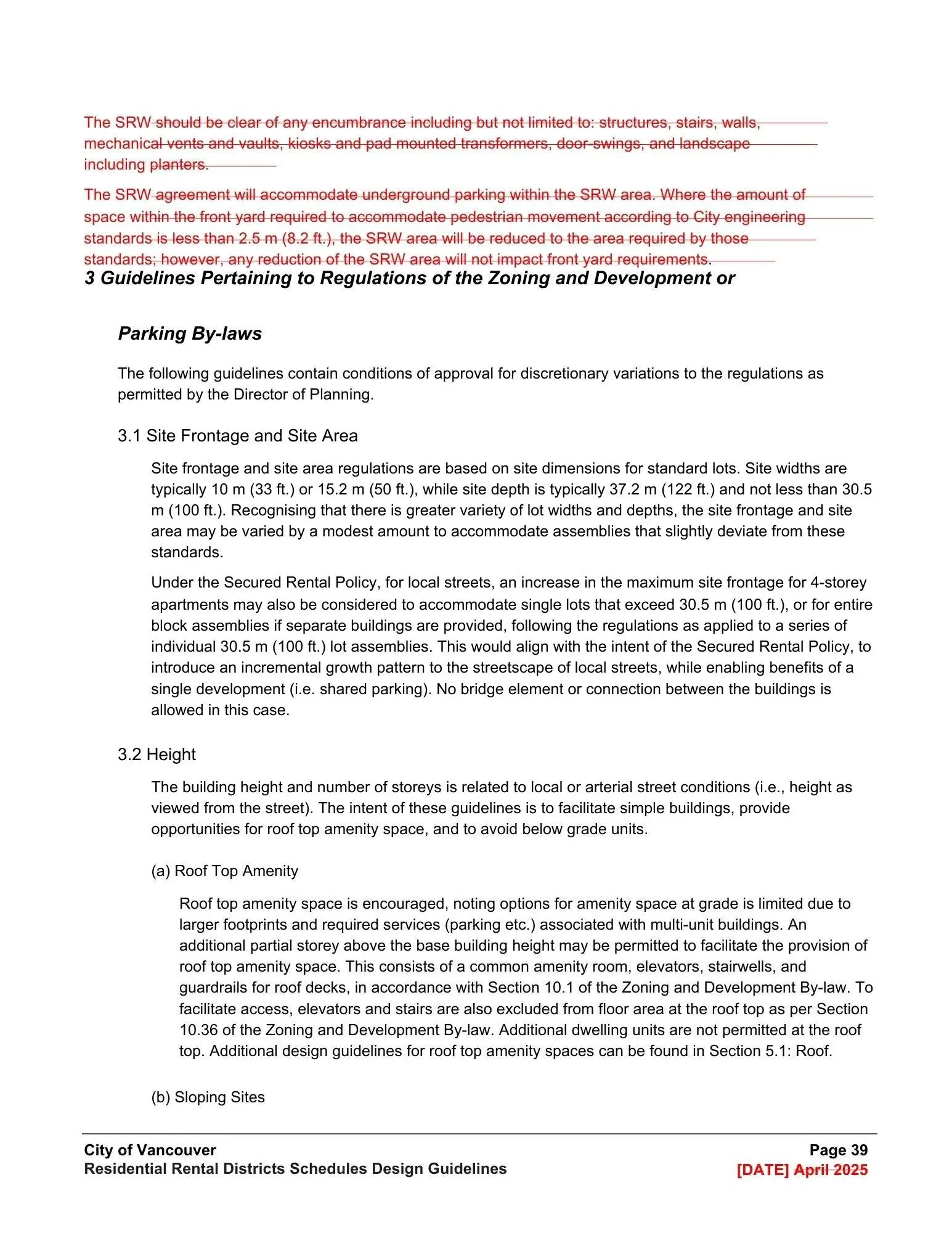
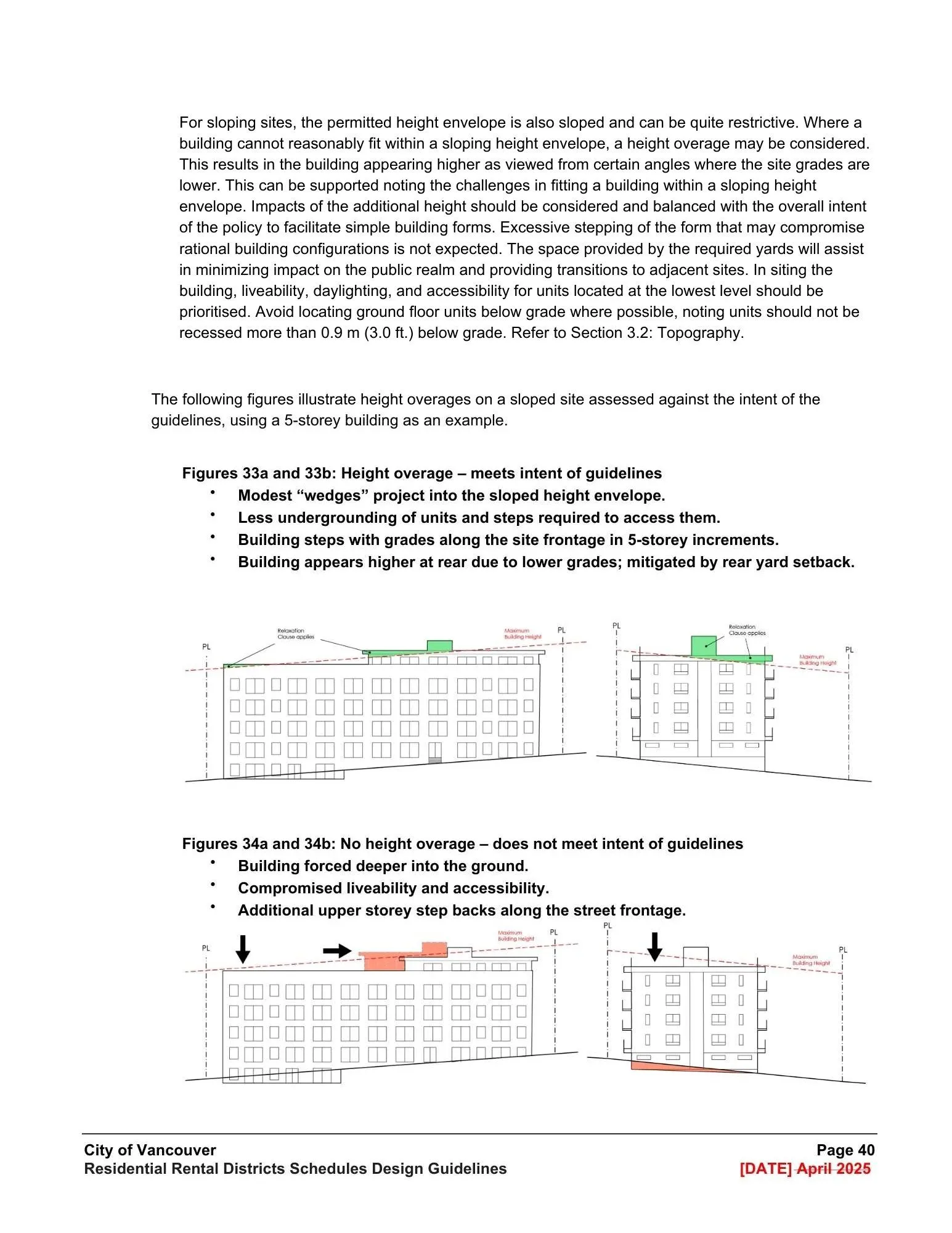
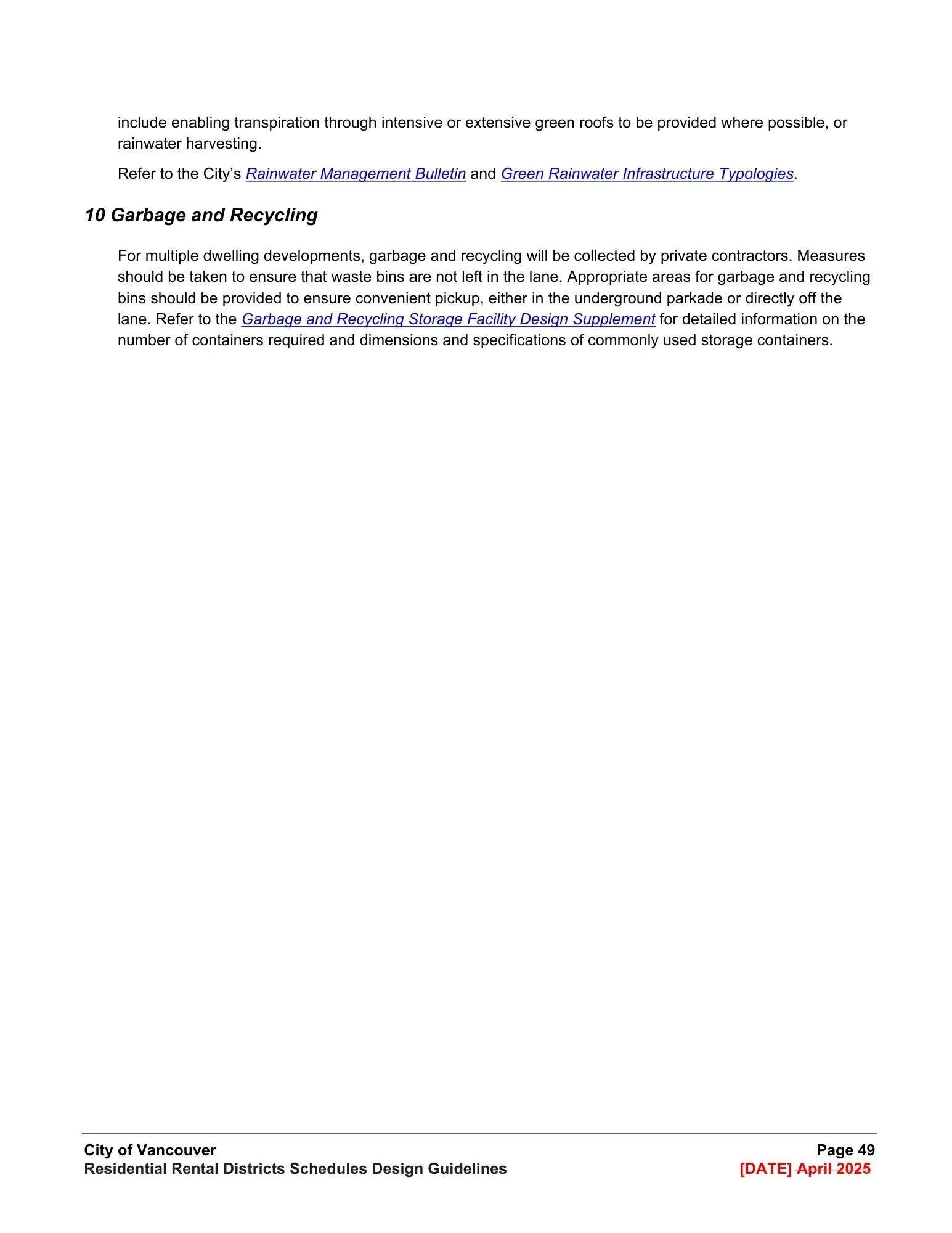
And some other proposed changes consistent with simplification approaches implemented with new district schedules. Updates are recommended to the existing RR2A, RR2B, and RR2C district schedules and the RR3A and RR3B district schedule. This includes removing design guidelines and relocating affordable housing requirements. And then in order to be compliant with provincial legislation, we've added in an eight-story 3.0 FSR option for RR2B sites and transit-oriented areas for existing in-stream projects.
So looking at recommendations B and C, based on these proposed zoning changes, there are four in-stream projects that have been approved for rezoning to an RR district that we're proposing moving to the appropriate district. This includes two projects currently in RR2C, which we're repealing, and two mixed-use projects on the east side. Recommendations B and C include changing the approval for these four projects to align them with the correct district. There are also a number of in-stream applications for residential rental districts. Staff will continue to process all in-stream rezoning inquiries and applications. This applies to all projects which have already submitted a formal rezoning application or a formal rezoning inquiry prior to the date this report is brought to council. Staff will begin accepting new development permit applications after enactment.
So looking at the engagement we did and what we heard from November 2025 to January 2026, we connected with residents in the development community through online information sessions and surveys. Engagement included a Shape Your City page and virtual open houses. From the public, we heard support for building more six-story buildings that feel human scaled and fit well into existing neighborhoods. We've heard a lot of support from the development community on streamlining development and implementing these changes as soon as possible.
We also heard concerns about the six-story building heights fitting into existing neighborhood character. Six stories is already allowed in most sites through the current RR rezoning process, so this isn't being added to those areas. However, the eight stories is new in these, but this is consistent with the TOA legislation. In addition, we heard concerns about reducing the requirements for below market rental housing units. This is being proposed due to current economic conditions and decreased viability of requiring the below market rental units in these low rise districts. We've seen this through the numbers of what's being developed. Existing requirements have produced minimal below market rental units, approximately 5% of the approved units so far. The proposal maintains requirements for the below-market rental units in areas where the market is more likely to deliver them.
So, in summary, the changes we're proposing today to the residential rental districts would improve development viability of secured market rental housing and simplify some of the regulations in these districts. I'll also note that there were report revisions on May 15th to clarify some mistakes that were made in the report, including FSR allowances, BMR rates, and heights in TOAs. If this is approved, the bylaws would be brought forward for enactment in June, and new applications using the updated district schedules could come in after that date. Staff will continue working through implementation of existing in-stream applications. And staff will also continue intergovernmental conversations on the tools available to the city for delivering below-market housing. And that's my presentation.
Great. Thank you very much. Council, you have up to five minutes to ask questions of team members. Councillor Orr.
Thanks. Thanks for the presentation. Again, answered a lot of my questions. Just in terms of BMR, we're hearing that it's affecting project viability. But I've also heard anecdotally that even 20% isn't that affordable anyways. So, for example, say the average CMHC rent is $2,000 for a one-bedroom. 20% below that is $1,600. You'd have to make $5,300 a month to afford that. Has staff done an impact report on how many residents earning $50,000 to $80,000 would be excluded under the 2,348 rezoned properties if the BMR is reduced or removed?
I'm going to invite Edna to come share.
Morning, Council. I'm Edna Cho, Senior Planner in Housing Policy. The answer to your question is no, we didn't do that analysis for this work. We were looking at what was financially feasible in terms of these projects.
But really just focused on getting the projects done and not the affordability for people who make around that.
I would say that we are focused on preserving the affordability where it works. That's why we're preserving the mixed-use option for BMR at 10% discount because that shows to still be feasible.
And then as Maggie alluded to in her presentation, we have other mechanisms to try to get to gain affordability. And we also know that we're going to have to step up our efforts to do more advocacy with senior governments to try to get more deeper levels of affordability.
No, I appreciate that. And that really stood out to me in the report was that we do need this, but we're... advocacy is one thing, but we're being told over and over again from senior levels, especially the province, that we don't have any money. The province is broke. So why, you know, if that's the case, why are we then getting rid of kind of the only thing that we have? You know, you're saying it's not working, we're not building enough, but it's kind of the bare minimum that we're doing here. And then we're saying, oh, okay, well, we'll just advocate to the province, but the province is broke. I don't see how we square that kind of circle.
Again, we're preserving the below market rental where it works in the mixed use projects. As we show through the data, primarily we're getting almost all market rental projects right now. So... You know, to change the five-story to six-stories will ensure that those projects continue to be viable and to ensure that we get, you know, we get that extra story, that extra, you know, could be 400 units on the table.
Right. So I think the number was 5% that we're getting from BMR. How much do we expect going forward? That will increase or decrease? You mean the... For the new projects, if we're getting rid of BMR, are you saying that we don't... These projects aren't delivering BMR, so we're getting rid of BMR to make the projects happen. So we're going to have even less BMR.
Yes, that's correct. In the fully residential projects. Okay.
And then so for the five-story versus six-story buildings, we're saying we're getting more applicants to choose the five-story buildings because of the requirements on the six-story. So why wouldn't we just... Make it so that five stories have to have BMR instead of going the other direction and reducing BMR for six stories. The five stories... Why wouldn't we go the other direction in terms of requiring affordability down the line that way from five stories, four stories? Instead of just getting rid of the six-story one.
Because it doesn't work. If we layered a BMR requirement to the five stories, it wouldn't be feasible. Then we wouldn't be able to get any of the development.
Okay. Does this send a sort of a message to developers that if we just wait long enough, we'll just kind of, you know... retroactively reduce their requirements. I mean, this seems like the kind of message that we're saying, like, oh, we can't build anything, so we're not going to. And so the city needs to do something. Yeah.
Counselor, Dan Garrison, Director of Housing Policy and Regulation. Just wanted to jump in on that question. Really, if you'd take a step back and you look at what we're doing here. I'm sorry, we're at time. Okay, thanks. Counselor Kirby Young.
Yeah, thank you. I have some questions that might, maybe that'll help. My first question is really, I guess, around recognizing the challenging times we're in, just asking the kind of, so what question are we doing the right, chasing the right paradigm? And so I know that the report references that a comprehensive review and update the city's development contribution tools, including DCLs, is underway. I'm specifically interested to know if that review will be looking at something like Is the city better off to take cash than requiring inclusionary zoning and below market units that could be then used, for example, to support community amenities or contributed to nonprofit housing projects as opposed to getting a small amount in discount affordability? Will that type of analysis be looked at as to whether we should take a very different approach to affordability versus BMR?
yes thanks counselor dan garrison housing policy and regulation um i i think the review that's coming up we're going to look holistically at where we're doing inclusionary housing and what's the best way to deliver the the deepest level of affordability as well as looking at how the city deals with our other infrastructure and public amenity needs So I think if you look at BMR, what we're proposing here, of course, is to remove the BMR requirements from lower density development, which will then largely start to pay things like development costs, levies, etc. The higher density development, like in TOA areas in the Broadway plan, is the area where we still think more inclusionary housing, more BMR, etc., is possible. In the short-term review, we're going to be looking at mostly legislative compliance with the new Bill 16 requirements.
Can I just interject? I know you have lots of great information on this topic, but I guess if you said you're already stating that you think that in the higher density projects, for example, that's a better alternative, but will that analysis be done and information provided to Council on alternatives that you could continue to have BMR distinguishing between lower rise and more density? or it could generate this amount of cash that could go to support, for example, nonprofit projects. Will we explicitly get that type of information on what the tradeoffs are?
In the short-term review, we are mostly looking at legislative compliance. We're sort of taking what our existing constructs are and making them comply with the legislation. We are also looking at launching the major inclusionary review where we do look at exactly what you're talking about. Really, the market has changed fundamentally from where it was when most of our inclusionary housing policies and zoning were adopted.
I understand, and sometimes we need to pivot. When will that broader review happen?
We're looking at launching that essentially immediately, and it's probably going to take us a little bit of time. It's not going to be in June or July. It's going to be probably in 2027.
Okay, that's clear. I do think that we need to revisit how we best, within the city levers, achieve affordability. Yeah, we agree. My second question is really around, it wasn't covered as directly, I think, in the report, but can you kind of speak to us as the city's going towards now more pre-enabled zoning? So whether it's either through the TOA legislation, the adoption of the ODP, et cetera, which creates a different paradigm when someone's bringing a project forward because you have broad density and entitlements as opposed to rezonings. where you got extra FSR and sometimes more land lift. So are we trading off? Can you talk about how that's intersecting, for example? Is that helping us move housing along faster, but we're not seeing as much land lift? And I know that it's complicated because there's many factors, but just interested in general perspective on that.
Yeah, I think that's one of the really key pieces that we're doing is shifting our development approvals approach towards more certainty, more clarity. And that happens with the district schedule approach. So this work that we're doing right now is sort of that middle ground where it's a rezoning, but directly to a district schedule that's already established. When we come forward with the villages, which planning program, which this work is really aligned with, that's going to be the next major step in pre-zoning proposals where we do look at that certainty. So, you know, I think actually the pre-zoning approach creates a real opportunity around particularly development viability where there's more certainty. The processes of approval are faster. There's sort of less money involved in that process. So I think that's an important step.
Okay. And if the approval is faster, then it mitigates some of the costs.
Lower carrying costs, less uncertainty, less risk involved in development. So certainly we think at that point we're going to be seeing improvements in development viability through that approval approach.
Okay. Thank you very much. Appreciate it.
Thank you, Councillor Fry.
Yeah, I guess just off the top, can you... walk through why this is not eligible for public comment and why it's not coming to public hearing.
I'll invite Edna up to answer this one.
Thanks for the question. So there's been changes to our public hearing rules from the provincial legislation. And so under the new rules, a public hearing is prohibited if a project is consistent with the ODP. where the changes are primarily residential in nature. And at least 50% of the residential gross floor area, the buildings will be for residential. So because these changes fall within, meet all those three criteria, a public hearing is prohibited. And so that's why this report is being brought to Daytime Council today.
So I was of the impression that ODP was really a land use policy. And that we've disaggregated sort of housing policies like inclusionary zoning from the actual ODP. Because I seem to recall in previous items, we couldn't discuss ODP because they're inclusionary because it wasn't part of ODP.
Are we being consistent with the application here?
We are. The ODP governs land use, but it also governs housing policies.
Okay. Yeah.
So we are being consistent with the application of the new rules.
Okay. So elsewhere in this report, it references the report from December, the amendment to report back on supporting development viability and unlocking new housing supply, which asked asked to look at including but not limited to reducing the required proportion of below market units.
Are there no other options being considered? Like we didn't get any other options to support housing viability other than eliminating below market. Were there no other options considered or viable?
In terms of city tools, this is what's available to us in terms of land use tools. Yeah.
Well, this is... We didn't model that? In the low-rise, like we're already up to six stories, so there's really no room to go in the low-rise form. Otherwise, as Dan mentioned earlier, you know, we can do the below-market rental in the high-rise developments, which we are doing through Canby and Broadway and in the... the r5 district schedules and these projects already get 100 dcl waivers for the bmr so that's already in play so i think you know it's just a very difficult time right now in the market with the construction costs and the uncertainty in the environment around around tariffs as well you know we are seeing um new rental rates falling which is great news for renters but that does mean it's a little bit it's even more challenging for the projects to work So within the tools we have available within the six-story form, this is what the city can do. But however, we agree that preserving affordability is really important, and that's why we're preserving it in the mixed-use option on the west side, because that's still looking to be feasible.
But just to be clear from your presentation, the five stories are penciling out fine. It's just the six stories that aren't working, and specifically six stories with the inclusion of BMR.
The testing results show that even if a new project were to go forward today, the five stories is also challenged. It's more challenging than it was in 2021. What we're talking, but a lot of these projects that we were showing in the pipeline, they're ones that were approved previously or in the system already. So there are challenges that are being faced by new projects, but right now those ones, because they're proceeding, they look to be viable. And as you can see, there's a lot more of them than the below market six-story option, which the testing results show they're not viable.
So when we zoom out from the building and the pro forma on a building, does the planning consider what it means for neighborhoods when we lose? below market units as part of the fabric of a larger neighborhood?
I think when we put these changes in place in 2021, we were very hopeful that we could get, you know, the diversity of the... And I'm sorry we're at time, but I'm sure Councillor Maloney would love to hear that answer.
Yeah, I've got loads of questions, but please finish that.
Oh, okay. In 2021, when we put forward the policy, you know, we really wanted to see the full spectrum of the different forms as well as the affordability. And so that was the intent. And I think, you know, with the experience we have now, it's showing that the BMR was a really great idea on paper, but it's just not penciling out. So we are, you know, we're getting 97% of the market rental. That's working really well. But we're getting very few projects in the below market rental. So it's really... kind of on paper at this point.
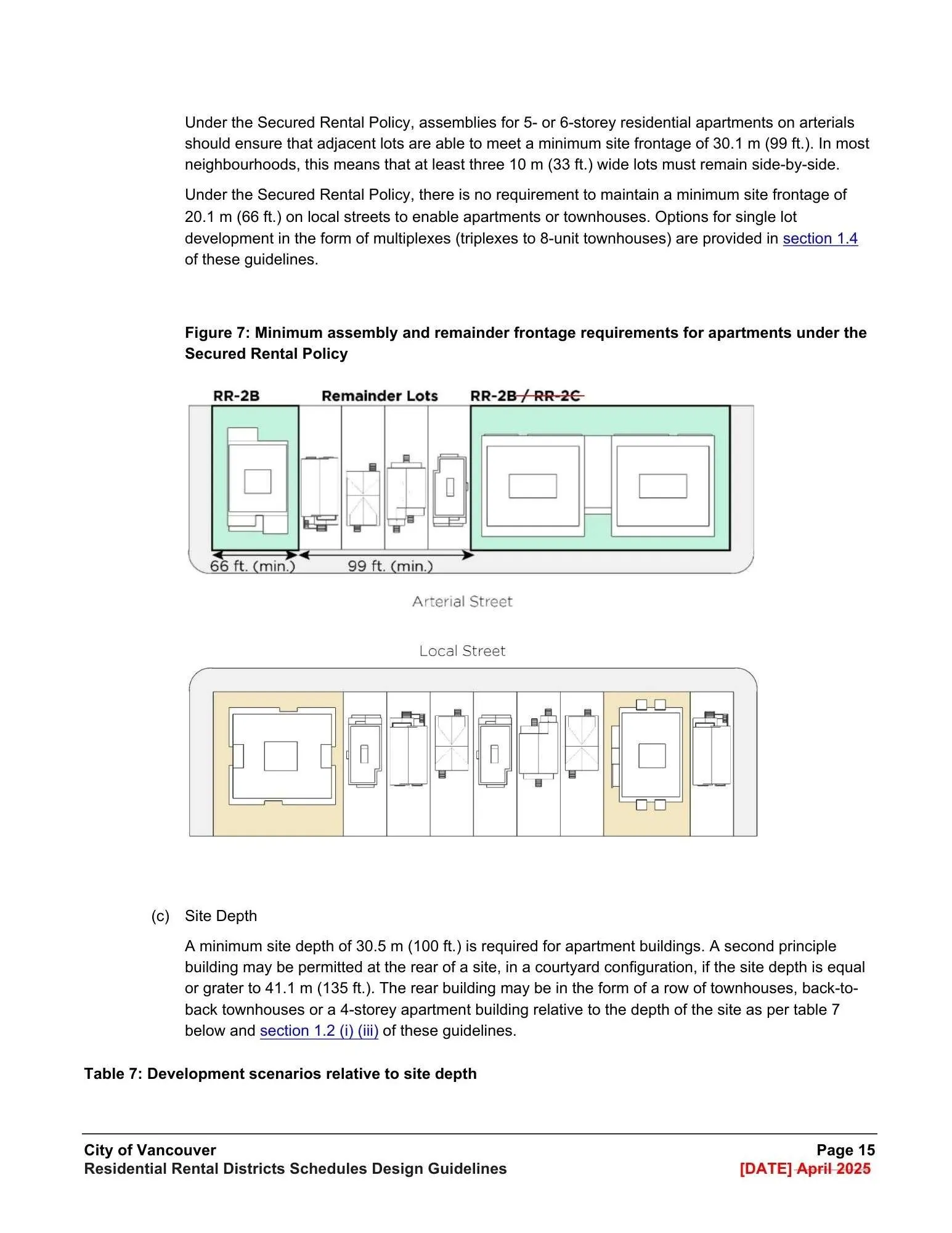
Thank you. So how does this fit with the single stair egress typology work in terms of minimum frontage sizes? Because I note that it's 66 feet, which is two standard lots.
When are we going to get, at what stage of the planning process will we be looking at integrating single stair typology on single lots, like below 50?
Marie Linehan, Development Planner. So the building code changes have been made to allow the single egress steers So these apartment buildings can make use of that. They can choose to do the single egress stairs. I think the change you're mentioning is allowing apartment buildings on smaller lots, and that's coming through with the R3, with the update to R3, which will come with the villages, because we anticipate that the single egress stairs has the most benefit on these smaller lots for efficiency. So that's coming forward with the villages' work. Wonderful.
Thanks for clarifying that. So what would be the effect of council opposing this change today in terms of development viability challenges? It would just mean that six-storey apartments continue not to be built. Is that right?
That's correct.
Yeah. Okay. And so that is really what Michael Geller was referring to with the ghost pipeline, things that have been approved but just aren't financially viable to build.
That's correct. Yeah. We're hearing projects running into difficulties and applicants coming back requesting changes.
Yeah. And so the effect of that is 20% BMR, 20% of nothing is nothing.
That's correct. If it doesn't get built.
Yeah. All right. And what effect does additional market housing supply have on the overall affordability of housing?
Additional supply can increase the vacancy rate, which means there's more competition for renters, more choice, and it brings down the rents. And we're already seeing a reduction in rents, I think 1.4% down from last year. So it is happening. Rents are still high, but with a sustained pipeline, that trend will likely continue, that decrease in rents.
And speaking to developers recently, I've heard that... You know, we've got buildings in the pipeline that are being built for the next couple of years, but then it's really going to grind to a halt once the projects that are in process are finished. Do you think that approving this today will help contribute to more housing being in the pipeline at that two-year point?
Yes, we do. We think that that's really important. A sustained pipeline is really important. We have, you know, 10,000 units under construction, but beyond that, you know, there's lots in the pipeline, but unsure where they will go. So having more units go into the pipeline will be really important so that we're not, you know, making great changes now, but then there's a stop and then, you know, we're back to where we were 10 years ago.
And what would be the general effect of having a more significant lack of housing in the pipeline at that point when current construction is completed? Volatility of housing prices.
then the rents will rise again and there will be less choice for renters and there will just be a tighter market.
Yep. And so what solutions very quickly just generally are within the city's power to contribute to housing affordability?
So within the city's power, we have our land use tools. So we have density. We can offer density, DCL waivers. We can look at land use, different forms of development. So those are our main tools. And then, yeah, waiving DCL charges. Yeah, those are the city's main tools.
So things like allowing more density in the Villages Plan is something that's going to have a positive effect on housing affordability.
That's correct. We'll have more choice for renters and for owners and more diversity for households. Thank you.
Thank you. Okay, so Council, you have up to five minutes to ask questions. Sorry. Can we get a mover of the motion? Thank you, Councillor Meiszner and Councillor Dominato seconded. Council, is there any discussion?
Seeing no one in the queue, I'm going to call the vote.
Thank you.
Documents
- Report – Fast-Tracking Rental Housing – Updates to Residential Rental Districts
- Draft By-law - Parking By-law
- Draft By-law - Sign By-law
- Draft By-law - Subdivision By-law No. 5208
- Draft By-law - Noise Control By-law
- Draft By-law - Zoning and Development - 1401-1455 East 49th Avenue
- Draft By-law - Zoning and Development - 2005-2045 West 49th Avenue
- Draft By-law - Zoning and Development - 4471-4485 Fraser and 691 Esat 29th Avenue
- Draft By-law - Zoning and Development - 4708-4742 Joyce Street and 3604 Tanner Street
- Draft By-law - Zoning and Development - Amendments regarding the repeal of the RR-2C district and the enactment of a new RR-3C district
- Report11bylaw-ZandDRR-2Cdistrict.pdf
- Staff Presentation
Statement Watch
Great. Thank you so much. Hello, Mayor and Council. I'm Maggie Moore, a planner in housing policy. Today, I'm sharing the proposed changes to the residential rental districts. I will start with an overview of the recommendations you have in front of you today. Then I'll talk through the current state of the city's housing targets, the city's policy objectives that relate to this proposal, as well as where we're at with our current residential rental districts. Then we'll get into today's recommendations, which are the proposed updates to these districts. I'll talk through engagement and what we've heard as well as a summary and next steps. So looking at the recommendations you have, recommendation A includes changes to the RR2 and RR3 district schedules, including removing below-market rental requirements for fully residential development, removing or reducing requirements in mixed-use developments, and allowing up to eight stories in the RR2 districts to be compliant with TOA legislation. Recommendations B and C include applying the district changes to four current in-stream projects. Basically, we're slotting these four projects into the correct district schedule to support their development viability. This also includes terminating their existing approval and principle. And then recommendations D and E include consequential changes to the secured rental policy and other bylaws and policies, including the subdivision bylaw and the signed bylaw. So looking at the Vancouver housing targets, one of the values of the Housing Vancouver strategy is for housing to respond to the diversity of people and households that call Vancouver home. To measure this, the 10-year housing targets outline the specific type and quantity of housing planned. The overall goal is for 83,000 units. Today, we're focusing on these two middle categories of rental housing that are highlighted here. The purpose-built below-market rental and purpose-built market rental, representing 43% of the city's overall target. And while we've been very successful in developing new units and enabling supply through zoning, there's been difficulty in the market delivering deeper affordability, especially in these low-rise districts. We'll share data throughout this presentation on what types of projects we've seen approved and make it to construction in the residential rental districts. Overall, we've seen that delivering below-market rental through private development in these low-rise zones can be very difficult and only shows viability in certain types of projects in certain areas of the city. Delivering more of these types of projects could require a greater investment from different areas of government, and we need to continue to work on partnerships with other levels of government on the ability to deliver below-market rental units. So looking at what's been approved so far, close to 50 projects in the residential rental districts have been approved since the districts came online in 2021. These projects include close to 3,500 secured rental units. However, only 5%, which is a very small portion of these units, are below market. The status shows that the secured rental policy in the RR districts have been really successful in delivering market rental, these low-rise, middle-density housing options, but it's been difficult to get the below-market rental units. We've also seen a couple of projects canceled and many other projects coming to the city asking for added support and reduction in below-market rental units. There are a few reasons why this has been the case, including increasing costs of development. This slide is not showing any new information. We know that there have been rising costs of construction. These rising costs are making it increasingly difficult to deliver the secured market rental housing, and even more so for projects that have the below market rental included. And as mentioned on the last slide, while units have been approved, we're seeing the rising costs of construction continue to make it difficult to deliver these units. Since 2021, no BMR units have been delivered from the residential rental districts. And while some, close to 50 units, are currently under construction, many others are failing to get to the construction phase. So looking at it from a policy context, based on the data and the projects we've seen, we're proposing changes to the residential rental districts to ensure that the projects can continue. These changes are being proposed under the secured rental policy developed in 2019 to promote the development of secured market rental housing and the development viability report, which was brought to council in December 2025, which proposed a set of measures to address immediate development viability challenges, including this one. In December 2021, Council approved amendments to the secured rental policy to create new rental residential districts near shopping and transit. Similar to other standard zoning districts, the RR zone set regulations such as permitted use, density, and height limits while allowing for a range of building designs. All residential uses in the RR zones are secured as rental tenure and no stratification or sale. of individual residential units is allowed. These requirements are secured through housing agreements. And the RR districts include options for four to six-story fully residential and mixed-use developments. The aim of allowing these projects is to develop complete communities, including the options on retail streets that allow for retail on the ground floor and apartments above to support these neighborhoods. When the zones were created in 2021, all six-story projects and arterials were required to provide below-market rental units based on the financial testing done at the time. So I'm going to go into a little more detail on what the districts look like and what the proposed changes are. The RR2A, RR2B, and RR2C district schedules currently allow apartment buildings at four, five, or six stories. where all dwelling units are secured as residential rental tenure. The six-story option requires 20% of residential floor area to be secured as below-market rental. Focusing just on the five and six-story option, the RR2B and RR2C, we've seen close to 30 projects approved since 2021. However, we've seen over 10 times more projects come in under the five-story option without BMR units than the six-story RR2C option. And while we've seen some five-story projects completed, we haven't seen any of the six-story projects completed or even have their zoning enacted. Because the five-story option is being opted for a lot more frequently, we're losing out on that six-story of rental units. If all of these five-story buildings had been approved as six stories, we could have seen up to 400 more rental units approved in just a few years. Moving on to the mixed use RR3 district. There are currently two options, four stories at 100% market rental and six story with a below market rental requirement. Looking at what we've seen in the mixed use projects, we've seen a different trend than in the fully residential projects. Overall, we have not seen a lot of these projects and many are struggling. There have been no projects in this district that have been completed and some have asked for adjustments to the below market rental inclusion. As you can see from this map, we are seeing a majority of projects opt into doing six stories with the BMR requirement. However, three times as many are doing this on the west side of the city. And the only four story projects we've seen have come in on the east side of the city. An important part of complete communities is to ensure we're getting these mixed-use projects and we're not getting a lot of uptake. Current conditions are making this even more difficult. We really want to make sure we get the retail. Through our financial testing and the projects that are coming in, we've seen that the BMR units are more viable on the west side of the city, although they still face some difficulties for delivery. The difference between east and west could be from a variety of factors, including lot size differences across the city and the going market rents that are feasible for those market rental units. So looking at those changes specifically to the RR3 districts. We are proposing removing the below-market rental requirement in six-story buildings on the east side of the city, where they're more difficult to deliver, and reducing the below-market rental requirement on the west side from a 20% discount below CMHC average rents to a 10% discount. This would allow us to get more mixed-use rental buildings throughout the city, contributing to those complete communities. So looking at an overview... THIS IS WHAT WE PROPOSED THE THIS IS WHAT WE PROPOSED THE DISTRICTS TO LOOK LIKE WITH THE DISTRICTS TO LOOK LIKE WITH THE CHANGES HIGHLIGHTED IN PURPLE. CHANGES HIGHLIGHTED IN PURPLE. SO IN THE RR2A, THAT FULLY SO IN THE RR2A, THAT FULLY RESIDENTIAL DISTRICT, WE'RE RESIDENTIAL DISTRICT, WE'RE LOOKING AT A FOUR STORY OPTION LOOKING AT A FOUR STORY OPTION AND A SIX STORY OPTION WITH NO AND A SIX STORY OPTION WITH NO LONGER BELOW MARKET RENTAL LONGER BELOW MARKET RENTAL REQUIREMENTS IN SIX STORIES. And then three mixed-use districts, a four-story option and two separate six-story options with different levels of affordability requirements based on location. So removing the below-market rental on the east side of the city. And some other proposed changes consistent with simplification approaches implemented with new district schedules. Updates are recommended to the existing RR2A, RR2B, and RR2C district schedules and the RR3A and RR3B district schedule. This includes removing design guidelines and relocating affordable housing requirements. And then in order to be compliant with provincial legislation, we've added in an eight-story 3.0 FSR option for RR2B sites and transit-oriented areas for existing in-stream projects. So looking at recommendations B and C, based on these proposed zoning changes, there are four in-stream projects that have been approved for rezoning to an RR district that we're proposing moving to the appropriate district. This includes two projects currently in RR2C, which we're repealing, and two mixed-use projects on the east side. Recommendations B and C include changing the approval for these four projects to align them with the correct district. There are also a number of in-stream applications for residential rental districts. Staff will continue to process all in-stream rezoning inquiries and applications. This applies to all projects which have already submitted a formal rezoning application or a formal rezoning inquiry prior to the date this report is brought to council. Staff will begin accepting new development permit applications after enactment. So looking at the engagement we did and what we heard from November 2025 to January 2026, we connected with residents in the development community through online information sessions and surveys. Engagement included a Shape Your City page and virtual open houses. From the public, we heard support for building more six-story buildings that feel human scaled and fit well into existing neighborhoods. We've heard a lot of support from the development community on streamlining development and implementing these changes as soon as possible. We also heard concerns about the six-story building heights fitting into existing neighborhood character. Six stories is already allowed in most sites through the current RR rezoning process, so this isn't being added to those areas. However, the eight stories is new in these, but this is consistent with the TOA legislation. In addition, we heard concerns about reducing the requirements for below market rental housing units. This is being proposed due to current economic conditions and decreased viability of requiring the below market rental units in these low rise districts. We've seen this through the numbers of what's being developed. Existing requirements have produced minimal below market rental units, approximately 5% of the approved units so far. The proposal maintains requirements for the below-market rental units in areas where the market is more likely to deliver them. So, in summary, the changes we're proposing today to the residential rental districts would improve development viability of secured market rental housing and simplify some of the regulations in these districts. I'll also note that there were report revisions on May 15th to clarify some mistakes that were made in the report, including FSR allowances, BMR rates, and heights in TOAs. If this is approved, the bylaws would be brought forward for enactment in June, and new applications using the updated district schedules could come in after that date. Staff will continue working through implementation of existing in-stream applications. And staff will also continue intergovernmental conversations on the tools available to the city for delivering below-market housing. And that's my presentation.
Statement Watch
I'm going to invite Edna to come share. Morning, Council. I'm Edna Cho, Senior Planner in Housing Policy. The answer to your question is no, we didn't do that analysis for this work. We were looking at what was financially feasible in terms of these projects.
But really just focused on getting the projects done and not the affordability for people who make around that.
I would say that we are focused on preserving the affordability where it works. That's why we're preserving the mixed-use option for BMR at 10% discount because that shows to still be feasible.
Yeah.
And then as Maggie alluded to in her presentation, we have other mechanisms to try to get to gain affordability. And we also know that we're going to have to step up our efforts to do more advocacy with senior governments to try to get more deeper levels of affordability.
No, I appreciate that. And that really stood out to me in the report was that we do need this, but we're... advocacy is one thing, but we're being told over and over again from senior levels, especially the province, that we don't have any money. The province is broke. So why, you know, if that's the case, why are we then getting rid of kind of the only thing that we have? You know, you're saying it's not working, we're not building enough, but it's kind of the bare minimum that we're doing here. And then we're saying, oh, okay, well, we'll just advocate to the province, but the province is broke. I don't see how we square that kind of circle.
Again, we're preserving the below market rental where it works in the mixed use projects. As we show through the data, primarily we're getting almost all market rental projects right now. So... You know, to change the five-story to six-stories will ensure that those projects continue to be viable and to ensure that we get, you know, we get that extra story, that extra, you know, could be 400 units on the table.
Right. So I think the number was 5% that we're getting from BMR. How much do we expect going forward? That will increase or decrease? You mean the... For the new projects, if we're getting rid of BMR, are you saying that we don't... These projects aren't delivering BMR, so we're getting rid of BMR to make the projects happen. So we're going to have even less BMR.
Yes, that's correct. In the fully residential projects. Okay.
Statement Watch
Counselor, Dan Garrison, Director of Housing Policy and Regulation. Just wanted to jump in on that question. Really, if you'd take a step back and you look at what we're doing here. I'm sorry, we're at time. Okay, thanks. Counselor Kirby Young.
Yeah, thank you. I have some questions that might, maybe that'll help. My first question is really, I guess, around recognizing the challenging times we're in, just asking the kind of, so what question are we doing the right, chasing the right paradigm? And so I know that the report references that a comprehensive review and update the city's development contribution tools, including DCLs, is underway. I'm specifically interested to know if that review will be looking at something like Is the city better off to take cash than requiring inclusionary zoning and below market units that could be then used, for example, to support community amenities or contributed to nonprofit housing projects as opposed to getting a small amount in discount affordability? Will that type of analysis be looked at as to whether we should take a very different approach to affordability versus BMR?
yes thanks counselor dan garrison housing policy and regulation um i i think the review that's coming up we're going to look holistically at where we're doing inclusionary housing and what's the best way to deliver the the deepest level of affordability as well as looking at how the city deals with our other infrastructure and public amenity needs So I think if you look at BMR, what we're proposing here, of course, is to remove the BMR requirements from lower density development, which will then largely start to pay things like development costs, levies, etc. The higher density development, like in TOA areas in the Broadway plan, is the area where we still think more inclusionary housing, more BMR, etc., is possible. In the short-term review, we're going to be looking at mostly legislative compliance with the new Bill 16 requirements.
Can I just interject? I know you have lots of great information on this topic, but I guess if you said you're already stating that you think that in the higher density projects, for example, that's a better alternative, but will that analysis be done and information provided to Council on alternatives that you could continue to have BMR distinguishing between lower rise and more density? or it could generate this amount of cash that could go to support, for example, nonprofit projects. Will we explicitly get that type of information on what the tradeoffs are?
In the short-term review, we are mostly looking at legislative compliance. We're sort of taking what our existing constructs are and making them comply with the legislation. We are also looking at launching the major inclusionary review where we do look at exactly what you're talking about. Really, the market has changed fundamentally from where it was when most of our inclusionary housing policies and zoning were adopted.
I understand, and sometimes we need to pivot. When will that broader review happen?
We're looking at launching that essentially immediately, and it's probably going to take us a little bit of time. It's not going to be in June or July. It's going to be probably in 2027.
Okay, that's clear. I do think that we need to revisit how we best, within the city levers, achieve affordability. Yeah, we agree. My second question is really around, it wasn't covered as directly, I think, in the report, but can you kind of speak to us as the city's going towards now more pre-enabled zoning? So whether it's either through the TOA legislation, the adoption of the ODP, et cetera, which creates a different paradigm when someone's bringing a project forward because you have broad density and entitlements as opposed to rezonings. where you got extra FSR and sometimes more land lift. So are we trading off? Can you talk about how that's intersecting, for example? Is that helping us move housing along faster, but we're not seeing as much land lift? And I know that it's complicated because there's many factors, but just interested in general perspective on that.
Yeah, I think that's one of the really key pieces that we're doing is shifting our development approvals approach towards more certainty, more clarity. And that happens with the district schedule approach. So this work that we're doing right now is sort of that middle ground where it's a rezoning, but directly to a district schedule that's already established. When we come forward with the villages, which planning program, which this work is really aligned with, that's going to be the next major step in pre-zoning proposals where we do look at that certainty. So, you know, I think actually the pre-zoning approach creates a real opportunity around particularly development viability where there's more certainty. The processes of approval are faster. There's sort of less money involved in that process. So I think that's an important step.
Okay. And if the approval is faster, then it mitigates some of the costs.
Lower carrying costs, less uncertainty, less risk involved in development. So certainly we think at that point we're going to be seeing improvements in development viability through that approval approach.
Statement Watch
Marie Linehan, Development Planner. So the building code changes have been made to allow the single egress steers So these apartment buildings can make use of that. They can choose to do the single egress stairs. I think the change you're mentioning is allowing apartment buildings on smaller lots, and that's coming through with the R3, with the update to R3, which will come with the villages, because we anticipate that the single egress stairs has the most benefit on these smaller lots for efficiency. So that's coming forward with the villages' work. Wonderful.