2027-2030 Capital Plan Approval
Motion 20 · Council Meeting, July 14, 2026
Summary
- Council approved a $3.5 billion Capital Plan for 2027–2030 to renew, rehabilitate, and expand city infrastructure and community assets, with an additional $0.1 billion in developer-delivered amenities.
- Key investments include water and sewer systems, roads and sidewalks, bridge rehabilitation (Granville and Cambie), community centre renewals, a new four-bay fire hall, and retrofits to the Firehall Arts Centre.
- A plebiscite question will be put to voters in the October civic election seeking approval for $790 million in borrowing, split across Transportation and Streets ($292M), Community Serving and Essential Facilities ($438M), and Parks and Open Public Spaces ($60M).
- The plan was developed amid economic uncertainty and rising construction costs, with an estimated annual infrastructure funding gap of approximately $500 million and widespread deterioration across city assets.
- To help close the funding gap, the plan incorporates a Council-approved 2% dedicated infrastructure levy and increased debt financing.
- Public engagement with over 4,200 survey responses and 500 in-person participants showed strong support for investments in water/sewer, transportation, community facilities, parks, and active transportation infrastructure.
Report Images

Vote
Public comments
Read all 8 statements
Transcript
33 segments
So, Paul, please go ahead.
Colin Knight, General Manager of Finance and Supply Chain. I'm here to present the 2027 to 2030 capital plan.
I'm going to start with an overview of the citywide context, and then I'm going to be joined by a number of city leadership team colleagues who will present overviews of the service categories, areas included in the capital plan, followed by a presentation of the public engagement results related to the capital plan.
So when we look at the capital plan overall, this plan is a $3.5 billion draft capital plan. It includes an additional $0.1 billion in in-kind amenities. And in comparison, this is an increase to the previous 2023 to 2026 capital plan, which had a city-led portion of $3.3 billion. And I'll speak in the presentation about some of the factors that are supporting the increase in the capital plan. But a large focus of the plan is on fixing and protecting essential infrastructure. This is based on direction provided by council. And so over 70% of the capital plan will be allocated to the renewal and maintenance of essential infrastructure. As part of the plan, we've included an accelerated infrastructure renewal, which is based on direction previously provided by council to increase the infrastructure levy at 2% each year. We've also reviewed borrowing capacity and are proposing increased borrowing to address investment in essential infrastructure. As you'll see in the capital plan and accompanying report, we've taken a program-based approach which provides an opportunity to have funding to be allocated in areas as scope costs, operating impacts of projects are designed and developed. And lastly, just to emphasize that this capital plan has been developed, including public engagement feedback, and we'll talk about the findings of the public engagement as part of this presentation, and detail is included in the accompanying report.
So if we look at the 2027 to 2030 capital plan, a few points to start off with.
The plan is developed using the city's capital planning framework, which looks at mid to long-term strategies, community plans, and overall service strategies in developing and informing the capital plan. This plan is a four-year capital plan, and it informs the annual capital budget over the course of the next four years. So the objective for this capital plan is to provide this four-year investment framework guided by council and board priorities, and this capital plan informs plebiscite borrowing, so the request that will go to the electorate as part of the plebiscite in October, and provides a plan for critical renewal and development of new infrastructure. Key inputs for development of the capital plan include council direction provided in the months leading up to the capital plan development, asset conditions, so information on facility condition that's been used to prioritize investments, which we summarize in this presentation and report. We consider the funding environment, so the capacity for funding, which is informed by taxes and fee projections and assessment of borrowing capacity. We look at initiatives already underway, so that's considered as well. And for some areas, and I'll speak to this, have a significant number of projects in the pipeline, and so that's considered as we look at developing the upcoming capital plan. We incorporate community and strategic plans in a variety of service areas. We also consider external funding opportunities in the capital plan development.
Some of the context informing the development of this plan. The economic and fiscal environment is one of uncertainty caused by geopolitical disruption that's impacting supply chain and driving up costs of fuel and construction. We also are in an environment of growing senior government budget fiscal deficits, which is constraining the availability of funding partnerships. And that factors into the projects that the city can incorporate in its capital plan. As we've presented to council previously, there's significant challenge around infrastructure renewal. And this has accumulated over many years and is an issue that's shared with many cities of similar age across the country. And it's really around aging assets and past underinvestment. In addition, we see the development industry is experiencing a large-scale slowdown that results in lower development-related revenue for the city. But as I noted, the capital plan is growing, and that's supported in large part by direction the council has taken around increasing city funding for infrastructure.
And notably, the council direction provided recently to approve a 2% infrastructure levy to accelerate renewed investments and needed renewal. I'll speak now around asset inventory. So as noted, this information is a summary of asset information which has been used to inform capital plan development. I think, as you'll see in the information shown on this slide and the subsequent slides, there's a significant breadth, a number of assets that have a very large value and significant age. And in some areas, facility conditions that are below good. And so we need to make sure that and through this plan we provide investment that supports improving renewal and infrastructure condition.
So the 2% levy to accelerate infrastructure renewal will make a significant difference in the ability to address the $500 million annual infrastructure deficit. And so council over the past four years has supported 1% increases in the infrastructure levy, which has... added a significant amount of funding in the current capital plan. And with the 2% infrastructure increases directed by council, it'll provide an additional $250 million over the course of the capital plan. So as you can see in the chart, this accumulates and it has the impact of reducing the amount of time it will take to close the infrastructure deficit. It would take an estimated 40 years to close the deficit with a 1% increase, but because of the power of compounding with the 2% increase, we are able to close that gap in 20 years. So a halving of the amount of time it's estimated to take to address the infrastructure deficit.
I'll now shift to just talking about some highlights on the current 2023 to 2026 capital plan. I want to emphasize that significant progress has been made in delivering the capital plan, and that's based on improvements in delivery processes and efforts taken across the organization to ensure that we're able to expedite the delivery of projects. And as a result, Over 93% of the capital plan will be allocated by the end of 2026, and there will be construction that will continue into this year and future years, but significant progress relative to prior years around capital delivery.
And you can see a number of the initiatives that are highlighted that have been delivered or in progress of being instructed as part of the current capital plan.
I'll now move to a summary of the 2027 to 2030 capital plan. Just to note again, as emphasized, council direction was incorporated in the plan development. Of course, there's many pieces of direction that can't be summarized here, but this provides a summary of some of the key capital plan-related direction that informed the plan development and is reflected in the proposed plan.
And this is a breakdown of the $3.5 billion proposed plan and the service areas where funds are allocated, again, with a significant focus on renewal of infrastructure.
And some of the key initiatives are highlighted here. The next section of the presentation will provide some more details on the various highlights, and the report has significant details around projects and programs contemplated in the plan.
And in addition to discussing the projects, we also have a focus on outcomes that will be achieved through the planned investments.
And the plan report that accompanies this includes a geographical view of the investments proposed in the plan. And as you'll see, there's significant investment across all areas of the city included in this plan.
Looking at how we will pay for this plan, you'll see that 73% is city contributions, 21% development contributions, and 6% partner contributions. And I will emphasize this is a shift from what we've seen in prior plans. In prior plans, it would be approximately 60%.
60% city contribution and 40% development and partner contributions. And so with the slowdown in the development market and with the constraints on senior government budgets, we've seen a shift and accompanying with council's direction to invest in renewal that's driving this shift to 73% city contributions. Were it not for the direction to increase City funding towards renewal, this plan would be smaller than the prior plan, but this approach is needed to advance critical investments in infrastructure renewal.
Looking at borrowing capacity, so as a normal part of the capital plan, we assess borrowing capacity. We look at metrics that our credit rating agencies use to assess our borrowing. We look at future impacts on operating budgets. And I'll note that the city has received the strongest credit ratings, AAA credit ratings. Because of our strong approach, and so we've looked at our borrowing capacity and also incorporated independent advice assessment of our borrowing capacity and are recommending that we do have the capacity to increase borrowing in a responsible and financially prudent way to support investments in community infrastructure and renewal. And So the proposed plan and proposed borrowing is within the metrics that are responsible and prudent. However, at the same time, we are not recommending to increase above this amount because, again, as we increase beyond these metrics, it creates risks around the city's credit rating as well as impacts on future budgets in terms of affordability.
And so related to this, as part of the report, you'll see the proposed plebiscite borrowing of $790 million, just under $0.8 billion. And this, if approved by council, would be the plebiscite borrowing question that would be put to the electorate in October. And you'll see the breakdown of the recommended borrowing summarized here.
As part of our capital planning, we also look at the impacts on future operating budgets related to investments. And so when we make investments in new and expanded facilities, there are costs associated with operating those facilities that have to be factored into future budgets. We also have to factor in costs around repaying, borrowing. as part of the plan. So this summarizes the future impacts that will need to be accommodated in the budget as part of the plan. But again, this is consistent with prior years and something that is needed to support investments and renewal and growth.
So for the next section, I'm going to call on colleagues from the city leadership team to present an overview of some of the highlights of proposed both assets and service categories delivered as part of this current capital plan, as well as highlights of the proposed 2027 to 2030 capital plan. And so I'll first...
And you can see the categories that will be included here. I'll first call Lon LeClair to speak on the streets area. You can use the arrows. Good afternoon, Mayor and Council. I'm LeClaire, General Manager of Engineering Services. So for this category, this is probably one of the most visible and consequential for most people's daily lives, is the streets category. The assets in this category include 1,500 kilometers of roads, tens of thousands of poles, almost 1,000 traffic signals, 30 vehicle bridges, of which six are major. What we've delivered so far in this capital plan are approximately 20 kilometers of new or improved bike lanes, 60 kilometers of roads renewed, 7 kilometers of sidewalks renewed. Thousands of poles have been replaced. Importantly, we started the renewal of the Granville Bridge. Phase 1 was completed. This is structural repair and recoding of the Granville Bridge steel frame. We've also closed the RFP on the means prevention fencing. This is the conceptual design. We have a consultant secured, so it's funded out of this plan, but it continues into the next plan. We've also completed the first phase of the Canby Bridge seismic upgrade and started the second phase. When we look to the next plan, what we're proposing to do, similar investments for cycling, which is another 20 kilometers of new or improved bike lanes. But we are looking at doubling the lane kilometers of road renewal, increasing sidewalk renewal by about three times what we did in the last plan. We will be continuing the structural repair and recoding of the Granville Bridge in the next phases and anticipating if we complete the conceptual design for the means prevention fencing by the end of 2027, we would then be moving on to detailed design and implementation of that.
Just to highlight the Canby Bridge work, this is a big project. The seismic upgrade results in a very significant improvement in seismic performance of the bridge. This project is a project that really wouldn't be happening if it wasn't for significant funding from the federal government to the tune of $84 million through the Disaster Mitigation and Adaptation Fund, but also very significant contributions from TransLink.
Another thing I did want to highlight as well, earlier this year, Council received a presentation from staff on the VANSTAT on the conditions of the roads and sidewalks. And in that presentation, you would have seen that the average condition of the road has been deteriorating for the last couple of decades. As a result, Council directed staff to include $104 million in renewal in this area.
What that means is that for the first time in decades, actually, we will see the average road condition actually improve in the next capital plan over the next four years. In addition to that, and somewhat similarly, TransLink has also increased the funding for the major road network, almost tripling the funding of the funding that will be spent in Vancouver.
I'll pass it over to Steve.
Good afternoon, Mayor and Council. I'm going to be sharing the parks and public spaces plan as part of the capital plan. So parks and public open spaces often fill the role of third place for many of Vancouver, providing the many amenities and needs that fill the space between life and our time at work or school. For many, these spaces create a sense of belonging, provide an opportunity for health and wellness, and moments for disconnection and clarity. The city's parks and public open spaces network consists of a wide range of assets, as you can see on the screen, that people interact with every day, from the seawall and waterfront spaces to sports fields and courts, playgrounds, dog parks, plazas, and the essential facilities like washrooms and field houses. These spaces are part of the daily experience of living in Vancouver. When these spaces are designed and well maintained, Vancouver achieves a level of livability that sets it apart from cities around the world. These investments we are discussing today are focused on maintaining and improving these spaces so that they continue to meet the needs of a growing city while remaining accessible, welcoming, and resilient for years to come.
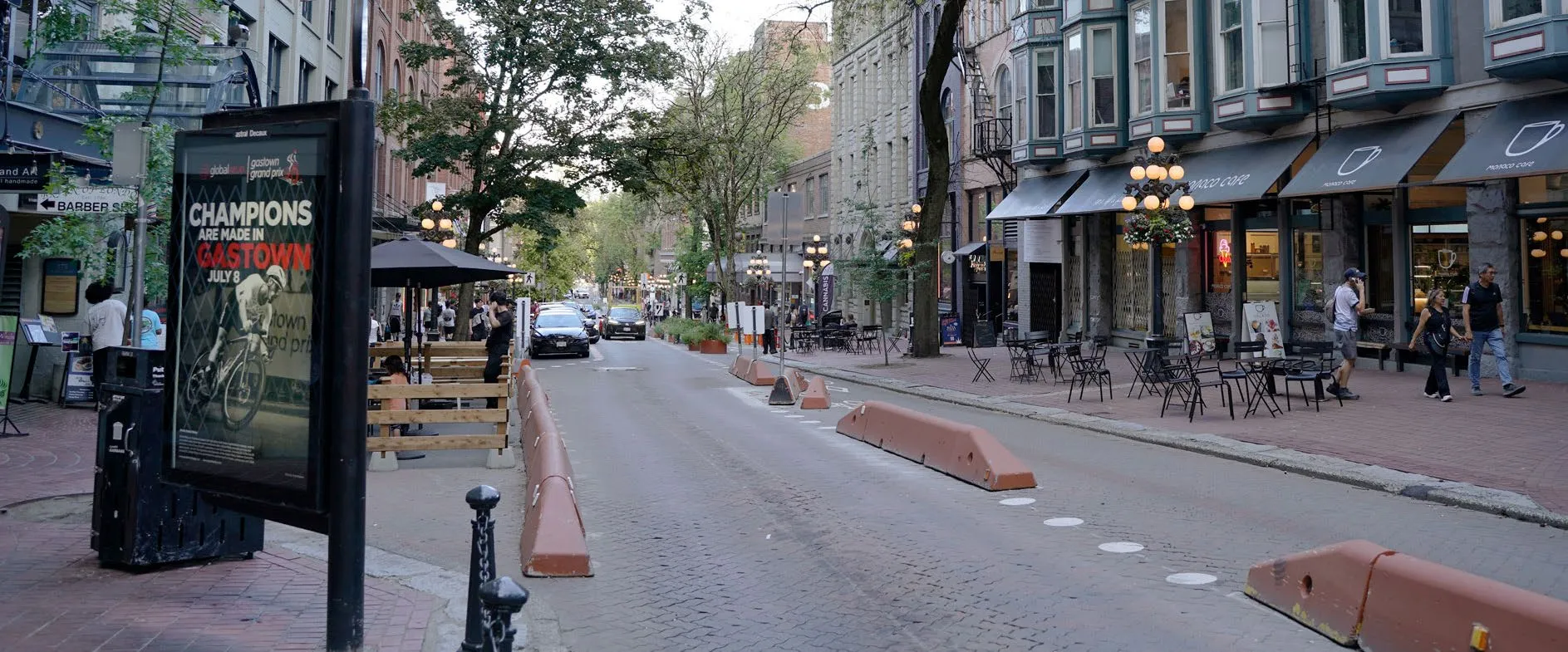
As I prepare to guide council and the public through materials supporting the important decisions today, a review of what can be achieved over four years is best captured by looking at what we've come to accomplish over the past four. Of the $273 million of city-led capital programming in the last four years, approximately 99% has already been allocated and in the process of being delivered or delivered. The park board team and engineering team are proud to have delivered two exceptionally strong capital delivery years in 2024 and 2025, both exceeding over 100% of delivery. And we remain on pace for 2026 for another solid year. Of note on this slide is the breadth of what has been delivered. We've invested across the entire parks and public spaces system rather than focusing on any single asset type. In park amenities, we've added new parks, upgraded existing parks, expanded sports infrastructure, renewed playgrounds, and advanced planning for our future inclusive destination playground. In our natural areas and urban forest work, we've restored habitat through creek daylighting projects, implemented green rainwater infrastructure, and planted approximately 11,000 trees. We've continued investing in our seawall and waterfront assets, renewing piers and marine structures that are critical to public access to our long-term and long-term asset management. And delivery included upgraded park buildings and infrastructure, including washrooms, fleet assets, decorative water features such as the Queen Elizabeth Park dancing fountains and waterfall. And finally, we've contributed to expanding and improving the public gathering spaces through public realm improvements, permanent neighborhood plazas, temporary public spaces that support vibrant and active communities, notably the improvements in Gastown and Granville Street.
and the many neighborhood plazas that were either temporary and now converted to permanent, or new temporary plazas that are in place today. Overall, the current capital plan reflects significant investment in both maintaining existing assets and expanding opportunities for recreation, gathering, and access to nature across Vancouver.
As we focus on the four years to come, the proposed investment is $278 million, with funding coming from a combination of city contributions and developer-led funding. much of these investments being delivered by the Park Board and engineering teams, and in many cases, both. Overall, the plan reflects a balanced approach that focuses on maintaining service levels, renewing critical infrastructure, and making targeted investments where demand is greatest. The largest proposed area of investments is park amenities. This includes growth and renewal of our existing park system, as well as improvements within these spaces that increase accessibility, safety, playability, and year-round use across the city. In subsequent slides, I will highlight three priority projects for a little bit more detail. We're also continuing to work in the urban forest and natural areas, supporting biodiversity, habitat enhancements, tree planting, and climate resilience. and a significant portion of the plan is directed towards park buildings, infrastructure, and fleet, including investments in improving public access to washrooms and addressing aging infrastructure throughout our system. Finally, we're proposing investments in public realm improvements, pedestrian zones, and plazas, again through work with engineering and oftentimes led by engineering, to support public life, community events, business activity, and safe gatherings throughout Vancouver.
Highlighting one exciting project is the Broad Slopes Project. Again, this is a piece of work jointly led by Park Board and engineering. This is a really great example of how creating new park space in areas experiencing significant growth create benefits that can be achieved when departments work together. As a key destination and connection point along the Arbutus Greenway, this project will deliver a multifunctional neighborhood park. That includes open lawn space, a skate and small wheels area, pollinator and rain gardens, dog off-leash area, public washroom facilities, gathering spaces, and accessible pathways. The location is particularly important because it serves the Broadway Plan area and will provide benefits to more than 19,000 residents who live within a 10-minute walk of the space. One of the key outcomes of this park provision is increasing park provision by 40% in that neighborhood, and the project's estimated budget of $8.8 million is already underway and is expected to be complete in 2029.
Another project endorsed by our board as well as Council is the Beacons Field Synthetic Turf Renewal. This project reflects our focus on maximizing the use of existing park spaces in response to growing demand for sport facilities. The project replaces an existing gravel field with a modern synthetic turf field that can accommodate approximately four times the play of an existing natural turf field. Once complete, the field is expected to provide up to 3,000 additional permit hours to our system, helping address ongoing demand for quality playing surfaces. The location, well-suited for this investment because it's close to transit and complements existing sports facilities in the area.
Project budget is $8.4 million, with construction expected in 2028 and 2029. And finally, highlighting another joint project between Park Board and Engineering, Columbia Park, which is an excellent example of a one-city approach to investment. It supports multiple objectives at once, accommodating population growth, improving park services, enhancing climate resilience, upgrading infrastructure, and strengthening neighborhood connectivity. The project combines several community benefits in a single initiative, including a new synthetic turf field, a renewed playground, a new washroom, and the Alberta Blue Greenway system. A unique feature of this project is the integration of an underground stormwater infrastructure with park improvements, allowing us to use limited urban space more efficiently while delivering benefits across our department. project budget for park improvements is roughly $10 million, and we expect this to start in 2028 and potentially be complete by 2030. This project illustrates how parks can contribute to a broader city goal while contributing high-quality recreational amenities. I'm happy to share the mic now with Margaret Witkins of ACCS.
Thank you.
Great. Arts, culture, and heritage includes cultural centers, entertainment and exhibition facilities, theaters, performance spaces, public arts, and heritage. These facilities help create the vibrancy of the city and shape its character and expression.
The 2023 to 2026 capital plan delivered a number of key projects within this area. This included the renewal and expansion of the Peony Amphitheater, a new covered multi-use outdoor venue with a 10,000 person capacity. It also included delivery of temporary and permanent public artworks and ongoing maintenance and restoration of existing artworks. CULTURAL SPACES GRANTS SUPPORTED APPROXIMATELY 150 PROJECTS ACROSS CITY-OWNED AND COMMUNITY CULTURAL SPACES, INCLUDING UPGRADES TO GALLERIES, THEATERS, AND ARTIST STUDIOS. NOTABLY, CAPITOL GRANTS SUPPORTED COUNCIL PRIORITIES RELATED TO CULTURAL REDRESS, INCLUDING RENOVATION TO THE CHINESE-CANADIAN MUSEUM, THE JOY KAGAWA HOUSE, AND THE FUTURE JAPANESE-CANADIAN HASTINGS PARK INTERPRETIVE CENTER.
Looking ahead to the 2027 to 2030 capital plan, there's a focus on maintenance and renewal of existing facilities, including major renovation and enhancements of the historic Fire Hall Arts Theater with an emphasis on accessibility and functionality. Improvements related to accessibility and functionality will also be advanced at the Vancouver Civic Theatres. Cultural grants will support city-owned and non-city-owned cultural spaces and cultural redress priorities.
And there will be continued advancement of the public art program, including permanent and temporary artworks and maintaining and restoring existing artworks. A highlight is the Fire Hall Arts Center Renewal. This builds on council direction from the midterm capital update. The Fire Hall Arts Center Renewal is a priority project focused on accessibility and functional upgrades. It's a 12,000 square foot facility with 140 seats and a city-owned heritage facility that hosts over 200 events a year and serves around 35,000 attendees. with a strong focus on equity, disability, and Indigenous programming. This project will deliver critical renewal and functional upgrades, including elevator entrances, washrooms, as well as life safety improvements, removing barriers for audiences, artists, and staff, with delivery targeted by Q1 2029. I will now pass to my colleague, Chief Frye.
Good afternoon, Karen Fry, Fire Chief and General Manager for Vancouver Fire Rescue Services. Firstly, I'd like to thank each and every one of you. This will be my last presentation to you, Council, before I transition into retirement. Sorry, Donnie. We have accomplished so much in our term, and I can't tell you how much your support has meant to not only me, but to our entire department. Our city and our firefighters are safer because of you and your support for public safety. So with that support, it doesn't end when I leave. We move towards the next capital plan, and I will present on public safety, which includes VPD, VFRS, and the animal shelter. While I'm standing here today, I'd like to acknowledge my colleague, Chief Rye, with an R, who will be here to answer any questions that you have towards the VPD portion of the capital plan. So Vancouver Police and Fire have been protecting our beautiful city of Vancouver for over 140 years this year. Currently, VPD has five primary and 10 secondary police facilities and approximately 500 vehicles and equipment, while our Vancouver Fire Rescue Services has 19 fire halls strategically located throughout our city and five specialty facilities with approximately 150 vehicles and equipment. The city also has one animal control shelter and eight vehicles and equipment.
So the delivery of the last capital plan will see an allocated $144 million spend at the end of this year. Some of the biggest projects include our renewal and expansion of the downtown South Fire Hall 8. Due to be completed in 2029, it is a fire hall with social housing high-rise and daycare.
Additionally, the renewal and expansion of our Grandview Fire Hall 9 is currently in the planning and redesign phase after a re-scope, and construction will begin this year. Finally, the animal shelter is under redevelopment that will see a 12,000 square foot purpose-built shelter beginning this year and completion expected in 2028.
For the 2027 to 2030 capital plan, we are requesting $205 million for our key projects and programs, and this will include a new fire hall 2 to be built at 422 to 496 Alexander Street, replacing the existing one at Main and Powell. Fire Hall 1 seismic upgrade. Fire Hall 1 currently is a working fire hall, our administration offices, and our fleet mechanic shop. The upgraded seismic standards will ensure that our firefighters will be in a better position to respond to our city when an earthquake hits. Additionally, we will also be including an upgraded HVAC system that will add much-needed cooling capacity to the building. For my partners and our partners at Vancouver Police, a $37.4 million investment in technology to support the operational needs of technology, infrastructure evergreening, computer hardware replacement, HR modernization, Also to maintain them to a modern policing capabilities with key investments in public safety, CCTV cameras, automated license plate recognition technology, drone as a first responder capabilities, which also have really helped our fire department during a lot of our large fires, and real-time integrated technology. So let me tell you about, as a key highlight here, a little bit about Fire Hall 2 at 422 and 496 Alexander Street. For those of you who haven't been in the existing one, to say that it is underbuilt for today's environment would be kind. We are busting at the seams. This fire hall, new fire hall, will be built in tandem with Fire Hall 9. Some of the key outcomes will be floor bays, which will allow all current apparatus to be parked inside and respond from inside. It will be built to the most up-to-date post-disaster requirements, and it will keep our firefighters safe. It will have upgraded ventilation, decontamination, and respite.
For both police and fire, We are looking for investments that will include renewal of our aging vehicles, 240 police cars, which include a marine unit and a modest 26 vehicles for growth. 50 vehicles, equipment for fire replacement, and an additional six apparatus for growth and surge capacity. With our last growth plan, we took out of our reserves, and so we are very limited right now in our ability to increase our staffing levels when needed for large events.
Finally, police looking for $5 million for facilities that will support their ongoing lifecycle renovations and replacements over their building infrastructure. And with that, I will turn it over to my colleague, Craig Crawford.
OKAY. GOT IT. GOT THAT ARROWS WORKING. GREAT. GOOD AFTERNOON MAYOR AND COUNCIL. I'LL BE SPEAKING ON THE COMMUNITY FACILITIES AND CIVIC FACILITIES SERVICE CATEGORIES OF THE CAPITAL PLAN. COMMUNITY FACILITIES ASSET CLASS INCLUDES A BROAD RANGE OF PUBLIC FACING USES INCLUDING LIBRARIES, COMMUNITY CENTERS, REC CENTERS, POOLS, ICE RINKS AND CHILDCARE SPACES.
Looking back at the 2023-26 capital plan, some of the highlights that have been delivered include the Sunset Senior Center that recently opened, the Marpole Community Center that is just nearing completion right now. Two library upgrades and expansions are currently in progress. A community economic hub is currently under construction at 525 Powell. That's an indoor space for street vendors and is part of a social housing development. AS WELL, THE NEW VANCOUVER AQUATIC CENTER IS SCHEDULED TO START CONSTRUCTION BY THE END OF 2026.
As well in 2023-26 capital plan, there's a number of child care projects that have been delivered for, including David Lord George, Eric Hamber, Henry Hudson, and Sam Stone. That's a total of 282 that are complete, and another 65 are coming online when the Coal Harbor project is completed, which is currently wrapping up.
MOVING ON TO THE 2730 CAPITAL PLAN FOR THESE COMMUNITY FACILITIES ASSET CLASS. WE HAVE A COMMUNITY CENTER RENEWAL PROGRAM IN ALIGNMENT WITH THE 2730 CAPITAL PLAN FOCUS ON RENEWAL AND REPLACEMENT. the city's aging assets as well we're going to continue to modernize the city's libraries with a focus on the main library and as well we're looking forward to delivery of up to 160 more child care spaces these will be in-kind amenities delivered through private developers
Moving on to civic facilities and equipment, the civic facilities asset class includes a range of administrative buildings and service yard infrastructure. In 23-26, one of the key highlights was delivered was Sunset Yards Operations Center.
It was completed earlier this year in April of 2026. and as well a very comprehensive capital maintenance and renovation program. That capital maintenance and renovation program includes a broad range of essential upgrades and renewals, includes accessibility upgrades, seismic strategic energy management, and specifically the ammonia charge reduction, which is an ongoing program. Just a couple of things this maintenance renovation program was able to fund was the urgent kids pool repairs and upgrading the rinks at Britannia and the agrodome.
Some of the key projects and programs under the 2730 Civic Facilities Program, including the next phase of upgrading the Sunset Yards facility. That's an ongoing project that has several phases based on a master plan that was developed a couple years ago. We're going to upgrade the Manitoba Yards by building two new operations buildings and continue our capital maintenance and renovation program delivery.
I want to highlight the Manitoba Yards Operations buildings. These designs of these buildings will be based on the Sunset Yards project, so we will save some design time and overall project delivery time by replicating a design of a successful project. It's going to create improved working conditions for staff. It's going to create a more efficient use of the site and be seismic resilient with some post-disaster capacity and reduced operating costs. These buildings, the Sunset Yards building was built to a passive house standard, so it should have excellent energy efficiency going forward. That's the end of my presentation, and I'm going to invite Josh up to talk about seismic and climate resilience.
THANK YOU, COUNCIL. I'LL COVER AREAS OF CLIMATE AND SEISMIC RESILIENCE WHICH HAVE BEEN BUCKETED TOGETHER HERE. IT INCLUDES INVESTMENTS SUPPORTING CLIMATE OBJECTIVES FOR THE CITY INCLUDING BUILDING EFFICIENCY, INNOVATION AND COOLING, PUBLIC EV CHARGING NETWORK AND CLIMATE ADAPTATION INITIATIVES ALONG WITH SEISMIC SAFETY IMPROVEMENTS IN BUILDINGS.
THIS SLIDE SPEAKS TO THE AREAS OF INVESTMENT IN THE 2023-26 CAPITAL PLAN.
FOR THIS UPCOMING CAPITAL PLAN, THERE ARE FOUR GENERAL AREAS OF PROPOSED INVESTMENT. FIRST IS CLIMATE ADAPTATION. INVESTMENTS INCLUDE THE FIRST PHASE OF STILL CREEK RESTORATION, WHICH IS A FEATURE OF THE RUPERT RENFROE PLAN IMPLEMENTATION. THIS IS FOR $7 MILLION. WE'RE ALSO CONTINUING PROGRAMS FOR EXTREME HEAT SAFETY FOR VULNERABLE RESIDENTS, UP TO 1500 UNITS.
SECOND, WE HAVE BUILDING EFFICIENCY INNOVATION AND COOLING, INCLUDING FOR POLICY REGULATORY INCENTIVES AND INDUSTRY SUPPORT TO ENABLE MASS TIMBER PREFAB CONSTRUCTION AND CONTINUED STREAMLINING OF ELECTRICAL CONNECTIONS. THIRD, WE HAVE EV CHARGING. PUBLIC EV CHARGING INVESTMENT WHICH INCLUDES LEVERAGING EXISTING FEDERAL AND B.C. HYDRO PROGRAMS. THIS IS IN ADDITION TO PARKS PARKING FAST CHARGING AND THIRD PARTY CURBSIDE CHARGING WHICH WE HAVE RECENTLY OPENED UP. FOURTH, WE HAVE SEISMIC IMPROVEMENTS. THIS INCLUDES THE SEISMIC INVENTORY OF VANCOUVER'S BUILDING STOCKS, A KEY PART OF THE SEISMIC STRATEGY YOU RECENTLY PASSED, AND SOME PILOT RETROFIT PROGRAMS ON CITY-OWNED BUILDINGS. AND FOR CLARITY, THAT IS THE $1.3 MILLION ALLOCATION ROUNDED TO $1 MILLION. NOTABLY, ALIGNED WITH OUR CORPORATE APPROACH ON CLIMATE RESILIENCE AND SEISMIC RESILIENCE, VARIOUS CITY FACILITIES AND ASSETS INCLUDE UPGRADES AS PART OF CAPITAL PROJECTS TO INCLUDE RESILIENCE, SOME OF WHICH MY COLLEAGUES HIGHLIGHTED, INCLUDING CRAIG WITH MANITOBA AND SUNSET YARDS. CHIEF FRYE WITH FIRE HALL ONE AND ANOTHER EXAMPLE, COLUMBIA PARK UPGRADES WHICH INCLUDE FLOOD RESILIENCE AS PART OF THE PROJECT STEVE HIGHLIGHTED. AND NOW I'LL PASS IT BACK TO LAWN.
GM Engineering back again. Now to speak about this category, which is all things water. This category includes drinking water, rainwater, and wastewater. Ultimately, the assets included in this group include thousands of kilometers of pipes, meters, pumps, hydrants, valves. A lot of this equipment is largely hidden from view, but is essential to service residents and businesses across the city. In this capital plan, we've delivered or about to finish delivering 25 kilometers of sewer renewal, 40 kilometers of water pipe renewal, four renewed pump stations, and 7,000 water meters on properties that were previously unmetered. In addition to that, we've delivered green rainwater for infrastructure and flood management in key locations across the city. If you look at the next capital plan, we will be ramping up sewer renewal. So we're planning for 32 kilometers of sewer main renewal, continuing water main renewal, another four renewed pump stations, and in addition, some significant investment in green infrastructure, including some of the projects that were already mentioned, Columbia Park, Still Creek, Hastings Sunrise, and Mount Pleasant.
Generally, the pipes in this system, they last about 100 years and a lot of them are coming due for replacement because a lot of our city was built about 100 years ago.
The ongoing goal is to renew it about 1% a year so that you do have kind of an ongoing forever replacement project, so to speak. In addition to that, because it's an ongoing forever project, we are also transitioning the way we fund it. So if you look at the funding strategy for sewers here, you can see that we're about equal on debenture and pay-as-you-go as we transition to pay-as-you-go. For water, we are already at the pay-as-you-go rate, so the great news for the water renewals work that's underway is that there is no ongoing borrowing costs because the fees that we collect that year for water help pay for the renewal.
In addition into the next capital plan in response to council direction, we're ramping up our metering of unmetered properties. So last in this capital plan, we've delivered 7,000 new water meters. In the next capital plan, we're planning on doubling that to 14,000 water meters on existing unmetered water properties. I will also talk to the next category, which is waste and energy utility. In this category, we have the region's only landfill. Of course, this is Vancouver-owned and operated landfill, but we do receive waste from all the cities across the region. We also have our own transfer station for solid waste at Manitoba Yard. We have two recycling centers, and then we have a host of equipment that's related to sanitation, including sweeper trucks and waste pickup trucks. In addition to that, of course, we operate our own neighborhood energy utility.
As part of this capital plan, there's a lot of obligation that comes with managing a landfill in terms of progressive closure, managing leachate and stormwater, but also capturing the gas that comes off of the landfill. And we've been very successful at being able to repurpose that gas as renewable natural gas. Also, our neighborhood energy system expands as development around that area that it serves expands.
In the next capital plan at the landfill, we will be continuing to do the ongoing stewardship of that site. In addition to the usual leachate gas and stormwater management, we're also going to be investing in renewal of the way stations and the stormwater management system. In addition, the neighborhood energy utility will continue to expand as consumer demand expands in the area.
The landfill, both of these as utilities, are kind of funded by users.
And so the work that happens at the landfill, in terms of its funding strategy, it's generally all pay-as-you-go with some partner funding from Metro Vancouver.
Thank you, Lon. So behind so many of the modern services that a city provides for its residents are technology. So the asset class in terms of technology services that supports the delivery of those public services includes about 6,500 computers and laptops, 850 infrastructure components, so I think servers and network switches. We maintain over 400 software applications to deliver those services. Uniquely for a city of our size, we have 300 plus kilometers of fiber optic cable, which allows us to connect our city facilities and increase our resiliency. And then we have AV setups both in city council chambers as well as in the park board chambers. In terms of the current capital plan, we will have delivered approximately $135 million of value over the course of the last four years. The majority of this is in the maintenance of our core IT infrastructure. We implemented a new data center to move out of our city hall data center. We extended and renewed about 80 kilometers of that fiber optic network that I mentioned, as well as ensuring that we're replacing the client hardware that our staff use over the course of the capital plan. We've also modernized many of our core city internal processes, for example, our financial planning transformation and our human resources information system, which just went live recently. In partnership with DBL, we've focused and invested heavily in digital transformation around our permitting and licensing, resulting in positive outcomes for both staff and customers alike, reduced wait times, and improved service delivery. So together, these investments have strengthened our technology foundation, improved service delivery, and created many of the capabilities that support our ongoing digital transformation efforts. In terms of the next capital plan, you'll see a consistent theme, again, with the majority of the investment on our infrastructure and core foundational technology. So think about our renewal lifecycle for the end-user computing devices across City of Vancouver, VPD, and VPL. We're also going to increase the amount dedicated towards cybersecurity to ensure that we're protecting the vast amount of data that we hold both around city business and operations, as well as our citizens. We'll continue to invest in our digital transformation program, modernizing and digitizing permitting and licensing services, and then leveraging that investment across a range of other services. In terms of that core technology foundation, the investment will be used to sustain and modernize our foundational technology infrastructure, as well as the deployment of enhanced cybersecurity platforms, tools, and governance capabilities. We'll move the average computing device replacement to approximately five years, and we expect that the majority of that funding will be in that area. Other examples include Council AV modernization, upgrade of our 311 contact center, various database upgrades, as well as security monitoring and response services. In terms of technology modernization, we'll continue to create those foundational capabilities across departments that will improve efficiency, user experience, and service integration.
So things like case management, enterprise payments, and identity, things that you invest in once and can use across multiple service areas. We'll also address technical debt, replacing end-of-life systems, enhancing performance, functionality, and integration between those systems. And with that, I'll hand it over to Ryan Bigelow. Thank you.
Afternoon, Council. Ryan Bigelow, Managing Director of Non-Market Housing Development and Operations. I'm going to go over the housing service category. So the city has over 250 sites that support a variety of housing, including shelters, SROs, non-profit and co-op housing, and market rental housing. The city directly owns and operates just over 1,000 SRO and social housing units, as well as a handful of market rental units. The city also acquires and holds land for future housing development. Notably, the city's housing assets are just part of a larger housing system, and most of the housing assets in Vancouver are partner-owned. So to support the preservation and growth of this partner housing, we provide capital grants.
SOME ANIMATIONS HERE, BUT I'LL SKIP OVER THAT. SO FOR THE 23 TO 26 CAPITAL PLAN, INCLUDED 675 MILLION TOWARDS HOUSING, 340 MILLION WAS CITY LED AND 335 MILLION RELATED TO IN-KIND ASSETS WE OBTAINED FROM DEVELOPERS. Notably, towards the end of the capital plan period, many senior government funding programs were wound down, as well as we saw a softening of the housing market. But despite these headwinds, the city and its non-profit delivery partners have leveraged over $1 billion in senior government funding and financing for housing development on city land during this capital plan, which is significant. But we don't expect the same in this upcoming capital plan. While 2026 has been filled with uncertainty for new housing developments, we intend to utilize all the funding in the 2023 to 2026 capital plan. Some highlights. Most of the housing capital went towards acquisitions of land for future housing development. We acquired or transferred 10 sites, which once developed will deliver over 900 homes. And we have additional acquisitions anticipated throughout the rest of 2026. We funded significant pre-development activities at a cost of $40 million, much of which will be recoverable when those projects proceed to construction. This helped initiate or advance 24 projects closer to construction, and once developed, these will deliver over 3,000 homes. Council also approved $30 million in capital grants for six projects to non-profits developing on their own land. Most of these started construction or will start construction shortly and tally up to about 800 homes. Lastly, we replaced 30 city-owned SRO rooms and provided a number of SRO grants, improving the livability of 480 non-city-owned SRO rooms.
Is there a seconder? Councillor Orr? Okay. Any discussion? Councillor Kirby-Young?
Is there any discussion?
Sure. I'm sorry, I'm just going to advance here. Councillor Meiszner?
Thank you. I just, Mayor, if you could inform me how many slides are left in the presentation, or if the clerks could let Council know. Sorry, can you repeat that? I just want to know how many slides are left in the presentation.
12? Okay, thank you.
Just 13 slides to present.
And roughly how much time would that be?
I think roughly 10 more minutes.
Any other discussion? Council?
Okay. All those in favor say yay. All those opposed say nay.
Sorry, clerk, how many do we have to have to the simple majority? Two thirds. Okay. It looks like that was two thirds. So we will extend to here.
Okay, I'll talk a lot faster. For 27 to 30, limited senior government funding and the softening of housing market conditions are anticipated to continue and will have a significant impact on the delivery of new affordable housing in Vancouver. So the proposed plan includes $176 million towards housing, $104 million will be city-led, and these investment levels align with the anticipated conditions. So nearly all of the city-led plan will be funded by the empty homes tax at $88 million. So how are we going to use this $104 million of city-led capital? $75 will go towards acquisitions, SRO replacement, and development. We anticipate acquisitions of land and building to deliver approximately 210 affordable homes and to plan and initiate 10 new development projects with our pre-development capital. To make our housing dollars stretch and deliver more affordable housing, we will leverage senior government funding where it's available, but we also will explore alternative funding approaches where it's not. While acquisition funding is lower in this capital plan, greater emphasis is being put on redevelopment of existing city lands, which will help the city continue to progress its housing goals and targets. Capital maintenance is the next largest program at $17 million to preserve our existing housing stock, and we'll spread that across nine buildings and 771 units. Housing capital grants are the third largest program at $10 million to help nonprofits deliver affordable housing on their own sites. The grants are meant to complement senior government funding programs, not replace them, so we're earmarking funding for roughly two to three projects.
Just to illustrate some investments from the capital plan, I wanted to highlight two items that are advancing our housing goals on city land. First is the acquisition of an assembly on Renfrew Street and the future redevelopment of a nearby city-owned site that's underutilized. This acquisition was completed last year, and we're planning the development of the site to replace and expand co-op housing. Once developed, a nearby city-owned site can be unlocked for further development. Overall, this pocket of sites could deliver roughly eight times more housing than what exists today and demonstrates the magnitude of additional housing we can create on city land that we already own. LASTLY, I WANTED TO PROVIDE SOME GREATER EMPHASIS ON OUR ASSET PRESERVATION EFFORTS. SO I WANTED TO HIGHLIGHT ONE OF OUR BUILDINGS WHERE CAPITAL MAINTENANCE DOLLARS ARE GOING. 1067 SEYMOUR, CITY OWNED AND OPERATED BUILDING, PROVIDED AFFORDABLE HOUSING TO 110 RESIDENTS, PRIMARILY SENIORS. BUILDING WAS CONSTRUCTED IN 1991. SO IT'S NOT REALLY A NEW BUILDING BUT HAS MANY YEARS LEFT IN IT IF IT'S PROPERLY MAINTAINED. SO THROUGH THIS CAPITAL PLAN, WE INTEND TO COMPLETE MAINTENANCE AND REPLACEMENT OF KEY BUILDING SYSTEMS TO CONTINUE PROVIDING AFFORDABLE AND LIVABLE HOUSING HERE. So that's it for housing. I'm going to pass you over to Alicia McCallum to summarize some of our engagement through the capital plan. Perfect. Thank you, Ryan. Good afternoon, Mayor and Council. I'm Alicia McCallum, the Chief of External Relations, and I'm pleased to present you the results of our 2027 to 2030 capital plan engagement process. And in contrast to my colleague, Chief Fry, who did a great job of holding it together this afternoon, this marks my first time presenting in Council Chambers today.
I'd like to start off by talking about the capital plan engagement background and objectives. We had more than two weeks from May 22nd to June 7th, and that gave people time to learn about the capital plan and share their input. We asked for input on specifically capital investment priorities, how the city manages infrastructure, financial strategies for capital planning. And the results are a snapshot of public priorities, and we want to remind everyone that should be considered alongside asset condition, service needs, financial capacity, and, of course, council direction. So in terms of how we engaged and who we heard from, we used online and in-person tactics to reach those who were interested or impacted. And that included a survey in seven languages, 10 pop-up events. We issued postcards. We did an email outreach. We circulated posters. And we had a social media campaign. In total, we heard from approximately 500 people in person, 4,265 online survey responses from residents, businesses, and community organizations. And that survey was open to anyone who chose to participate. So the results are a snapshot of participant priorities, not statistically representative as a sample of Vancouver.
In terms of the profile of survey respondents, we heard from a broad range of people across the city. The survey respondents included people living in different neighborhoods from different age groups. Business owners, sorry. I've never had a problem with projection. I don't think anybody, I think we've gathered that, yeah. People from different age groups, business owners and operators, and people connected to community organizations serving Vancouver. Respondents were a mix of homeowners, renters, people in different housing situations. About half of those respondents were homeowners. Nearly one quarter of those respondents lived in households with children under 18, and the results were weighted to match census data on age, gender, geographic region, and among those residents. In terms of the priorities for the capital plan investments, I'd like to give you now an overview of the respondents' priorities for investments. Respondents were asked to rate the importance of the 12 capital plan investment categories. Overall, the results show a strong interest in core infrastructure, transportation, community facilities, parks, and recreation. These priorities generally align with council direction, including increased investment in roads and sidewalks and renewal replacement of major recreation facilities. In the online survey, water, sewers, and drainage was the highest rated category, with 97% of respondents saying it was either very or fairly important. Other top categories included transportation and streets, community facilities, and parks and open spaces, waste collection and diversion and disposal. At the in-person pop-ups, participants identified housing as the top priority, followed by community facilities, transportation and streets, parks and open spaces, and child care.
When asked about transportation and street improvements, respondents prioritized protected bikeways and cycling connections, pedestrian safety, transit-supported street improvements.
In terms of parks, open spaces, and related amenities, recreation facilities were the top priority, followed by park buildings and infrastructure, park renewals and amenity upgrades, urban forest and natural areas, and seawall and the waterfront. And in terms of top priorities for community center spaces, this slide will show you the top priorities for residents living near the five community centers identified by council for renewal or replacement. Across those five locations, amongst the strongest priorities for facilities were the fitness facilities, pools, libraries, or learning commons. Overall, the results show a strong interest in renewing these facilities to support recreation, wellness, learning, and flexible community use. In closing, I'd like to acknowledge and thank our public engagement team for their expertise and professionalism throughout this process, and I will ask Colin to return to the podium to wrap up our presentation.
THANK YOU. I'LL WRAP UP THE PRESENTATION WITH JUST A SUMMARY OF WHERE WE ARE IN THE PROCESS. AGAIN, THIS IS A KEY STAGE IN THE PROCESS FOR GETTING COUNCIL'S APPROVAL OF THE CAPITAL PLAN THAT WILL INFORM THE ELECTORATE APPROVAL OF THE BORROWING ON OCTOBER 17TH. And further, I'd just again like to acknowledge the work of many staff in the departments represented here for their work assembling this. And with that, I'll conclude the presentation. Thank you.
Great. Thank you very much.
That was a very comprehensive presentation. So thank you, everyone, for all the work that you put into it. Okay, can we please have a motion to recess until Thursday, July the 6th? No, we don't need a motion. Perfect. All right.
We are recessing until Thursday, July 16th, 2026 at 1 p.m. In the council chamber and online. Thank you very much.
Statement Watch
So, Paul, please go ahead. Colin Knight, General Manager of Finance and Supply Chain. I'm here to present the 2027 to 2030 capital plan. I'm going to start with an overview of the citywide context, and then I'm going to be joined by a number of city leadership team colleagues who will present overviews of the service categories, areas included in the capital plan, followed by a presentation of the public engagement results related to the capital plan. So when we look at the capital plan overall, this plan is a $3.5 billion draft capital plan. It includes an additional $0.1 billion in in-kind amenities. And in comparison, this is an increase to the previous 2023 to 2026 capital plan, which had a city-led portion of $3.3 billion. And I'll speak in the presentation about some of the factors that are supporting the increase in the capital plan. But a large focus of the plan is on fixing and protecting essential infrastructure. This is based on direction provided by council. And so over 70% of the capital plan will be allocated to the renewal and maintenance of essential infrastructure. As part of the plan, we've included an accelerated infrastructure renewal, which is based on direction previously provided by council to increase the infrastructure levy at 2% each year. We've also reviewed borrowing capacity and are proposing increased borrowing to address investment in essential infrastructure. As you'll see in the capital plan and accompanying report, we've taken a program-based approach which provides an opportunity to have funding to be allocated in areas as scope costs, operating impacts of projects are designed and developed. And lastly, just to emphasize that this capital plan has been developed, including public engagement feedback, and we'll talk about the findings of the public engagement as part of this presentation, and detail is included in the accompanying report. So if we look at the 2027 to 2030 capital plan, a few points to start off with.
Statement Watch
What that means is that for the first time in decades, actually, we will see the average road condition actually improve in the next capital plan over the next four years. In addition to that, and somewhat similarly, TransLink has also increased the funding for the major road network, almost tripling the funding of the funding that will be spent in Vancouver. I'll pass it over to Steve. Good afternoon, Mayor and Council. I'm going to be sharing the parks and public spaces plan as part of the capital plan. So parks and public open spaces often fill the role of third place for many of Vancouver, providing the many amenities and needs that fill the space between life and our time at work or school. For many, these spaces create a sense of belonging, provide an opportunity for health and wellness, and moments for disconnection and clarity. The city's parks and public open spaces network consists of a wide range of assets, as you can see on the screen, that people interact with every day, from the seawall and waterfront spaces to sports fields and courts, playgrounds, dog parks, plazas, and the essential facilities like washrooms and field houses. These spaces are part of the daily experience of living in Vancouver. When these spaces are designed and well maintained, Vancouver achieves a level of livability that sets it apart from cities around the world. These investments we are discussing today are focused on maintaining and improving these spaces so that they continue to meet the needs of a growing city while remaining accessible, welcoming, and resilient for years to come. As I prepare to guide council and the public through materials supporting the important decisions today, a review of what can be achieved over four years is best captured by looking at what we've come to accomplish over the past four. Of the $273 million of city-led capital programming in the last four years, approximately 99% has already been allocated and in the process of being delivered or delivered. The park board team and engineering team are proud to have delivered two exceptionally strong capital delivery years in 2024 and 2025, both exceeding over 100% of delivery. And we remain on pace for 2026 for another solid year. Of note on this slide is the breadth of what has been delivered. We've invested across the entire parks and public spaces system rather than focusing on any single asset type. In park amenities, we've added new parks, upgraded existing parks, expanded sports infrastructure, renewed playgrounds, and advanced planning for our future inclusive destination playground. In our natural areas and urban forest work, we've restored habitat through creek daylighting projects, implemented green rainwater infrastructure, and planted approximately 11,000 trees. We've continued investing in our seawall and waterfront assets, renewing piers and marine structures that are critical to public access to our long-term and long-term asset management. And delivery included upgraded park buildings and infrastructure, including washrooms, fleet assets, decorative water features such as the Queen Elizabeth Park dancing fountains and waterfall. And finally, we've contributed to expanding and improving the public gathering spaces through public realm improvements, permanent neighborhood plazas, temporary public spaces that support vibrant and active communities, notably the improvements in Gastown and Granville Street.
Statement Watch
Project budget is $8.4 million, with construction expected in 2028 and 2029. And finally, highlighting another joint project between Park Board and Engineering, Columbia Park, which is an excellent example of a one-city approach to investment. It supports multiple objectives at once, accommodating population growth, improving park services, enhancing climate resilience, upgrading infrastructure, and strengthening neighborhood connectivity. The project combines several community benefits in a single initiative, including a new synthetic turf field, a renewed playground, a new washroom, and the Alberta Blue Greenway system. A unique feature of this project is the integration of an underground stormwater infrastructure with park improvements, allowing us to use limited urban space more efficiently while delivering benefits across our department. project budget for park improvements is roughly $10 million, and we expect this to start in 2028 and potentially be complete by 2030. This project illustrates how parks can contribute to a broader city goal while contributing high-quality recreational amenities. I'm happy to share the mic now with Margaret Witkins of ACCS. Thank you. Great. Arts, culture, and heritage includes cultural centers, entertainment and exhibition facilities, theaters, performance spaces, public arts, and heritage. These facilities help create the vibrancy of the city and shape its character and expression. The 2023 to 2026 capital plan delivered a number of key projects within this area. This included the renewal and expansion of the Peony Amphitheater, a new covered multi-use outdoor venue with a 10,000 person capacity. It also included delivery of temporary and permanent public artworks and ongoing maintenance and restoration of existing artworks. CULTURAL SPACES GRANTS SUPPORTED APPROXIMATELY 150 PROJECTS ACROSS CITY-OWNED AND COMMUNITY CULTURAL SPACES, INCLUDING UPGRADES TO GALLERIES, THEATERS, AND ARTIST STUDIOS. NOTABLY, CAPITOL GRANTS SUPPORTED COUNCIL PRIORITIES RELATED TO CULTURAL REDRESS, INCLUDING RENOVATION TO THE CHINESE-CANADIAN MUSEUM, THE JOY KAGAWA HOUSE, AND THE FUTURE JAPANESE-CANADIAN HASTINGS PARK INTERPRETIVE CENTER. Looking ahead to the 2027 to 2030 capital plan, there's a focus on maintenance and renewal of existing facilities, including major renovation and enhancements of the historic Fire Hall Arts Theater with an emphasis on accessibility and functionality. Improvements related to accessibility and functionality will also be advanced at the Vancouver Civic Theatres. Cultural grants will support city-owned and non-city-owned cultural spaces and cultural redress priorities.
Statement Watch
And there will be continued advancement of the public art program, including permanent and temporary artworks and maintaining and restoring existing artworks. A highlight is the Fire Hall Arts Center Renewal. This builds on council direction from the midterm capital update. The Fire Hall Arts Center Renewal is a priority project focused on accessibility and functional upgrades. It's a 12,000 square foot facility with 140 seats and a city-owned heritage facility that hosts over 200 events a year and serves around 35,000 attendees. with a strong focus on equity, disability, and Indigenous programming. This project will deliver critical renewal and functional upgrades, including elevator entrances, washrooms, as well as life safety improvements, removing barriers for audiences, artists, and staff, with delivery targeted by Q1 2029. I will now pass to my colleague, Chief Frye. Good afternoon, Karen Fry, Fire Chief and General Manager for Vancouver Fire Rescue Services. Firstly, I'd like to thank each and every one of you. This will be my last presentation to you, Council, before I transition into retirement. Sorry, Donnie. We have accomplished so much in our term, and I can't tell you how much your support has meant to not only me, but to our entire department. Our city and our firefighters are safer because of you and your support for public safety. So with that support, it doesn't end when I leave. We move towards the next capital plan, and I will present on public safety, which includes VPD, VFRS, and the animal shelter. While I'm standing here today, I'd like to acknowledge my colleague, Chief Rye, with an R, who will be here to answer any questions that you have towards the VPD portion of the capital plan. So Vancouver Police and Fire have been protecting our beautiful city of Vancouver for over 140 years this year. Currently, VPD has five primary and 10 secondary police facilities and approximately 500 vehicles and equipment, while our Vancouver Fire Rescue Services has 19 fire halls strategically located throughout our city and five specialty facilities with approximately 150 vehicles and equipment. The city also has one animal control shelter and eight vehicles and equipment. So the delivery of the last capital plan will see an allocated $144 million spend at the end of this year. Some of the biggest projects include our renewal and expansion of the downtown South Fire Hall 8. Due to be completed in 2029, it is a fire hall with social housing high-rise and daycare.
Statement Watch
Finally, police looking for $5 million for facilities that will support their ongoing lifecycle renovations and replacements over their building infrastructure. And with that, I will turn it over to my colleague, Craig Crawford. OKAY. GOT IT. GOT THAT ARROWS WORKING. GREAT. GOOD AFTERNOON MAYOR AND COUNCIL. I'LL BE SPEAKING ON THE COMMUNITY FACILITIES AND CIVIC FACILITIES SERVICE CATEGORIES OF THE CAPITAL PLAN. COMMUNITY FACILITIES ASSET CLASS INCLUDES A BROAD RANGE OF PUBLIC FACING USES INCLUDING LIBRARIES, COMMUNITY CENTERS, REC CENTERS, POOLS, ICE RINKS AND CHILDCARE SPACES. Looking back at the 2023-26 capital plan, some of the highlights that have been delivered include the Sunset Senior Center that recently opened, the Marpole Community Center that is just nearing completion right now. Two library upgrades and expansions are currently in progress. A community economic hub is currently under construction at 525 Powell. That's an indoor space for street vendors and is part of a social housing development. AS WELL, THE NEW VANCOUVER AQUATIC CENTER IS SCHEDULED TO START CONSTRUCTION BY THE END OF 2026. As well in 2023-26 capital plan, there's a number of child care projects that have been delivered for, including David Lord George, Eric Hamber, Henry Hudson, and Sam Stone. That's a total of 282 that are complete, and another 65 are coming online when the Coal Harbor project is completed, which is currently wrapping up. MOVING ON TO THE 2730 CAPITAL PLAN FOR THESE COMMUNITY FACILITIES ASSET CLASS. WE HAVE A COMMUNITY CENTER RENEWAL PROGRAM IN ALIGNMENT WITH THE 2730 CAPITAL PLAN FOCUS ON RENEWAL AND REPLACEMENT. the city's aging assets as well we're going to continue to modernize the city's libraries with a focus on the main library and as well we're looking forward to delivery of up to 160 more child care spaces these will be in-kind amenities delivered through private developers Moving on to civic facilities and equipment, the civic facilities asset class includes a range of administrative buildings and service yard infrastructure. In 23-26, one of the key highlights was delivered was Sunset Yards Operations Center.
Statement Watch
It was completed earlier this year in April of 2026. and as well a very comprehensive capital maintenance and renovation program. That capital maintenance and renovation program includes a broad range of essential upgrades and renewals, includes accessibility upgrades, seismic strategic energy management, and specifically the ammonia charge reduction, which is an ongoing program. Just a couple of things this maintenance renovation program was able to fund was the urgent kids pool repairs and upgrading the rinks at Britannia and the agrodome. Some of the key projects and programs under the 2730 Civic Facilities Program, including the next phase of upgrading the Sunset Yards facility. That's an ongoing project that has several phases based on a master plan that was developed a couple years ago. We're going to upgrade the Manitoba Yards by building two new operations buildings and continue our capital maintenance and renovation program delivery. I want to highlight the Manitoba Yards Operations buildings. These designs of these buildings will be based on the Sunset Yards project, so we will save some design time and overall project delivery time by replicating a design of a successful project. It's going to create improved working conditions for staff. It's going to create a more efficient use of the site and be seismic resilient with some post-disaster capacity and reduced operating costs. These buildings, the Sunset Yards building was built to a passive house standard, so it should have excellent energy efficiency going forward. That's the end of my presentation, and I'm going to invite Josh up to talk about seismic and climate resilience. THANK YOU, COUNCIL. I'LL COVER AREAS OF CLIMATE AND SEISMIC RESILIENCE WHICH HAVE BEEN BUCKETED TOGETHER HERE. IT INCLUDES INVESTMENTS SUPPORTING CLIMATE OBJECTIVES FOR THE CITY INCLUDING BUILDING EFFICIENCY, INNOVATION AND COOLING, PUBLIC EV CHARGING NETWORK AND CLIMATE ADAPTATION INITIATIVES ALONG WITH SEISMIC SAFETY IMPROVEMENTS IN BUILDINGS. THIS SLIDE SPEAKS TO THE AREAS OF INVESTMENT IN THE 2023-26 CAPITAL PLAN. FOR THIS UPCOMING CAPITAL PLAN, THERE ARE FOUR GENERAL AREAS OF PROPOSED INVESTMENT. FIRST IS CLIMATE ADAPTATION. INVESTMENTS INCLUDE THE FIRST PHASE OF STILL CREEK RESTORATION, WHICH IS A FEATURE OF THE RUPERT RENFROE PLAN IMPLEMENTATION. THIS IS FOR $7 MILLION. WE'RE ALSO CONTINUING PROGRAMS FOR EXTREME HEAT SAFETY FOR VULNERABLE RESIDENTS, UP TO 1500 UNITS.
Statement Watch
So things like case management, enterprise payments, and identity, things that you invest in once and can use across multiple service areas. We'll also address technical debt, replacing end-of-life systems, enhancing performance, functionality, and integration between those systems. And with that, I'll hand it over to Ryan Bigelow. Thank you. Afternoon, Council. Ryan Bigelow, Managing Director of Non-Market Housing Development and Operations. I'm going to go over the housing service category. So the city has over 250 sites that support a variety of housing, including shelters, SROs, non-profit and co-op housing, and market rental housing. The city directly owns and operates just over 1,000 SRO and social housing units, as well as a handful of market rental units. The city also acquires and holds land for future housing development. Notably, the city's housing assets are just part of a larger housing system, and most of the housing assets in Vancouver are partner-owned. So to support the preservation and growth of this partner housing, we provide capital grants. SOME ANIMATIONS HERE, BUT I'LL SKIP OVER THAT. SO FOR THE 23 TO 26 CAPITAL PLAN, INCLUDED 675 MILLION TOWARDS HOUSING, 340 MILLION WAS CITY LED AND 335 MILLION RELATED TO IN-KIND ASSETS WE OBTAINED FROM DEVELOPERS. Notably, towards the end of the capital plan period, many senior government funding programs were wound down, as well as we saw a softening of the housing market. But despite these headwinds, the city and its non-profit delivery partners have leveraged over $1 billion in senior government funding and financing for housing development on city land during this capital plan, which is significant. But we don't expect the same in this upcoming capital plan. While 2026 has been filled with uncertainty for new housing developments, we intend to utilize all the funding in the 2023 to 2026 capital plan. Some highlights. Most of the housing capital went towards acquisitions of land for future housing development. We acquired or transferred 10 sites, which once developed will deliver over 900 homes. And we have additional acquisitions anticipated throughout the rest of 2026. We funded significant pre-development activities at a cost of $40 million, much of which will be recoverable when those projects proceed to construction. This helped initiate or advance 24 projects closer to construction, and once developed, these will deliver over 3,000 homes. Council also approved $30 million in capital grants for six projects to non-profits developing on their own land. Most of these started construction or will start construction shortly and tally up to about 800 homes. Lastly, we replaced 30 city-owned SRO rooms and provided a number of SRO grants, improving the livability of 480 non-city-owned SRO rooms.
Statement Watch
I'd like to start off by talking about the capital plan engagement background and objectives. We had more than two weeks from May 22nd to June 7th, and that gave people time to learn about the capital plan and share their input. We asked for input on specifically capital investment priorities, how the city manages infrastructure, financial strategies for capital planning. And the results are a snapshot of public priorities, and we want to remind everyone that should be considered alongside asset condition, service needs, financial capacity, and, of course, council direction. So in terms of how we engaged and who we heard from, we used online and in-person tactics to reach those who were interested or impacted. And that included a survey in seven languages, 10 pop-up events. We issued postcards. We did an email outreach. We circulated posters. And we had a social media campaign. In total, we heard from approximately 500 people in person, 4,265 online survey responses from residents, businesses, and community organizations. And that survey was open to anyone who chose to participate. So the results are a snapshot of participant priorities, not statistically representative as a sample of Vancouver. In terms of the profile of survey respondents, we heard from a broad range of people across the city. The survey respondents included people living in different neighborhoods from different age groups. Business owners, sorry. I've never had a problem with projection. I don't think anybody, I think we've gathered that, yeah. People from different age groups, business owners and operators, and people connected to community organizations serving Vancouver. Respondents were a mix of homeowners, renters, people in different housing situations. About half of those respondents were homeowners. Nearly one quarter of those respondents lived in households with children under 18, and the results were weighted to match census data on age, gender, geographic region, and among those residents. In terms of the priorities for the capital plan investments, I'd like to give you now an overview of the respondents' priorities for investments. Respondents were asked to rate the importance of the 12 capital plan investment categories. Overall, the results show a strong interest in core infrastructure, transportation, community facilities, parks, and recreation. These priorities generally align with council direction, including increased investment in roads and sidewalks and renewal replacement of major recreation facilities. In the online survey, water, sewers, and drainage was the highest rated category, with 97% of respondents saying it was either very or fairly important. Other top categories included transportation and streets, community facilities, and parks and open spaces, waste collection and diversion and disposal. At the in-person pop-ups, participants identified housing as the top priority, followed by community facilities, transportation and streets, parks and open spaces, and child care. When asked about transportation and street improvements, respondents prioritized protected bikeways and cycling connections, pedestrian safety, transit-supported street improvements.
In terms of parks, open spaces, and related amenities, recreation facilities were the top priority, followed by park buildings and infrastructure, park renewals and amenity upgrades, urban forest and natural areas, and seawall and the waterfront. And in terms of top priorities for community center spaces, this slide will show you the top priorities for residents living near the five community centers identified by council for renewal or replacement. Across those five locations, amongst the strongest priorities for facilities were the fitness facilities, pools, libraries, or learning commons. Overall, the results show a strong interest in renewing these facilities to support recreation, wellness, learning, and flexible community use. In closing, I'd like to acknowledge and thank our public engagement team for their expertise and professionalism throughout this process, and I will ask Colin to return to the podium to wrap up our presentation. THANK YOU. I'LL WRAP UP THE PRESENTATION WITH JUST A SUMMARY OF WHERE WE ARE IN THE PROCESS. AGAIN, THIS IS A KEY STAGE IN THE PROCESS FOR GETTING COUNCIL'S APPROVAL OF THE CAPITAL PLAN THAT WILL INFORM THE ELECTORATE APPROVAL OF THE BORROWING ON OCTOBER 17TH. And further, I'd just again like to acknowledge the work of many staff in the departments represented here for their work assembling this. And with that, I'll conclude the presentation. Thank you.