Alcohol Consumption Public Plazas 2026-2029
Motion 15 · Council Meeting, April 14, 2026
Report Images
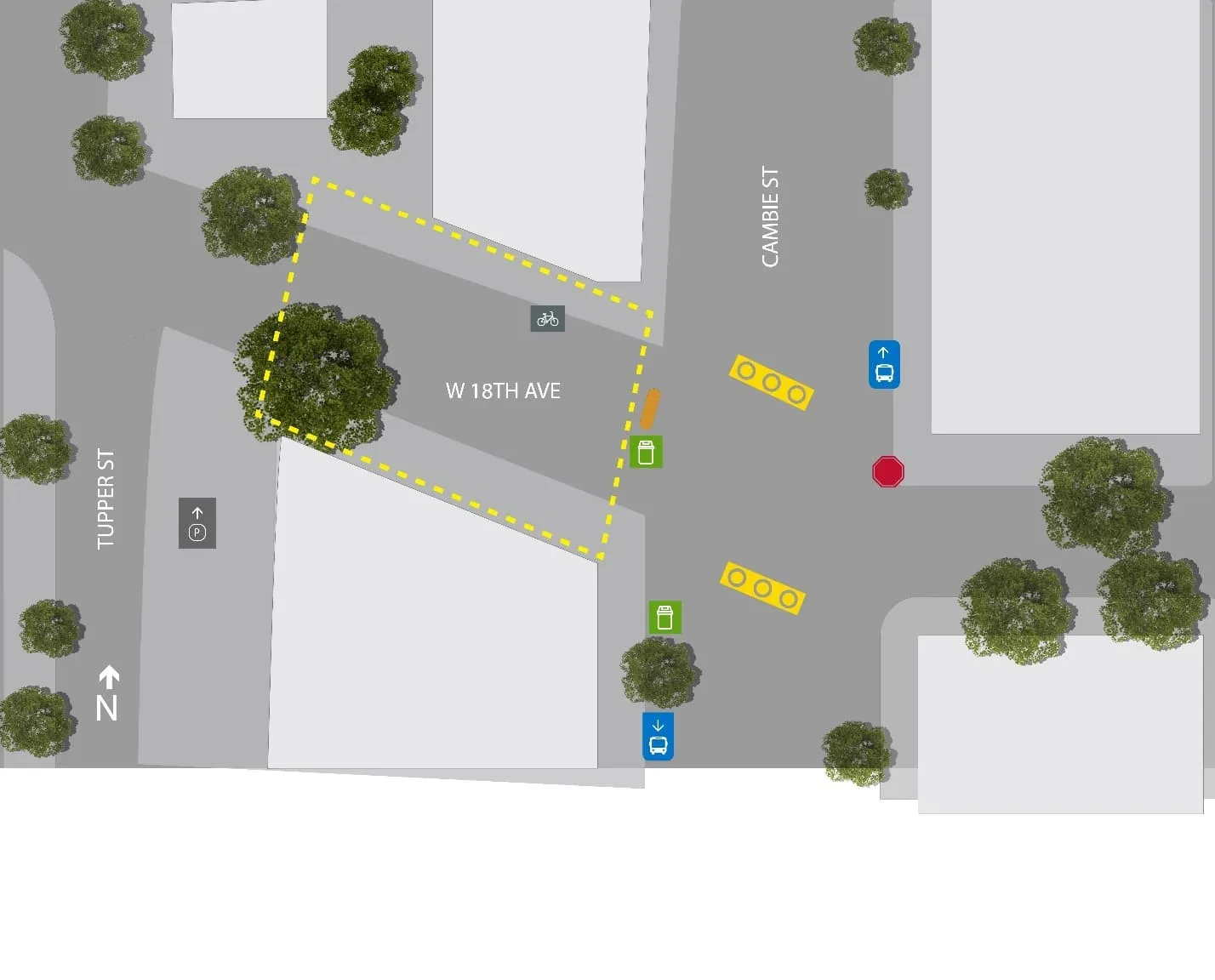
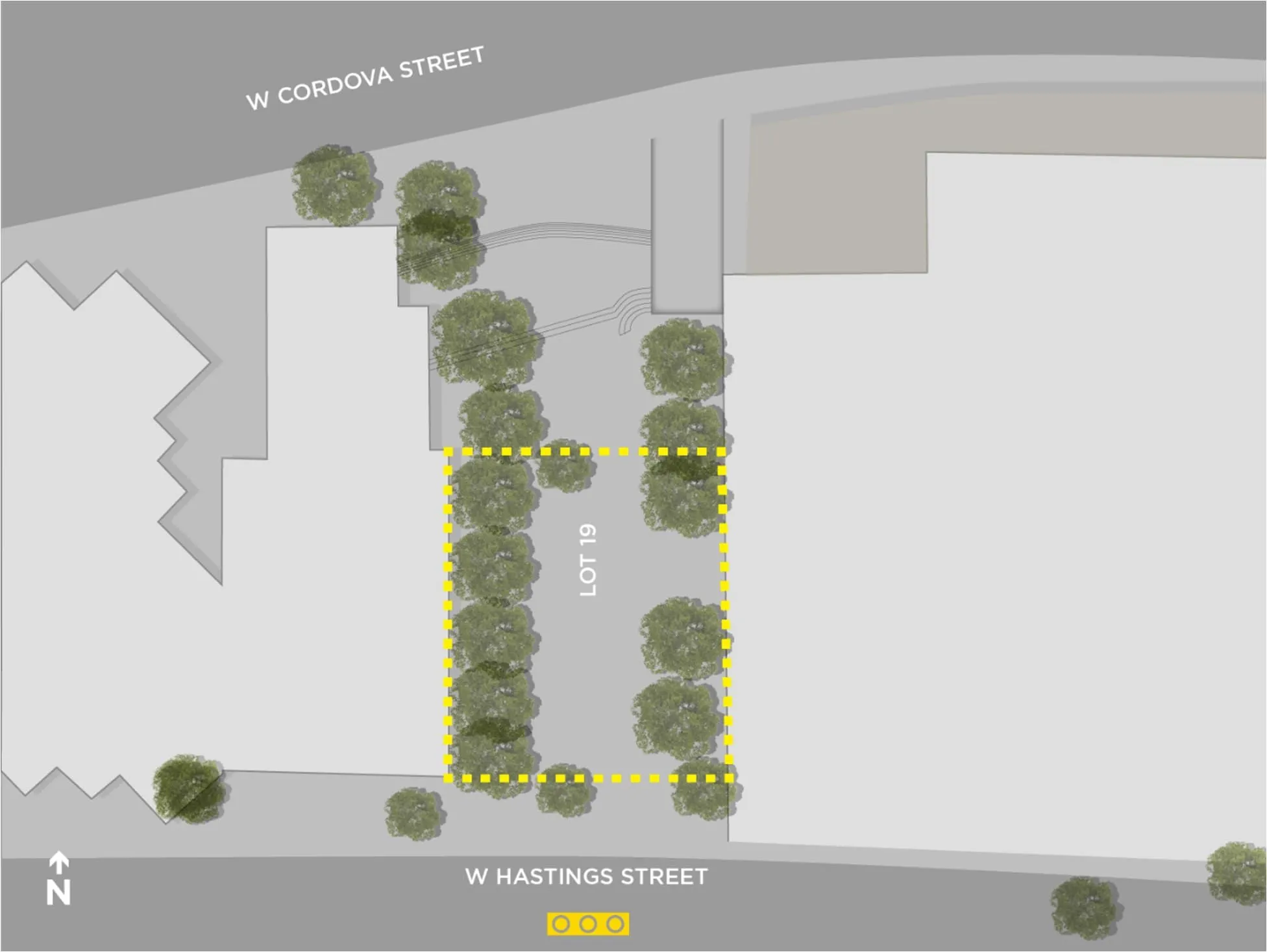
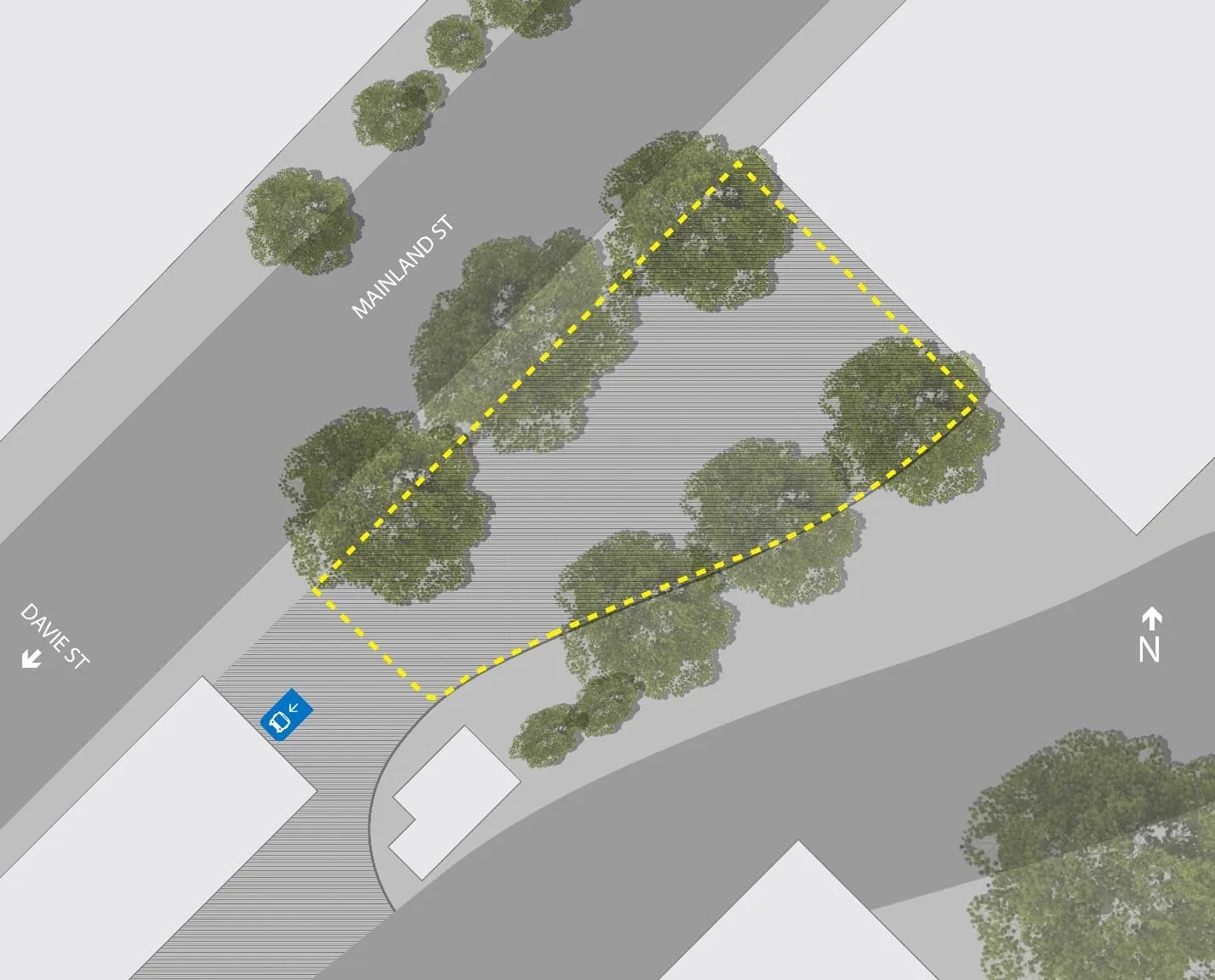
Vote
Public comments
Read all 2 statements
Transcript
1 segments
Okay, so would someone like to move adoption of the recommendations before council? Thank you. I think that was Councillor Dominato, seconded by Councillor Meiszner. All those in favour say yay. Yay. All those opposed say nay. Great. The motion carries unanimously.
So the following have been approved on consent. Report number three, the Vancouver Community Sports Events Grant, spring 2026 intake. Report number 4A, budget resolution, and 4B, 2026 property taxation, distribution of property tax levy. Report number 5, property tax exemptions. Report number 7, Vancouver Heritage Foundation Board annual report 2025. Report number 9, funding application to local government development approvals program. Report number 12, CD-1 rezoning 4088 Granville Street. Report number 14, CD-1 rezoning 310 East 14th Avenue. Report number 15, rezoning 1305 through 1325 West 13th Avenue. And report number 16, 2026 financing growth update. Required consultation for amenity cost charge bylaw and bill 16 density bonus and inclusionary zoning updates. We also have referral report number one, fast-tracking rental housing and small hotels, new mixed-use commercial district, and referral report number three, CD-1 rezoning, 888 through 896 Canby Street, and 111 through 191 Smythe Street. Okay. So number one. Okay. So the first item on the docket is report number one, 2025 homeless count Vancouver. Before we begin this agenda item, if anyone believes that they have a conflict of interest, now's the time to declare it. Any conflicts? No? Okay. This item has a presentation.
Statement Watch
Well done. Yeah, so my name is Phaedra Alicia Ruck. I'm a fourth generation Vancouver resident speaking on the shared territory of all people who call this place home. I'm here in opposition to the sites for the 2026 to 2029 alcohol consumption public plazas program. This bylaw would take effect on May 10th, 2026 in less than one month. Council still has time today for sober second thoughts. Photos taken about an hour ago at 111 Princess, one of the plazas that was piloted by Portland Housing Society, show a police car, seven people appear to be homeless, open hard drug use nearby, and a shopping cart out on the street. This is not the picture of success that council is being sold in the report. Council should be cautious about relying on the Portland Housing Society and the 111 Princess Plaza as reassurance. In 2014, the province... Sorry, going to skip that. Vancouver already has 209 licensed liquor establishments and 1,222 restaurants with liquor service. That's more than 1,400 licensed places to drink already operating in regulated settings. Alcohol is a lucrative business through licensed venues with taxes, permit fees, rent, and jobs, but public plazas offer the city no added value. The financial section of this report is completely unacceptable. The report doesn't give the public one clear total cost for washroom signage and site operations, even though the washroom access is treated as critical. In 2023, city staff asked the province for $3.8 million for one year of washrooms related to programs. If washrooms are critical for alcohol sites, then council should show the public the full cost clearly before approving expansion. I speak as a recovered alcoholic with five years sober. And as a recovered alcoholic, I'm uniquely aware of how many places in this city there are to drink and how few places there are to get clean. Rarely does addiction start with hard drugs. More often, it starts with alcohol. And addiction doesn't stop at a sign, a boundary, or 5 p.m. Today is 10 years since British Columbia declared a substance use public health emergency in the overdose opioid crisis, April 14, 2016. On this exact day, council is being asked to expand, normalize public substance use into 13 plaza sites. The report says the program has operated without incident, but with respect, this is naive. Alcohol harm does not show up neatly in complaints. It shows up in emergency rooms, violence, broken families, relapse, and lives that unravel behind closed doors. and end up where I live part-time with my partner on the downtown east side. In the first report before council today, people indicated substance use as a reason for housing loss. Even this morning's report was woefully inadequate in showing the true scope of the crisis. Substance use is already helping push people out of housing. Why is council expanding public addiction spaces instead of public recovery spaces? What is the real difference between a safe injection site and what's being proposed here? Is that at least one is supervised. These would be unsupervised public alcohol consumption sites. Last year, Vancouver hosted the AA International World Convention through the work of recovered alcoholics and local members. Vancouver should be proud of that. Today, council is being asked to make sober life harder than it needs to be. So I ask you guys now because my time has rang out. This is a step in the wrong direction, and it's within your power to prevent today. Fun detox, fun treatment, but we do not need more places to drink. We need more places to recover. Thank you.
Statement Watch
Yeah, thank you for the question. Associate Director of Street Activities, Rachel Magnuson. That site is a unique site. So it's a part of our parklet program, our social service parklet program, where we work closely with social services. Many of these are in the downtown east side to provide public space. And in particular, this is a managed alcohol program. So it is... run by the Portland Hotel Society. It's been a really well-functioning program for a long time. And what we do is we permit that parklet in front of them as a sort of extension of their social service space. So it is managed by a safe consumption program, and then they offer the programming in that, and then they also provide washrooms and other kind of access to services within their building.
Okay. And when you say consumption, you're referring to consumption of alcohol.
That's correct.
Not hard, illicit substances. Okay. Thanks for that. And then are staff aware of any, you know, significant volume of complaints around that particular patio?
No, we haven't had any.
Okay. Okay. Thanks for the information.
Thank you. Thank you, Councillor Dominato.
Yeah, thanks there. Um, I just wanted to speak just in in brief Just to acknowledge the speaker appreciating that That you came in and spoke to this and and while I have been previously supported the recommendations around these patio spaces and allowing people to drink. We also did it during COVID when people were unable to congregate in homes. But I just want to acknowledge the reality of what you're speaking to in terms of alcoholism in our society. And I would doubt, I suspect I'm not alone in that probably most of us in our families have someone who has struggled with alcoholism, including my own and my family. And so I think there is a persistent issue as a society there. So I just wanted to acknowledge that. Even though I will be supporting the recommendations we have presented today, I did want to also acknowledge that it is complex. It does have real impacts. And I think there's opportunities. And we were just talking earlier about more advocacy to the provincial government for supports for a range of issues around... treatment and recovery spaces. It's something we've talked about and tried to advocate for, for a number of reasons, not just around alcohol, but around other substances. But I just want to say thank you for coming and speak to council, because I think it is an issue that we see universally throughout our society. And I appreciate you speaking up. Thank you.
Thank you very much, Councillor. Councillor Maloney.
I just have some questions. So The plaza locations that are included, they're all clustered around the metro core. What was the reasoning behind not including any south of King Edward and mostly around the downtown?
Yeah, good question. So the way our plaza program is run is that we co-manage spaces with community groups, BIAs, or social service organizations. And so rather than us identifying the plazas that are suited for public drinking, we work closely with our partners who co-manage those spaces with us to identify them. And so the list that you see has been brought forth by us, by our community partners who want to have this, to belong to this program. We do have some new plazas like Main and 50th or newer plaza, Fraser and 48th. And the Fraser and 48th, they just haven't chosen to be a part of the program. And Main and 50th is still early in its pilot stages and so isn't eligible at this time.
Okay. And the one at the plaza at 14th and Main, I know that the bathrooms, the public toilets are pretty far away from that one.
Yeah.
Was that a consideration?
Absolutely. And so we... Many people who might be using that plaza may be patrons of businesses in the area, so they can use those bathrooms if they're at the JGB and getting a coffee. And we want to be able to provide a secure public use of a washroom. Another consideration is just the management of that. So we work closely with the BIA where someone has to come and lock that bathroom, et cetera. And with the balance of both the washrooms that may be available in businesses, that location that's a little bit far, we thought it kind of met the criteria.
You thought just on balance?
On balance, there would be enough access.